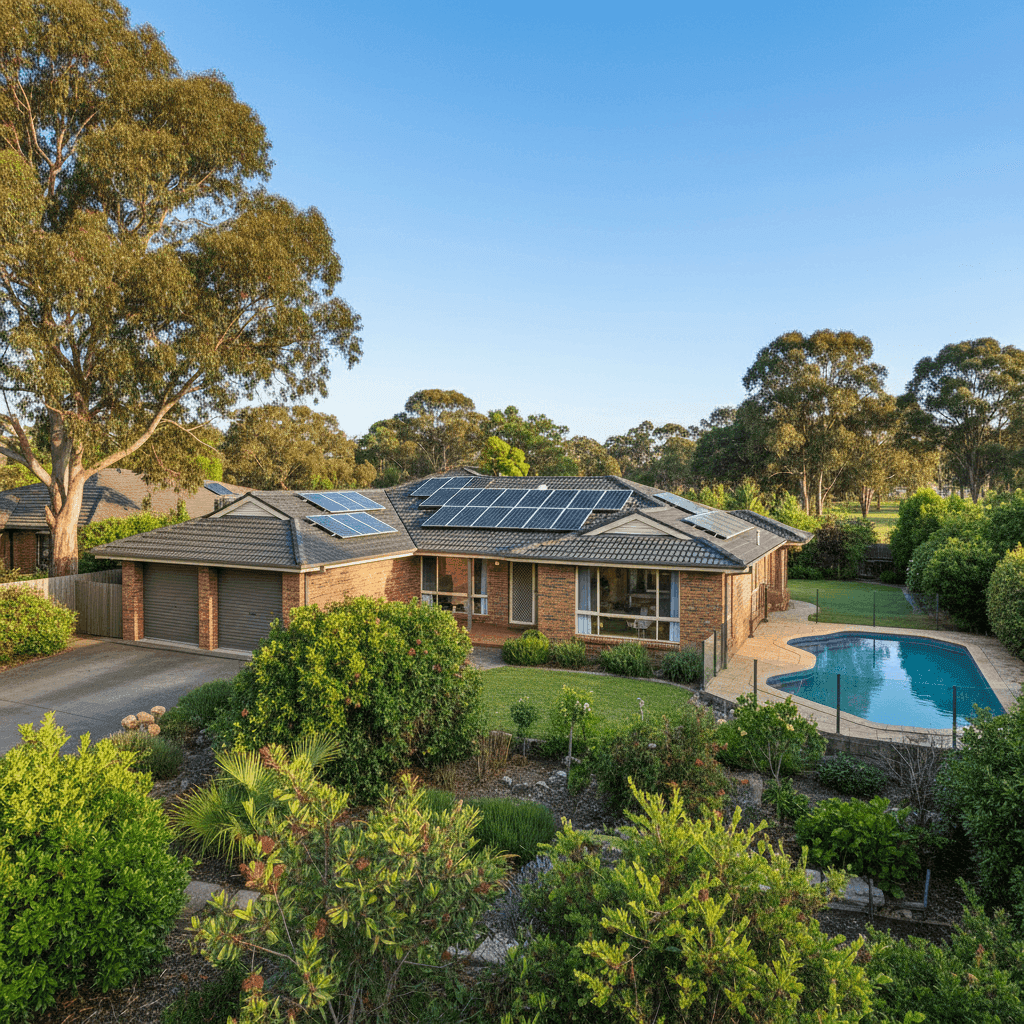
Montmorency is a leafy, well-established suburb in Melbourne's north-east, sitting within the City of Banyule and known for its bushland character, quiet streets, and generous block sizes. It's exactly the kind of suburb where a substantial, free-standing family home — five bedrooms, four bathrooms, built in 1975 — fits right in. But when it comes to insuring a property like this, the premium can vary dramatically depending on the home's features, the sum insured, and the insurer's own risk assessment. This article breaks down a real home and contents insurance quote for a property in Montmorency and puts the numbers in context.
---
Is This Quote Fair?
The annual premium for this property came in at $3,605 per year (or $339/month), covering a building sum insured of $1,338,000 and contents valued at $193,000, with a $1,000 excess on both building and contents.
Our price rating for this quote is Expensive (Above Average) — and the data backs that up.
Compared to the Montmorency suburb average of $2,272/year, this quote sits 59% above what most homeowners in the area are paying. Even against the suburb's 75th percentile — meaning 75% of quotes in the area are cheaper — this premium of $3,605 still exceeds the $2,648 mark by nearly $1,000 annually.
That said, context matters. This isn't a standard home. At 315 sqm with above-average fittings, a pool, solar panels, and ducted climate control, the rebuild cost is genuinely high — and the $1,338,000 building sum insured reflects that. A larger sum insured almost always translates to a higher premium, so some of the price gap is structurally justified. The question is whether the specific insurer's pricing is competitive for this level of cover.
---
How Montmorency Compares
To understand whether this quote is reasonable, it helps to zoom out and look at the broader pricing landscape.
| Benchmark | Premium |
|---|---|
| This quote | $3,605/yr |
| Montmorency suburb average | $2,272/yr |
| Montmorency suburb median | $2,201/yr |
| Banyule LGA average | $2,085/yr |
| VIC state average | $3,000/yr |
| VIC state median | $2,718/yr |
| National average | $5,347/yr |
| National median | $2,764/yr |
A few things stand out here. First, Montmorency's local averages are notably lower than the Victorian state average of $3,000/year, which suggests the suburb is generally considered a lower-risk area by insurers — no cyclone exposure, no flood-prone coastal location, and a relatively stable claims history. The Banyule LGA average of $2,085/year is even lower, reinforcing that this part of Melbourne tends to attract competitive premiums.
Second, while this quote exceeds the Victorian average, it sits well below the national average of $5,347/year. That national figure is heavily influenced by high-risk regions in Queensland and Western Australia, where cyclone, flood, and storm exposure push premiums significantly higher. So in that broader context, $3,605 isn't outrageous — but for Montmorency specifically, there's likely room to find a better deal.
It's worth noting that the suburb sample size used for comparison is 15 quotes, which gives a reasonable but not exhaustive picture. Premiums can vary considerably between insurers even for identical properties, so shopping around remains the most effective tool a homeowner has.
---
Property Features That Affect Your Premium
Several characteristics of this property have a direct bearing on what insurers charge.
Size and sum insured: At 315 sqm, this is a large home by any measure. The $1,338,000 building sum insured is the single biggest driver of the premium — insurers price cover proportionally to the maximum payout they could face. Getting this figure right is important: underinsurance is a serious risk, but overestimating rebuild costs means paying more than necessary.
Age and construction: Built in 1975, the home is now over 50 years old. Older properties can attract higher premiums because ageing plumbing, wiring, and structural components carry a greater likelihood of claims. The brick veneer construction and tiled roof are both viewed favourably by most insurers — brick veneer is durable and fire-resistant, and tiles are considered a low-risk roofing material compared to timber shingles or older metal.
Slab foundation: A concrete slab foundation is generally considered stable and low-maintenance, which is a neutral-to-positive factor in risk assessments.
Timber and laminate flooring: These materials can be more costly to repair or replace following water damage compared to ceramic tiles, which may nudge the contents and building premium slightly higher.
Pool: A swimming pool adds both asset value and liability exposure. Most insurers factor pool ownership into their pricing, particularly for liability cover.
Solar panels: Rooftop solar adds to the replacement value of the building and can complicate claims involving roof damage. It's important to confirm that your solar system is explicitly covered under your policy and that the sum insured accounts for its replacement cost.
Ducted climate control: Ducted HVAC systems are expensive to repair or replace and are typically included in the building sum insured. Their presence in a home of this size is expected, but it's worth verifying coverage extends to mechanical breakdown or storm damage scenarios depending on your policy type.
Above-average fittings: Higher-quality fixtures, fittings, and finishes cost more to reinstate after a claim, which is reflected in the premium. This is appropriate — the risk of underinsurance is real for homes with premium kitchens, bathrooms, and flooring.
---
Tips for Homeowners in Montmorency
1. Get multiple quotes before renewing The gap between this quote and the suburb average suggests meaningful savings may be available elsewhere. Use a comparison platform like CoverClub to run quotes across multiple insurers simultaneously rather than accepting your renewal price at face value.
2. Review your building sum insured carefully At $1,338,000, the sum insured is substantial. Make sure it reflects current rebuild costs — not market value — using a quantity surveyor estimate or an insurer's rebuild calculator. Rebuilding costs have risen sharply in recent years due to labour and materials inflation, so an outdated estimate in either direction can leave you exposed or overpaying.
3. Consider your excess level Both building and contents excesses are set at $1,000. Opting for a higher voluntary excess (say, $2,000 or $2,500) can reduce your annual premium meaningfully. This makes sense if you're unlikely to make small claims and want to lower your ongoing costs.
4. Confirm solar panels and pool are adequately covered Check the policy wording to ensure your solar system is covered for damage from storms, hail, and fire, and that the pool structure and equipment are included in your building cover. These are easy items to overlook and can result in unpleasant surprises at claim time.
---
Compare Home Insurance Quotes in Montmorency
Whether you're reviewing your current policy or insuring a new home, comparing quotes is the simplest way to make sure you're not overpaying. CoverClub makes it easy to see real premiums from multiple insurers side by side, tailored to your specific property. You can also explore local pricing data for Montmorency and benchmark your premium against what your neighbours are paying.