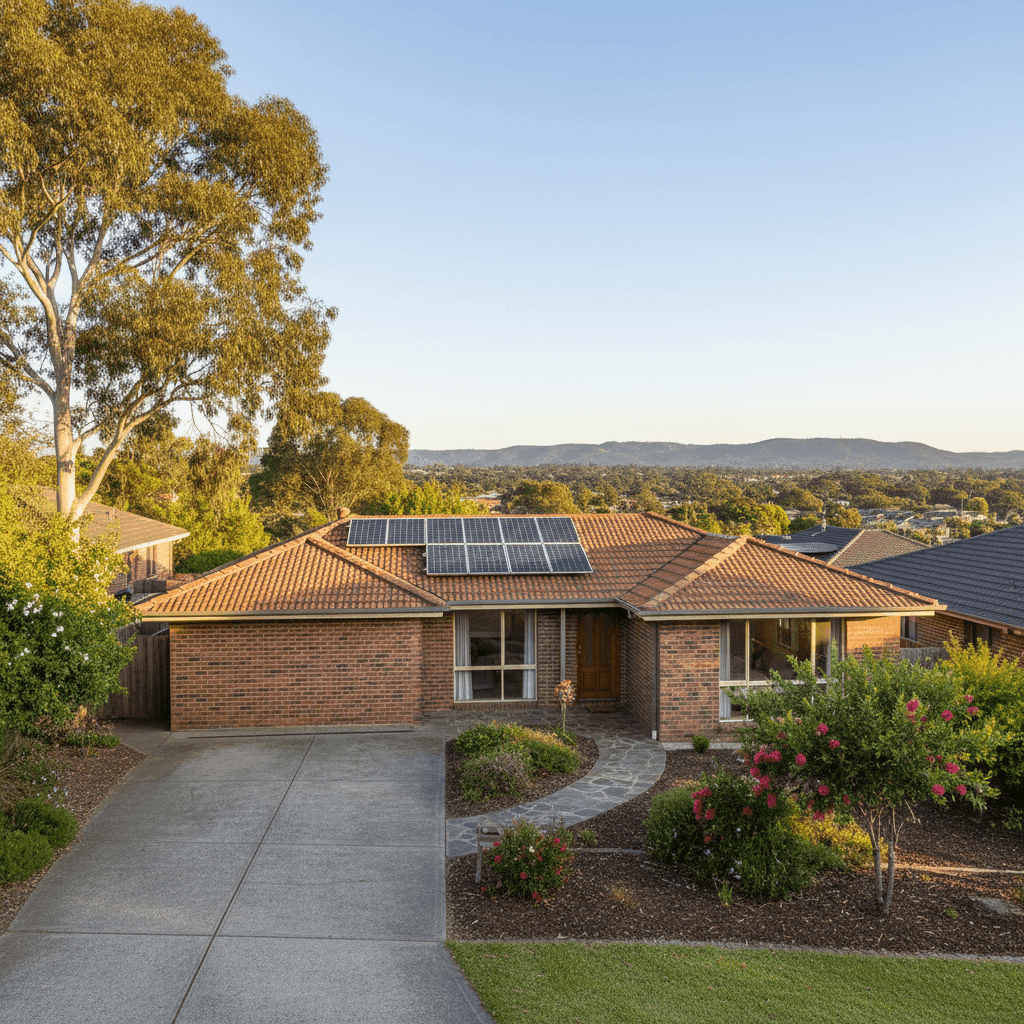
If you own a free standing home in Montmorency, VIC 3094, you're likely paying close attention to the cost of home and contents insurance — especially as premiums across Australia have climbed steadily in recent years. This article breaks down a real insurance quote for a four-bedroom, brick veneer home in this leafy north-eastern Melbourne suburb, and puts the numbers in context so you can make a more informed decision at renewal time.
---
Is This Quote Fair?
The quote in question comes in at $2,108 per year (or $210/month) for combined home and contents cover, with a building sum insured of $778,000 and contents valued at $86,000. Both the building and contents excess are set at $1,000.
Our price rating for this quote is Expensive — above average for the Montmorency area.
To understand why, it helps to look at what other homeowners in the same suburb are paying. The suburb average for Montmorency sits at $1,583 per year, with a median of $1,624. This quote lands about 33% above the suburb average — a meaningful gap that's worth investigating before simply accepting the renewal.
That said, "expensive" doesn't automatically mean "wrong." The sum insured here is substantial at $778,000, and the property has several features — including solar panels and ducted climate control — that can nudge premiums upward. We'll explore those factors shortly.
---
How Montmorency Compares
One of the most useful things you can do when assessing any insurance quote is to zoom out and look at the broader picture.
| Benchmark | Average Premium | Median Premium |
|---|---|---|
| Montmorency (3094) | $1,583/yr | $1,624/yr |
| Banyule LGA | $2,144/yr | — |
| Victoria | $2,921/yr | $2,694/yr |
| National | $2,965/yr | $2,716/yr |
(Based on CoverClub quote data. [View VIC stats](https://coverclub.com.au/stats/VIC) · [View national stats](https://coverclub.com.au/stats/national))
A few things stand out here. First, Montmorency is a relatively affordable suburb to insure compared to the rest of Victoria — the state average of $2,921 is nearly double the suburb average. This likely reflects the area's lower exposure to extreme weather events such as cyclones or coastal flooding, as well as the predominantly established, brick-construction housing stock.
Second, the quote of $2,108 actually sits below both the Victorian and national averages, which means it's not outrageous in absolute terms — it's simply on the higher end for this particular suburb. For homeowners comparing against state-level benchmarks, the quote may feel more reasonable. But for locals shopping around, there's a reasonable chance a better deal exists.
It's also worth noting that the Banyule LGA average of $2,144 is fairly close to this quote, suggesting the pricing may partly reflect broader local government area risk factors rather than anything specific to this property.
---
Property Features That Affect Your Premium
Insurance pricing is never one-size-fits-all. The characteristics of this property play a direct role in how insurers calculate risk — and therefore what they charge.
Brick veneer construction with a tiled roof is generally viewed favourably by insurers. Brick veneer is resilient to fire and wind, and tiles are a durable roofing material. This combination typically attracts more competitive premiums compared to, say, weatherboard or corrugated iron.
Pole foundations are worth noting. Homes built on stumps or poles — common in older Melbourne suburbs, particularly on sloped blocks — can be more susceptible to movement, moisture ingress, and pest damage over time. Some insurers factor this into their risk assessment, particularly for homes built in the 1970s when construction standards differed from today.
Construction year: 1974. At over 50 years old, this home is considered a mature dwelling. Older homes can carry higher premiums due to ageing electrical wiring, plumbing systems, and roofing materials that may be more costly to repair or replace. If you haven't had a recent building inspection, it may be worth organising one — both for peace of mind and potentially to support a case for a lower premium.
Solar panels add replacement value to the roof structure, and insurers need to account for the cost of repairing or reinstalling panels after a storm or hail event. Make sure your policy explicitly covers solar panels and that the sum insured reflects their current replacement cost.
Ducted climate control is another feature that increases the contents and fixtures value of the home. These systems can be expensive to repair or replace, and ensuring they're adequately covered under your building sum insured is important.
Timber and laminate flooring throughout the home is a consideration for contents cover — these floors can be costly to replace after water damage or fire, and it's worth confirming how your policy treats fixed floor coverings.
---
Tips for Homeowners in Montmorency
Whether you're reviewing your current policy or shopping for the first time, here are some practical steps to help you get better value.
1. Review your sum insured carefully. A building sum insured of $778,000 is significant. Make sure this figure reflects the rebuild cost of your home — not its market value. Overcovering can mean unnecessarily high premiums, while undercovering leaves you exposed. Use a building cost calculator or consult a quantity surveyor to get an accurate figure.
2. Shop around at renewal time. The gap between this quote and the suburb average suggests there may be more competitive options available. Insurers price risk differently, and loyalty doesn't always pay. Compare quotes on CoverClub to see what other providers are offering for similar properties in your area.
3. Ask about discounts for security and safety features. Homes with monitored alarm systems, deadbolts, and smoke detectors often qualify for reduced premiums. If your home has these features, make sure you've declared them when getting quotes — some insurers won't apply discounts unless explicitly asked.
4. Consider your excess strategically. Both the building and contents excess on this policy are set at $1,000. Opting for a higher excess (say, $1,500 or $2,000) can meaningfully reduce your annual premium. If you're unlikely to make small claims, this trade-off can make good financial sense over the long run.
---
Ready to Compare?
If you're a homeowner in Montmorency and want to see whether you're getting a fair deal, CoverClub makes it easy to compare home and contents insurance quotes from multiple providers in minutes. You can also explore suburb-level insurance data for Montmorency to benchmark your current premium against your neighbours.
Get a quote today at CoverClub — it's free, fast, and could save you hundreds of dollars a year.