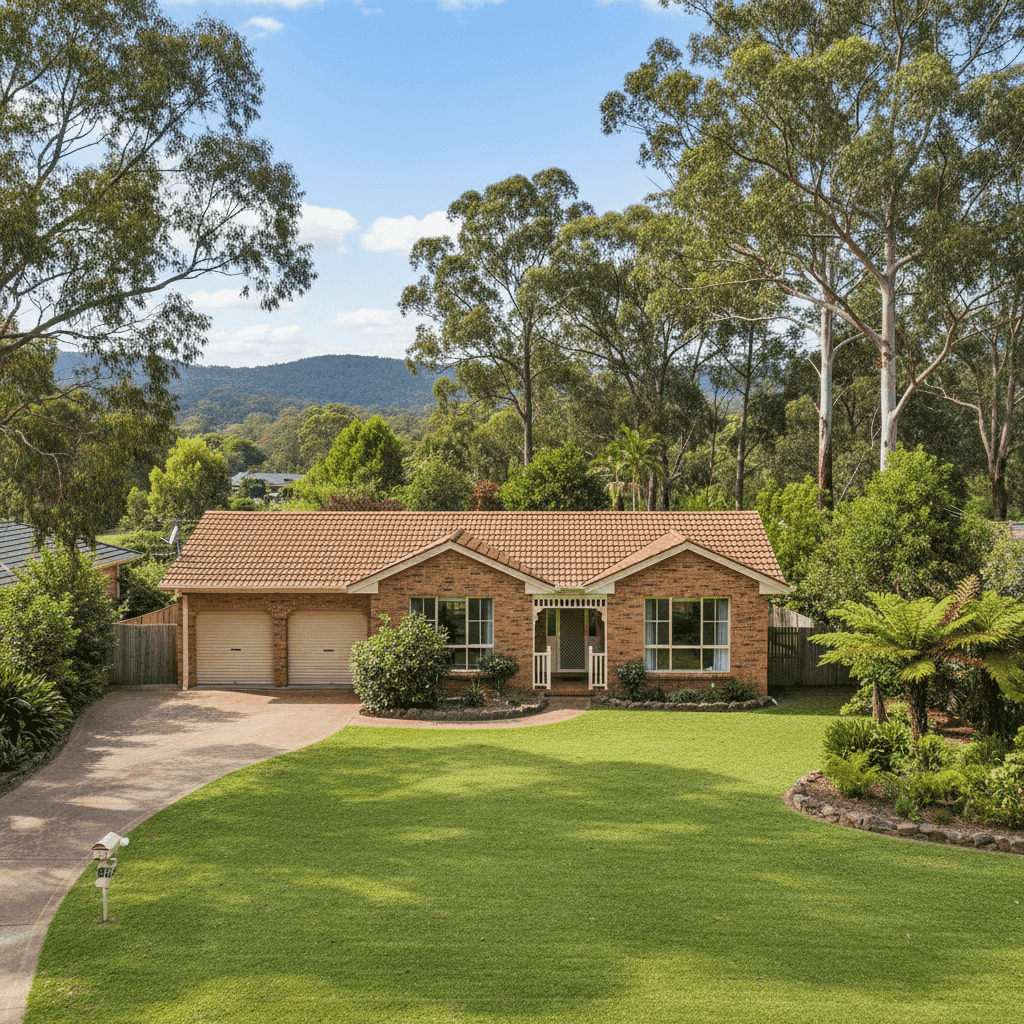
Nestled in the foothills of the Yarra Ranges, Montrose is a leafy suburb in Melbourne's outer east that blends semi-rural charm with suburban convenience. For owners of free standing homes in the area, understanding what drives home insurance costs — and whether a quote stacks up — is an important part of protecting one of your most valuable assets. This article breaks down a real home and contents insurance quote for a four-bedroom property in Montrose VIC 3765, and puts it in context against local, state, and national benchmarks.
---
Is This Quote Fair?
The quote in question comes in at $1,947 per year (or $190/month) for combined home and contents cover, with a building sum insured of $808,000 and contents valued at $50,000. The building excess is $2,000 and the contents excess sits at $1,000.
Our price rating for this quote is FAIR — Around Average.
Within Montrose itself, this premium lands above the suburb average of $1,497/yr and well above the median of $1,249/yr, but comfortably below the 75th percentile of $2,111/yr. In plain terms: roughly a quarter of comparable quotes in the suburb cost more than this one, and about three quarters cost less. That's not a bargain, but it's far from the top of the range either.
What tips the rating toward "fair" rather than "expensive" is the broader context. Compared to the Victorian state average of $2,921/yr and the national average of $2,965/yr, this quote is notably more affordable — sitting roughly 33% below both benchmarks. Homeowners in many other parts of Australia are paying significantly more for equivalent cover.
It's also worth noting that Yarra Ranges LGA carries an average premium of $4,615/yr — more than double this quote. That figure is heavily influenced by high-risk properties deeper in the ranges, so it's not a direct comparison, but it does illustrate how much variation exists even within the same local government area.
---
How Montrose Compares
Here's a quick snapshot of how this quote sits across different comparison points:
| Benchmark | Premium |
|---|---|
| This Quote | $1,947/yr |
| Montrose Suburb Average | $1,497/yr |
| Montrose Suburb Median | $1,249/yr |
| Montrose 75th Percentile | $2,111/yr |
| VIC State Average | $2,921/yr |
| National Average | $2,965/yr |
| Yarra Ranges LGA Average | $4,615/yr |
Explore the full data on the Montrose suburb stats page, the Victoria state overview, or the national insurance stats dashboard.
One important caveat: the suburb sample size here is 15 quotes, which is a reasonable starting point but not a large dataset. As more quotes are collected for Montrose, these averages will become increasingly reliable. That said, the state and national figures are drawn from a much larger pool and provide a solid reference point.
The key takeaway is that while this quote is above average for Montrose specifically, it is well below what Victorian and Australian homeowners pay on average. The higher building sum insured ($808,000) is likely a significant factor in pushing the premium above the local median.
---
Property Features That Affect Your Premium
Several characteristics of this property have a meaningful influence on the premium calculated. Here's how they play out:
Brick Veneer Construction Brick veneer is one of the most common wall types in Australian suburban homes built from the 1960s onwards, and insurers generally view it favourably. It offers solid fire resistance compared to weatherboard or cladding, which can help moderate premiums.
Tiled Roof Terracotta or concrete tiles are considered a durable, low-risk roofing material by most insurers. They hold up well in storms and are less susceptible to ember attack than metal or Colorbond alternatives in some scenarios — a relevant consideration given Montrose's proximity to bushland.
Stump Foundation The property sits on stumps, which is common for homes built in this era and terrain. Stumped foundations can be more vulnerable to movement and moisture-related issues over time, and some insurers factor this into their risk assessment, particularly for older homes.
Construction Year: 1970 At over 50 years old, this home falls into a category where insurers may apply additional scrutiny around plumbing, electrical systems, and structural integrity. Older homes can attract slightly higher premiums, or require more thorough disclosure at the time of application.
Ducted Climate Control The presence of ducted heating and cooling adds to the replacement value of the home's fixtures and fittings, which is appropriately reflected in the building sum insured. It's a common feature in Melbourne's climate, where both hot summers and cold winters make temperature control essential.
Building Size: 235 sqm At 235 square metres, this is a generously sized family home. Larger floor areas mean higher rebuild costs, which directly influences the sum insured and, in turn, the annual premium.
No Pool or Solar Panels The absence of a pool and solar panels simplifies the risk profile slightly. Both features can add to replacement costs and, in the case of pools, introduce liability considerations.
---
Tips for Homeowners in Montrose
1. Review Your Sum Insured Carefully With a building sum insured of $808,000, it's important to ensure this figure accurately reflects the rebuild cost of your home — not its market value. Rebuild costs include demolition, materials, and labour, and can differ significantly from what you'd sell the property for. Underinsurance is a common and costly mistake; consider using a professional quantity surveyor or an online rebuild calculator to validate your figure.
2. Consider Your Bushfire Exposure Montrose sits on the urban fringe near the Dandenong Ranges, an area with elevated bushfire risk. Check whether your policy includes adequate cover for bushfire damage, and review any exclusions or conditions that apply. Maintaining a well-cleared property perimeter isn't just good practice — it may also be a condition of your cover.
3. Explore Your Excess Options This quote carries a $2,000 building excess and a $1,000 contents excess. Opting for a higher voluntary excess is one of the most straightforward ways to reduce your annual premium. If you have the financial buffer to absorb a larger out-of-pocket cost in the event of a claim, it's worth modelling the savings.
4. Don't Set and Forget Insurance needs change. With a home built in 1970, it's worth reassessing your policy annually — particularly if you've completed renovations, updated your electrical system, or added new appliances or valuables to your contents. Keeping your insurer informed ensures you're neither underinsured nor paying for cover you no longer need.
---
Compare Your Options with CoverClub
Whether you're renewing your current policy or shopping around for the first time, it pays to see what's available. CoverClub makes it easy to compare home and contents insurance quotes tailored to your property and location. Get a quote today and find out if you could be paying less — or getting more — for your cover.