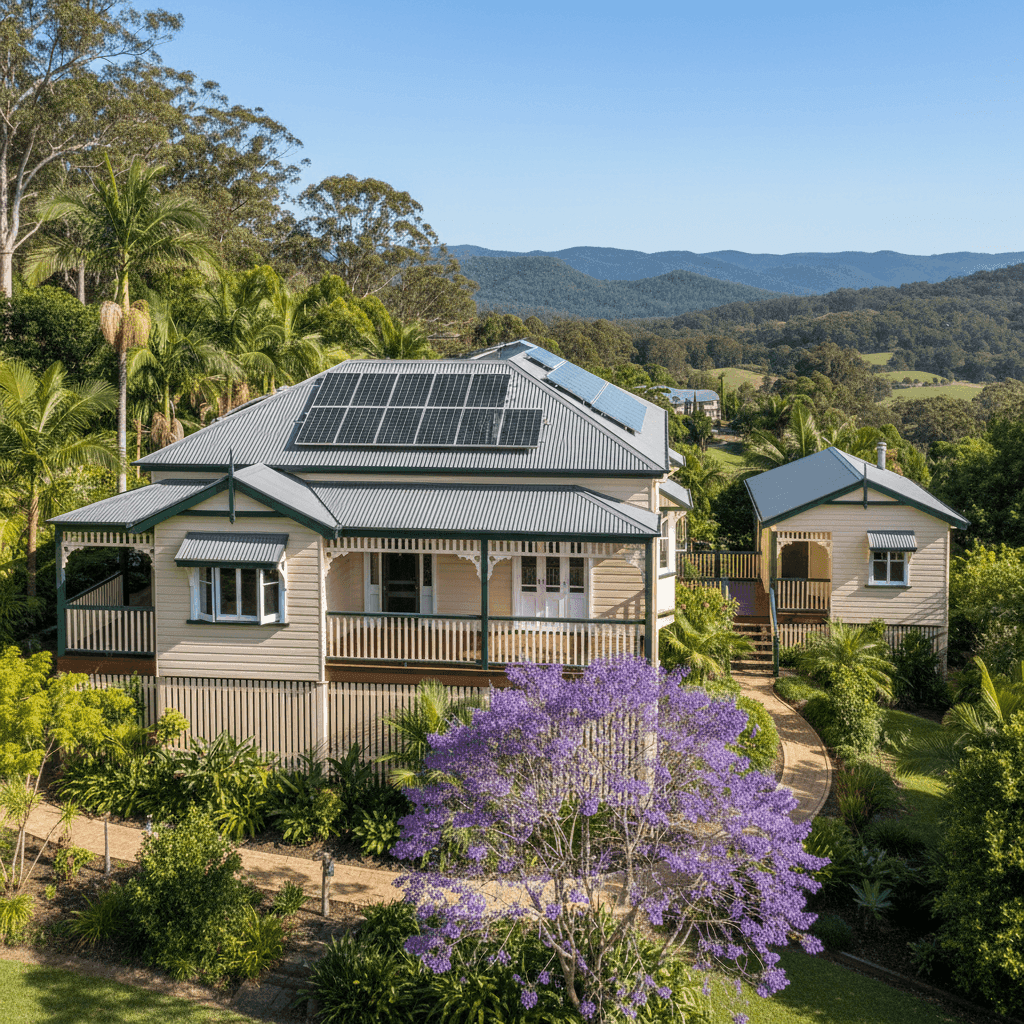
Nestled in the hinterland of the Sunshine Coast, Montville is one of Queensland's most charming villages — known for its arts scene, lush rainforest surrounds, and a rich collection of heritage-listed properties. Insuring a home here, however, comes with its own set of complexities. This article breaks down a real home and contents insurance quote for a 3-bedroom, 2-bathroom free-standing home in Montville QLD 4560, rated Expensive (Above Average), and explores what's driving the cost — and what you can do about it.
---
Is This Quote Fair?
The annual premium for this property came in at $9,119 per year (or $867/month), with a $1,000 excess on both building and contents. The building is insured for $1,801,000 and contents for $100,000.
Our price rating system has flagged this quote as Expensive — Above Average, and the data backs that up. The suburb average for Montville sits at just $4,255 per year, meaning this quote is more than double what most nearby homeowners are paying. Even the suburb's 75th percentile — the upper end of what's considered typical — comes in at $4,665/yr, still well below this quote.
That said, context matters enormously here. This isn't a standard cookie-cutter property. It's a heritage-listed home on stumps with above-average fittings, solar panels, ducted climate control, a granny flat, and a very high building sum insured of $1.8 million. Each of these factors meaningfully influences what an insurer will charge.
---
How Montville Compares
To put this quote in perspective, here's how the premium stacks up across different benchmarks:
| Benchmark | Average Premium | Median Premium |
|---|---|---|
| Montville (suburb) | $4,255/yr | $3,850/yr |
| Sunshine Coast (LGA) | $7,249/yr | — |
| Queensland (state) | $9,129/yr | $3,903/yr |
| National | $5,347/yr | $2,764/yr |
A few things stand out. First, the Queensland state average of $9,129/yr is almost identical to this quote — suggesting that while the premium is above the local suburb norm, it's broadly in line with what higher-risk or higher-value Queensland properties attract. The wide gap between QLD's average ($9,129) and median ($3,903) tells its own story: a relatively small number of expensive properties are pulling the average up significantly.
Second, the national average of $5,347/yr highlights just how much Queensland homeowners — particularly those with unique or high-value properties — pay compared to the rest of the country.
The Sunshine Coast LGA average of $7,249/yr is also instructive. This property's premium sits above even that elevated benchmark, which reflects its heritage status, high rebuild cost, and additional structures.
It's worth noting the suburb sample size is just 9 quotes, so the local averages should be interpreted with some caution — a few very different properties can shift those numbers considerably.
---
Property Features That Affect Your Premium
Several characteristics of this property are doing a lot of heavy lifting when it comes to the premium. Here's what matters most:
Heritage Listing
This is arguably the single biggest premium driver. Heritage-listed homes must be restored using period-appropriate materials and techniques if damaged — and that costs significantly more than a standard rebuild. Insurers price this risk accordingly, and finding a policy that adequately covers heritage restoration requirements is essential.
High Building Sum Insured ($1,801,000)
A sum insured of $1.8 million is substantial, even for a quality home. This figure reflects the above-average fittings, the heritage restoration premium, and likely the inclusion of the granny flat. Higher insured values mean higher premiums — it's a direct relationship.
Stump Foundation
Homes on stumps (a classic Queensland construction style) are more exposed to certain risks, including movement, flooding underneath, and pest ingress. Insurers factor this into their risk calculations, particularly in hinterland areas with variable soil conditions and moisture.
Granny Flat
The presence of a separate granny flat adds to the overall rebuild cost and increases the complexity of any claim. This will be included in the building sum insured and contributes to the elevated premium.
Timber and Laminate Flooring
Timber floors — while beautiful — are more susceptible to water damage and can be costly to repair or replace. Combined with a stump foundation (which allows airflow but also moisture), this is a risk combination insurers take seriously.
Solar Panels and Ducted Climate Control
Both of these add to the replacement value of the home. Solar systems can cost tens of thousands of dollars to replace, and ducted climate control systems are similarly expensive. If these aren't explicitly listed in your policy, it's worth confirming they're covered.
Above-Average Fittings
High-end fixtures, joinery, and finishes cost more to repair and replace — and insurers build this into their pricing when you nominate above-average fittings quality.
Colorbond Roof
On the positive side, a steel/Colorbond roof is generally viewed favourably by insurers. It's durable, fire-resistant, and performs well in storms — which may be moderating the premium slightly compared to older roofing materials.
---
Tips for Homeowners in Montville
1. Make Sure Your Heritage Coverage Is Explicit
Not all home insurance policies adequately cover heritage restoration costs. Before signing anything, confirm that your policy specifically addresses the use of period-appropriate materials and specialist trades. Some insurers offer heritage-specific endorsements — these are worth seeking out.
2. Review Your Sum Insured Carefully
A $1.8 million sum insured is significant. Use a qualified quantity surveyor or your insurer's rebuild cost calculator to confirm this figure is accurate — both over-insuring and under-insuring carry real risks. Over-insuring means you're paying more premium than necessary; under-insuring can leave you badly exposed at claim time.
3. Compare Multiple Quotes
Given this quote is rated above average even by Queensland standards, it's worth shopping around. Premiums for heritage and high-value properties can vary dramatically between insurers. Use CoverClub's quote comparison tool to see what other providers are offering for your specific property profile.
4. Ask About Discounts for Security and Safety Features
Solar panels, quality roofing, and a well-maintained property can sometimes attract discounts with certain insurers. It's always worth asking — particularly if you've recently upgraded the roof, installed a security system, or made structural improvements.
---
Get a Better Deal on Your Home Insurance
Whether you're a long-time Montville local or new to the hinterland, it pays to make sure your home insurance is working as hard as your property does. With a premium this size, even a 10–15% saving represents hundreds of dollars back in your pocket each year.
Compare home insurance quotes at CoverClub — it takes just a few minutes, and you'll instantly see how your current quote stacks up against the market. You can also explore local Montville insurance data and Queensland-wide trends to better understand what's typical for your area.