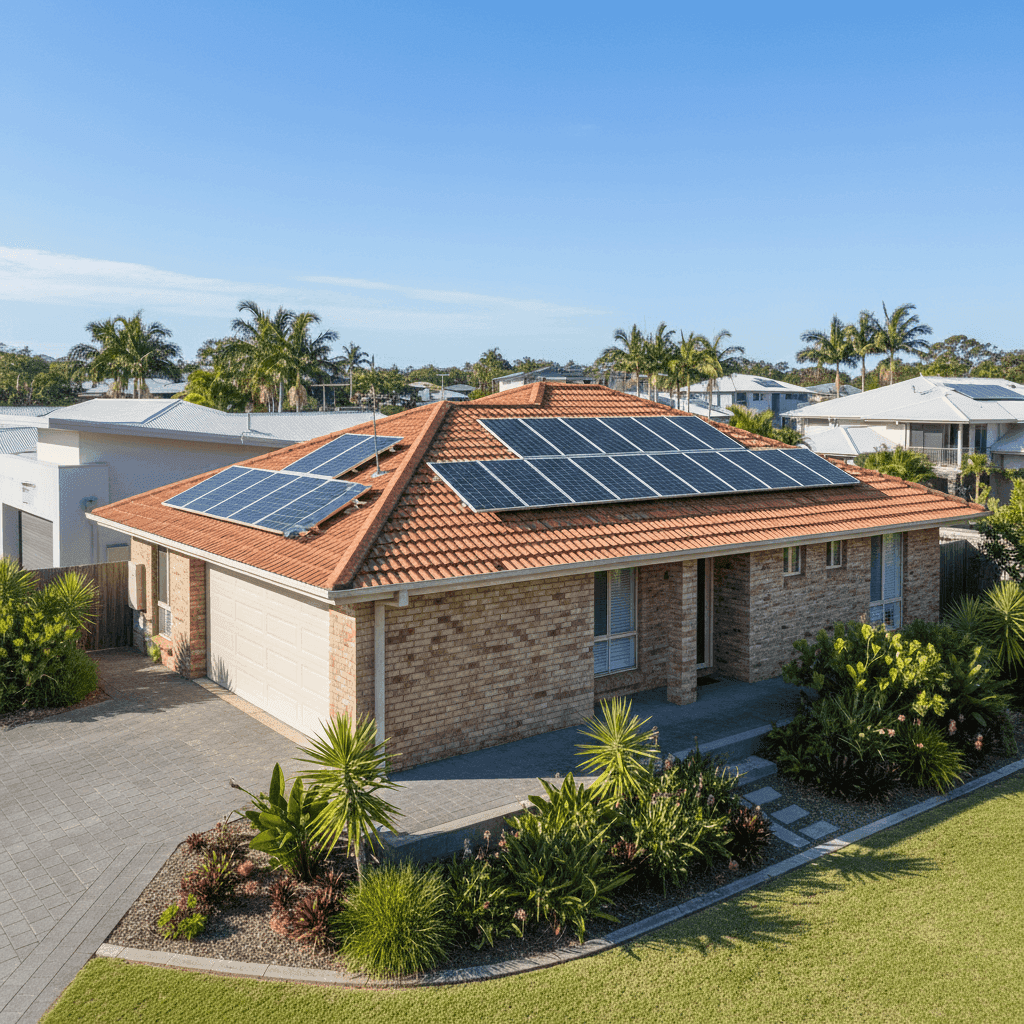
Mooloolaba is one of the Sunshine Coast's most sought-after suburbs — a coastal lifestyle destination with strong property values and a mix of established homes and newer builds. If you own a free standing home here, understanding what you should be paying for building insurance is just as important as knowing what your property is worth. This article breaks down a real building-only insurance quote for a four-bedroom, two-bathroom brick veneer home in Mooloolaba (QLD 4557) and puts it in context against local, state, and national benchmarks.
---
Is This Quote Fair?
The quote in question comes in at $3,018 per year (or $301/month) for building-only cover, with a $1,000 building excess and a sum insured of $716,000 on a 214 sqm home built in 1989.
Our rating? Cheap — well below average.
To put that in perspective, the average home insurance premium across Mooloolaba sits at $6,733 per year, with a median of $4,929. That means this quote is coming in at less than half the suburb average — a genuinely strong result for the homeowner. Even measured against the suburb's 25th percentile (the cheapest quarter of quotes), which sits at $4,160/yr, this premium is still significantly lower.
So yes — by any reasonable measure, this is a competitive quote. Whether it stays that way at renewal is another matter, which is why it's always worth comparing annually.
---
How Mooloolaba Compares
Zooming out to a broader picture helps illustrate just how variable home insurance pricing can be across different geographies.
| Benchmark | Premium |
|---|---|
| This Quote | $3,018/yr |
| Mooloolaba Suburb Average | $6,733/yr |
| Mooloolaba Suburb Median | $4,929/yr |
| LGA (Sunshine Coast) Average | $7,249/yr |
| QLD State Average | $9,129/yr |
| QLD State Median | $3,903/yr |
| National Average | $5,347/yr |
| National Median | $2,764/yr |
A few things stand out here. Queensland's state average of $9,129/yr is strikingly high — well above the national average of $5,347 — largely driven by the elevated risk profiles of cyclone-prone and flood-affected regions in the state's north and west. This skews the QLD average considerably upward.
However, the QLD median of $3,903/yr tells a more grounded story. When you strip out the extreme outliers, many Queensland homeowners are paying in a similar ballpark to this quote — which suggests the quote is competitive but not wildly out of step with what's achievable in the state.
At the national level, the median sits at $2,764/yr, which is actually below this quote — a reminder that insurance costs vary enormously by location, and coastal Queensland properties often carry higher base risk than the national median would suggest.
You can explore more detailed Queensland home insurance statistics here.
---
Property Features That Affect Your Premium
Several characteristics of this property likely contribute to its favourable premium outcome.
Brick Veneer Construction Brick veneer is generally viewed positively by insurers. It offers solid fire resistance and structural durability compared to timber-framed or clad homes, which can translate to lower rebuild risk — and lower premiums.
Tiled Roof Terracotta or concrete tile roofing is a standard, well-understood material for insurers. It performs reasonably well in storms and is less susceptible to fire than some alternatives. That said, older tile roofs (this home was built in 1989) can be more vulnerable to hail and may require maintenance to prevent water ingress — something worth keeping on top of.
Slab Foundation A concrete slab foundation is a neutral-to-positive factor for insurers. It avoids the underfloor moisture and pest risks associated with elevated timber stumps, and is generally considered a stable base in Queensland's climate.
Solar Panels This property has solar panels installed. While solar adds value to a home, it's worth confirming with your insurer that the panels are explicitly covered under your building policy — some policies include them automatically, while others require a specific endorsement or may only cover them under contents.
No Pool, No Ducted Climate Control The absence of a pool removes a common liability and maintenance risk factor. No ducted air conditioning also simplifies the mechanical systems insurers need to account for in a rebuild estimate.
Standard Fittings Standard-quality fixtures and fittings (rather than high-end or custom finishes) keep the per-square-metre rebuild cost more predictable and generally more moderate, which supports a lower sum insured relative to luxury-finished homes of similar size.
Not in a Cyclone Risk Zone Despite being on the Sunshine Coast, this property falls outside a designated cyclone risk area — a meaningful factor in Queensland, where cyclone-rated construction requirements and associated risk loadings can significantly inflate premiums for properties further north.
---
Tips for Homeowners in Mooloolaba
1. Review Your Sum Insured Annually Construction costs have risen sharply in recent years. A sum insured of $716,000 for a 214 sqm home works out to roughly $3,346/sqm — which is within a reasonable range for Queensland, but worth validating against current builder rates each year. Being underinsured at claim time is a costly mistake.
2. Check Your Solar Panel Coverage If you have solar panels (as this property does), read your policy carefully to confirm they're included in the building cover. Ask your insurer directly if you're unsure — it's a quick call that could save a significant headache after a storm or hail event.
3. Don't Let Your Policy Auto-Renew Without Comparing Even a "cheap" quote today can drift upward at renewal. Insurers regularly adjust pricing, and loyalty doesn't always pay. Set a reminder to compare quotes before each renewal — the savings can be substantial.
4. Consider Your Excess Level This policy carries a $1,000 building excess. Opting for a higher excess (say, $2,000 or $2,500) can reduce your annual premium, which may make sense if you have sufficient savings to cover a larger out-of-pocket cost in a claim scenario. Conversely, if cash flow is tight, a lower excess provides more predictable costs when things go wrong.
---
Compare Your Home Insurance with CoverClub
Whether you're a Mooloolaba local or researching the market before buying, CoverClub makes it easy to see what you should be paying. Our platform compares real quotes from leading Australian insurers so you can make an informed decision — not just accept whatever lands in your inbox at renewal time.
Get a home insurance quote today at CoverClub and see how your current premium stacks up.