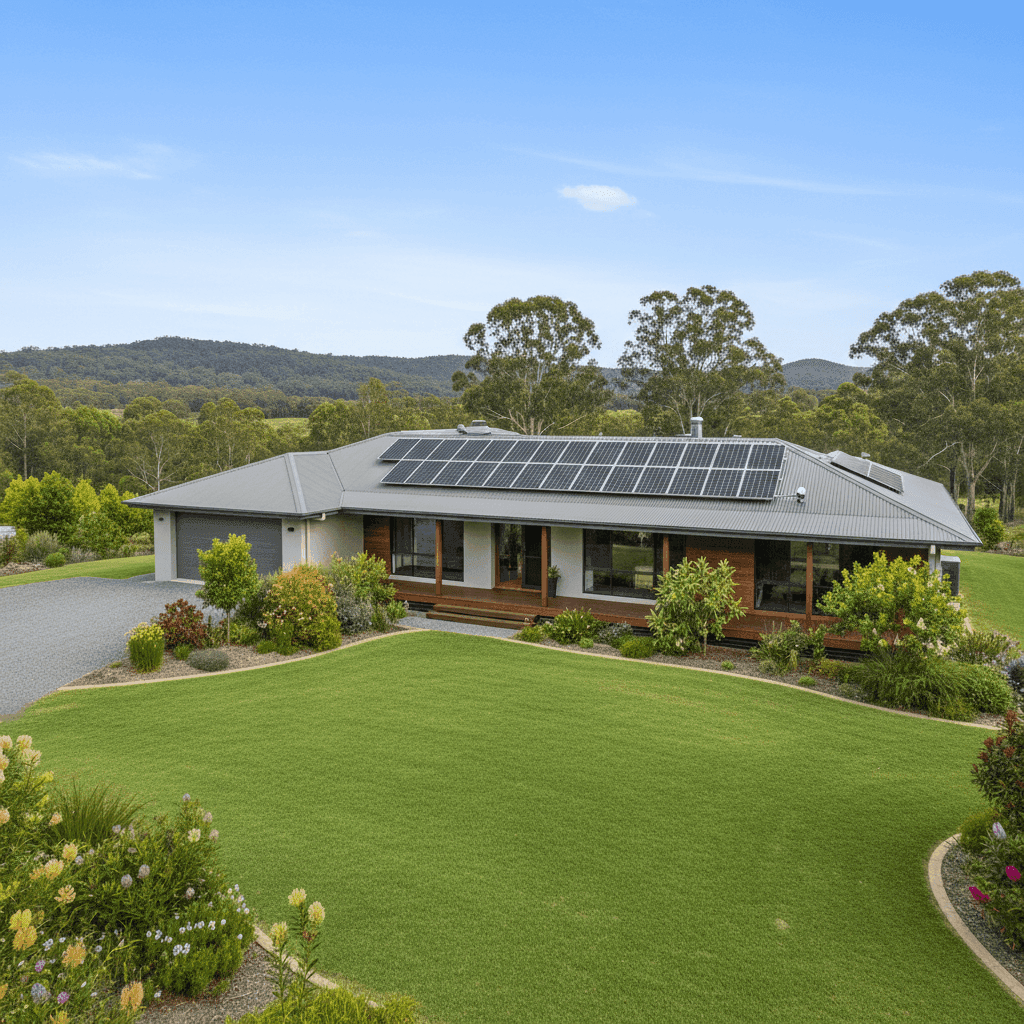
Nestled in the hinterland of the Sunshine Coast, Mooloolah Valley is a leafy, semi-rural community that attracts families and lifestyle seekers alike. Properties here tend to be generous in size, and this five-bedroom, three-bathroom free-standing home — built in 2018 and sitting on a slab foundation — is a fine example of modern regional living. But what does it actually cost to insure a home like this, and is the quoted premium a good deal? Let's break it down.
---
Is This Quote Fair?
The annual premium for this home and contents policy comes in at $2,970 per year (or $285 per month), covering a building sum insured of $994,000 and contents valued at $67,000. Both the building and contents excess are set at $1,000.
Our price rating for this quote is FAIR — Around Average, which reflects where it sits relative to comparable properties in the area. Within the Mooloolah Valley suburb (postcode 4553), quotes range considerably:
| Benchmark | Premium |
|---|---|
| 25th percentile (cheaper end) | $2,837/yr |
| This quote | $2,970/yr |
| Suburb average | $4,279/yr |
| Suburb median | $3,907/yr |
| 75th percentile (pricier end) | $5,330/yr |
At $2,970, this quote sits just above the 25th percentile — meaning roughly 75% of comparable quotes in the suburb are more expensive. That's a solid outcome. The "Fair" rating acknowledges it's not the cheapest possible result, but it's meaningfully below both the suburb average and median, which suggests genuine value.
It's worth noting that insurance pricing is highly individualised. Factors like the specific insurer, chosen cover limits, optional extras, and the policyholder's claims history all influence the final figure. A quote at this level, for a well-appointed five-bedroom home with above-average fittings, is a reasonable outcome.
---
How Mooloolah Valley Compares
To put this quote in broader context, it helps to look at Mooloolah Valley insurance data alongside Queensland state figures and national benchmarks.
| Geography | Average Premium | Median Premium |
|---|---|---|
| Mooloolah Valley (4553) | $4,279/yr | $3,907/yr |
| Sunshine Coast LGA | $7,249/yr | — |
| Queensland | $9,129/yr | $3,903/yr |
| Australia (national) | $5,347/yr | $2,764/yr |
A few things stand out here. Queensland's average premium of $9,129 is extraordinarily high compared to the median of $3,903 — a sign that the state average is being pulled upward by a relatively small number of very expensive policies, likely in high-risk cyclone or flood zones further north. Mooloolah Valley, sitting outside designated cyclone risk areas, benefits from a more moderate risk profile.
The national median of $2,764 is actually slightly below this quote, which is why the "Fair" rating applies rather than "Great Value." Homeowners across Australia with smaller or lower-value properties naturally attract lower premiums. Given the size and rebuild value of this property, $2,970 is a competitive result.
The Sunshine Coast LGA average of $7,249 is notably elevated, which likely reflects the diversity of properties across the broader region — including coastal and flood-prone areas that carry significantly higher risk loadings.
---
Property Features That Affect Your Premium
Several characteristics of this home have a direct bearing on what insurers charge.
Steel/Colorbond Roof Colorbond roofing is generally viewed favourably by insurers. It's durable, fire-resistant, and performs well in storm conditions — all of which can help moderate premiums compared to older tile or timber roofing.
Slab Foundation A concrete slab foundation is considered low-risk from an underwriting perspective. It offers structural stability and reduces exposure to subsidence or pest-related damage that can affect homes on stumps or piers.
Timber and Laminate Flooring While attractive and popular in modern builds, timber and laminate flooring can be more susceptible to water damage than tiles. Insurers may factor this in when assessing contents and building risk, particularly in areas that experience heavy rainfall.
Above-Average Fittings Quality This property's above-average fittings — think quality kitchen appliances, premium fixtures, and higher-end finishes — contribute to the relatively high building sum insured of $994,000. Accurate sum insured figures are critical: underinsuring a well-appointed home can leave you significantly out of pocket in the event of a total loss.
Solar Panels Solar panels add value to a home but also add complexity to an insurance claim. Most home and contents policies do cover rooftop solar systems as part of the building, but it's worth confirming this with your insurer and ensuring the replacement value is factored into your sum insured.
Ducted Climate Control Ducted air conditioning systems are a significant fixed asset. As a permanent building fixture, these are typically covered under the building component of a policy — another reason the building sum insured needs to be carefully calculated.
---
Tips for Homeowners in Mooloolah Valley
1. Review your sum insured annually Construction costs have risen sharply in recent years across Queensland. A building sum insured that was accurate in 2022 may no longer reflect the true cost to rebuild in 2025–26. Use a building cost calculator or speak with a quantity surveyor to ensure you're not underinsured.
2. Confirm solar panel coverage with your insurer Ask your insurer specifically whether your solar panels and inverter are covered under the building policy, and whether that coverage extends to accidental damage, storm damage, and power surge. Not all policies treat solar the same way.
3. Shop around — even if your current rate seems reasonable This quote is competitive, but the insurance market changes constantly. Running a comparison every 12 months at renewal time is one of the simplest ways to ensure you're not paying more than necessary. The spread between the 25th percentile ($2,837) and 75th percentile ($5,330) in Mooloolah Valley shows just how much prices can vary for similar properties.
4. Consider your contents valuation carefully A contents value of $67,000 may be appropriate for this property, but it's easy to underestimate — especially in a five-bedroom home with above-average fittings. Walk through each room and itemise your belongings, including electronics, clothing, furniture, and outdoor equipment. Many homeowners are surprised how quickly the total adds up.
---
Compare Your Home Insurance with CoverClub
Whether you're renewing your policy or insuring a new property, CoverClub makes it easy to see how your quote stacks up. We aggregate real premium data from across Australia so you can make an informed decision with confidence. Get a home insurance quote today and find out where you stand.