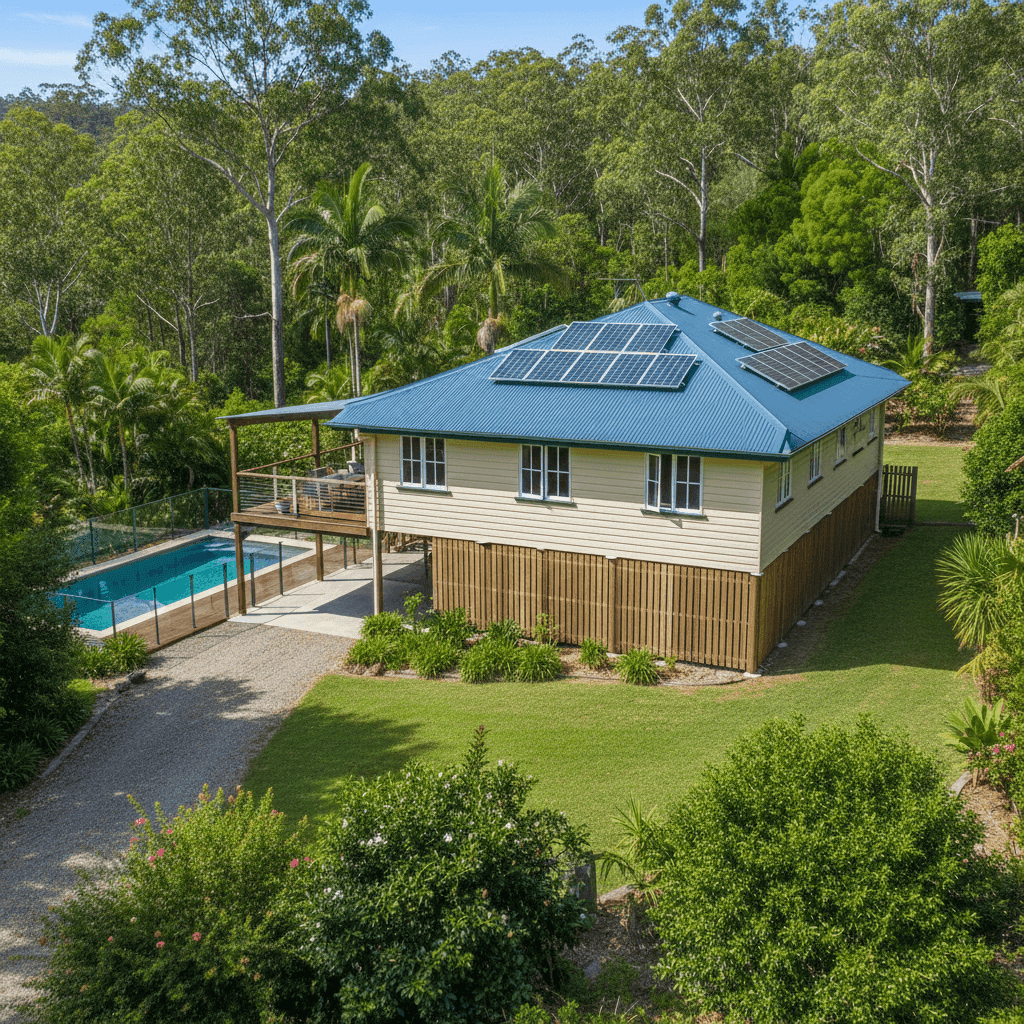
Nestled in the hinterland of the Sunshine Coast, Mooloolah Valley is a leafy, semi-rural community that attracts families and lifestyle seekers alike. If you own a free standing home here — particularly a weatherboard property on poles — you'll know that insuring it comes with its own set of considerations. This article breaks down a real home and contents insurance quote for a 4-bedroom, 2-bathroom home in Mooloolah Valley (postcode 4553), helping you understand whether the premium stacks up and what's driving the cost.
---
Is This Quote Fair?
The quote in question comes in at $6,436 per year (or $610/month) for combined home and contents cover, with a building sum insured of $894,000 and contents valued at $201,000. Both the building and contents excess are set at $500.
Based on our pricing analysis, this quote is rated Expensive — above average for the area. To put that in perspective:
- The suburb average for Mooloolah Valley is $4,279/yr
- The suburb median sits at $3,907/yr
- The 75th percentile — meaning only 25% of quotes are higher — is $5,330/yr
At $6,436, this quote sits above the 75th percentile for the suburb, meaning the vast majority of comparable properties in Mooloolah Valley are being quoted less. That's a meaningful gap worth investigating before you commit to a policy.
That said, context matters. The QLD state average is a hefty $9,129/yr (though the median is much lower at $3,903/yr, indicating the average is skewed by high-risk coastal and cyclone-prone properties). Compared to the state average, this quote looks more reasonable — but the median tells a more honest story for a non-cyclone-risk area like Mooloolah Valley.
At the national level, the average premium is $5,347/yr and the median is $2,764/yr. Again, this quote exceeds both figures, reinforcing the "expensive" rating.
---
How Mooloolah Valley Compares
Understanding where your suburb sits relative to broader benchmarks is key to knowing whether you're overpaying. Here's a snapshot:
| Benchmark | Premium |
|---|---|
| This Quote | $6,436/yr |
| Mooloolah Valley suburb average | $4,279/yr |
| Mooloolah Valley suburb median | $3,907/yr |
| QLD state average | $9,129/yr |
| QLD state median | $3,903/yr |
| National average | $5,347/yr |
| National median | $2,764/yr |
| Sunshine Coast LGA average | $7,249/yr |
A few things stand out here. The Sunshine Coast LGA average of $7,249/yr is notably higher than the Mooloolah Valley suburb average, suggesting that coastal and more exposed parts of the Sunshine Coast are pulling the LGA figure up. Mooloolah Valley, being inland and hinterland, generally benefits from lower flood and storm surge risk compared to beachside suburbs — yet this particular quote still lands above the local norm.
The spread between the 25th percentile ($2,837/yr) and 75th percentile ($5,330/yr) is substantial, which tells us there's significant variability in what insurers are charging for properties in this postcode. With only 28 quotes in the sample, individual property characteristics — like construction type, sum insured, and features — can have an outsized effect on where a quote lands.
---
Property Features That Affect Your Premium
Several characteristics of this property are likely contributing to a higher-than-median premium. Here's what insurers are paying close attention to:
Weatherboard Timber Construction
Weatherboard wood external walls are considered a higher-risk building material by most insurers. Timber is more susceptible to fire, termite damage, and general deterioration compared to brick veneer or double brick. This alone can significantly lift a premium.
Steel/Colorbond Roof
On the positive side, a Colorbond steel roof is generally viewed favourably — it's durable, low-maintenance, and performs well in storms. This may offer a slight offset to the timber wall risk.
Pole/Stump Foundation (Elevated)
The property sits on a pole foundation, elevated by less than 1 metre. While elevated homes (classic Queenslanders) can have better flood resilience in some scenarios, they also introduce structural complexity that insurers factor into their pricing. The underfloor space also requires coverage consideration.
Timber and Laminate Flooring
Timber flooring adds to the replacement cost calculation and can be expensive to repair or replace following water or fire damage. This contributes to a higher building sum insured and, in turn, a higher premium.
Swimming Pool
The presence of a pool adds liability exposure and increases the overall replacement value of the property. Most insurers will factor pool infrastructure into the building sum insured.
Solar Panels
Solar panels are now a standard feature on many Australian homes, but they do add to the insured value of the building. Damage from hail, storms, or fire can be costly to rectify, and insurers price accordingly.
High Building Sum Insured
At $894,000, the building sum insured is substantial. This reflects the cost to rebuild a 235 sqm weatherboard home on poles — a construction type that can be more expensive to rebuild than standard brick homes due to specialist labour and materials.
---
Tips for Homeowners in Mooloolah Valley
If you're looking to get better value on your home insurance without compromising on cover, here are some practical steps worth considering:
- Shop around using a comparison tool. With quotes ranging from $2,837 to well above $5,330 in this postcode alone, the difference between insurers can be thousands of dollars per year. Get a quote at CoverClub to see how multiple providers price your specific property.
- Review your sum insured carefully. Underinsurance is a real risk, but overinsurance means you're paying more than necessary. Use a building cost calculator to verify that $894,000 accurately reflects your home's rebuild cost — not its market value.
- Consider your excess level. Both the building and contents excess on this policy are set at $500. Opting for a higher excess (e.g., $1,000 or $2,500) can meaningfully reduce your annual premium. Just make sure you can comfortably cover that amount if you need to make a claim.
- Maintain your property proactively. Weatherboard homes require regular upkeep — repainting, checking for rot, and treating for termites. Insurers may ask about the condition of your home, and a well-maintained property can support a better risk profile. Some insurers also offer discounts for security systems or fire-rated upgrades.
---
Ready to Find a Better Deal?
Whether this quote is right for you depends on your individual circumstances — but one thing is clear: there's meaningful room to compare. At CoverClub, we make it easy to benchmark your premium against real quotes from across Australia. Start comparing home insurance quotes today and make sure you're not leaving money on the table.
For more data on insurance pricing in your area, explore the Mooloolah Valley suburb stats, browse QLD-wide insurance trends, or check out national home insurance benchmarks.