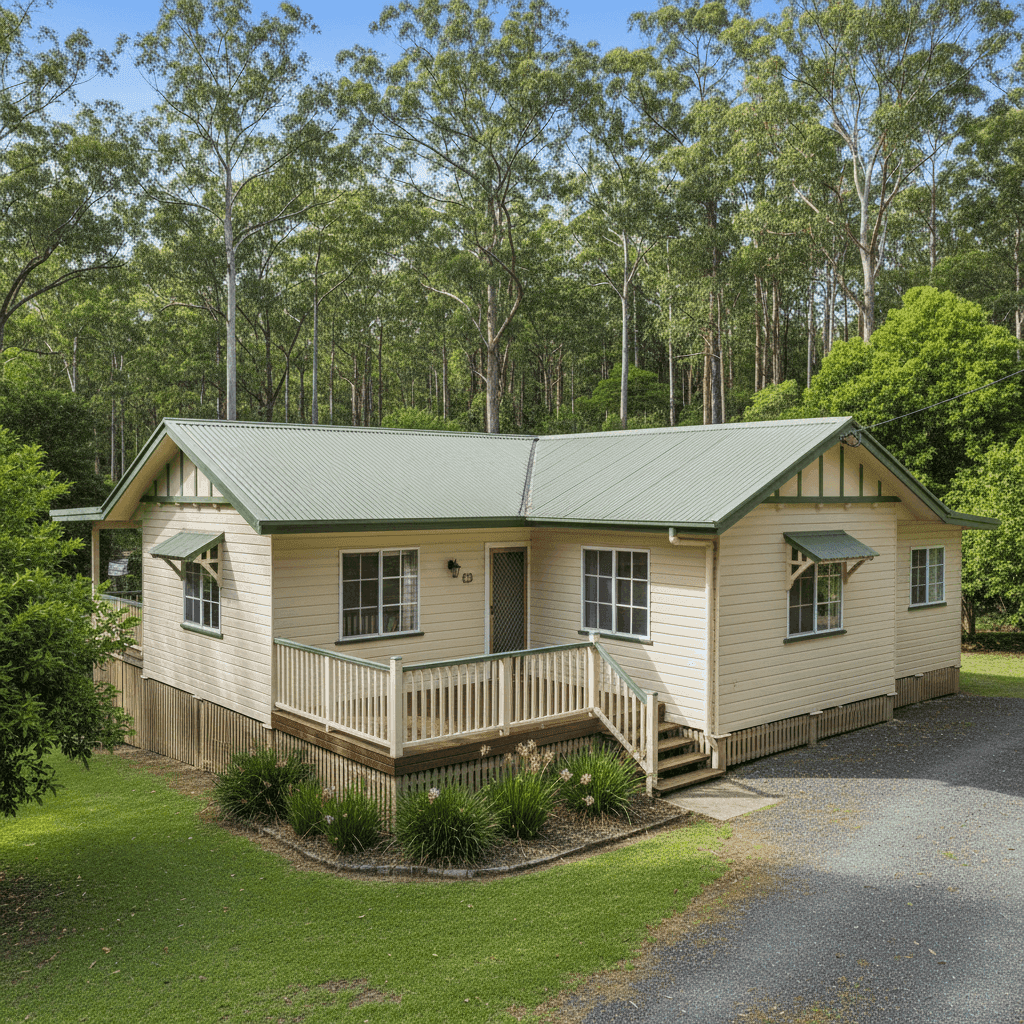
Nestled in the hinterland of the Sunshine Coast, Mooloolah Valley is a quiet, semi-rural community that attracts homeowners who value space, greenery, and a relaxed lifestyle. But like any Queensland property, insuring a free standing home here comes with its own set of considerations — from the age of the dwelling to the local risk profile. This article breaks down a real home and contents insurance quote for a 3-bedroom, 2-bathroom weatherboard home in Mooloolah Valley (postcode 4553), and puts the numbers into context so you can make a confident, informed decision.
---
Is This Quote Fair?
The quote in question comes in at $3,460 per year (or $339 per month) for combined home and contents cover, with a building sum insured of $693,000 and contents valued at $82,000. Both the building and contents excess are set at $1,000.
Our pricing engine has rated this quote as Fair — Around Average, and the data backs that up. Within the Mooloolah Valley suburb, the average premium sits at $4,279 per year and the median is $3,907 per year, based on a sample of 28 quotes. At $3,460, this policy is tracking meaningfully below both the suburb average and median — a positive sign for the homeowner.
That said, "fair" doesn't necessarily mean "the best available." The suburb's 25th percentile is $2,837 per year, which means roughly a quarter of comparable properties in the area are being insured for less. There's still room to explore, and shopping around could potentially save hundreds of dollars annually.
---
How Mooloolah Valley Compares
One of the most striking aspects of this quote is how it stacks up against broader benchmarks. Queensland as a whole carries some of the highest home insurance costs in the country — largely due to the state's exposure to cyclones, flooding, and severe storms. The QLD state average premium is a steep $9,129 per year, though this figure is heavily skewed by high-risk coastal and far-north Queensland postcodes. The QLD median — a more reliable measure — is $3,903 per year, which is almost identical to the Mooloolah Valley median.
At the national level, the average premium is $5,347 per year, while the national median is $2,764 per year. The fact that this quote sits above the national median but well below the national average is consistent with a property in a moderate-risk, semi-rural area.
Within the Sunshine Coast LGA, the average premium is $7,249 per year — significantly higher than what this Mooloolah Valley homeowner is paying. Much of that LGA average is driven by coastal suburbs with greater storm surge, flood, and wind exposure. Mooloolah Valley, being inland and hinterland-based, generally benefits from a more favourable risk profile than beachside suburbs.
You can explore detailed pricing data for this postcode on the Mooloolah Valley suburb stats page.
| Benchmark | Premium |
|---|---|
| This Quote | $3,460/yr |
| Suburb Average (4553) | $4,279/yr |
| Suburb Median (4553) | $3,907/yr |
| Suburb 25th Percentile | $2,837/yr |
| Sunshine Coast LGA Average | $7,249/yr |
| QLD State Average | $9,129/yr |
| QLD State Median | $3,903/yr |
| National Average | $5,347/yr |
| National Median | $2,764/yr |
---
Property Features That Affect Your Premium
Insurance underwriters assess dozens of variables when pricing a policy. Here's how the specific characteristics of this property influence the premium:
Weatherboard Timber Walls
Weatherboard wood construction is common in older Queensland homes and adds a degree of fire and impact risk compared to brick or rendered masonry. Timber walls can be more susceptible to damage from storms, pests, and moisture — factors that insurers weigh carefully. Homeowners with weatherboard properties may find premiums slightly higher than equivalent brick homes.
Steel/Colorbond Roof
Colorbond roofing is generally viewed favourably by insurers. It's durable, lightweight, and performs well in high-wind events. It's also resistant to fire embers, which is a consideration in semi-rural areas. This roof type can have a moderating effect on premiums compared to older tile or corrugated iron roofs.
Construction Year: 1990
At around 35 years old, this home is mature but not ancient. Properties from this era were typically built to reasonable standards, though they may not meet the most current building codes. Ageing plumbing, wiring, and structural elements can incrementally increase risk in the eyes of insurers.
Slightly Elevated Foundation (Less Than 1m)
The property is elevated by less than one metre on a slab foundation. While this provides minimal flood mitigation compared to a fully raised Queenslander, it does offer a small buffer against minor inundation. Slab foundations are common and generally well-understood by insurers.
Timber/Laminate Flooring
Timber and laminate floors are susceptible to water damage, which can be costly to repair or replace. This is a factor in contents and building claims alike, and may subtly influence pricing.
Ducted Climate Control
The presence of a ducted climate control system adds to the building's replacement value and is factored into the sum insured. It's worth ensuring the $693,000 building sum insured adequately reflects the cost to rebuild, including this system.
No Pool, No Solar Panels
The absence of a pool removes a liability risk that can increase premiums. Similarly, no solar panels means no additional complexity around electrical systems or roof penetrations — both simplifying factors for insurers.
---
Tips for Homeowners in Mooloolah Valley
1. Review Your Sum Insured Regularly
Construction costs have risen sharply in recent years. A $693,000 building sum insured may be appropriate today, but it's worth reassessing annually — particularly for a weatherboard home where labour and materials can be expensive. Underinsurance is one of the most common and costly mistakes homeowners make.
2. Consider Increasing Your Excess to Lower Premiums
Both the building and contents excess on this policy are set at $1,000. Opting for a higher excess — say $2,000 or $2,500 — can meaningfully reduce your annual premium. This works well for homeowners who have an emergency fund and are primarily seeking cover for major events rather than minor claims.
3. Check for Bundling Discounts
Many insurers offer discounts when you combine home and contents cover under a single policy, which this quote already does. However, it's also worth asking whether adding car insurance or other products to the same provider yields further savings.
4. Compare Quotes at Renewal Time
The insurance market is competitive, and your current insurer's renewal price is rarely the best available. Given that the suburb's 25th percentile sits at $2,837 per year, there's a reasonable chance that comparing quotes could uncover a materially cheaper option without sacrificing cover quality.
---
Ready to Compare?
Whether you're renewing an existing policy or insuring a new property, comparing quotes is the single most effective way to ensure you're not overpaying. At CoverClub, we make it easy to see what different insurers would charge for your specific home — in minutes, not hours.
Get a home insurance quote for your Mooloolah Valley property →