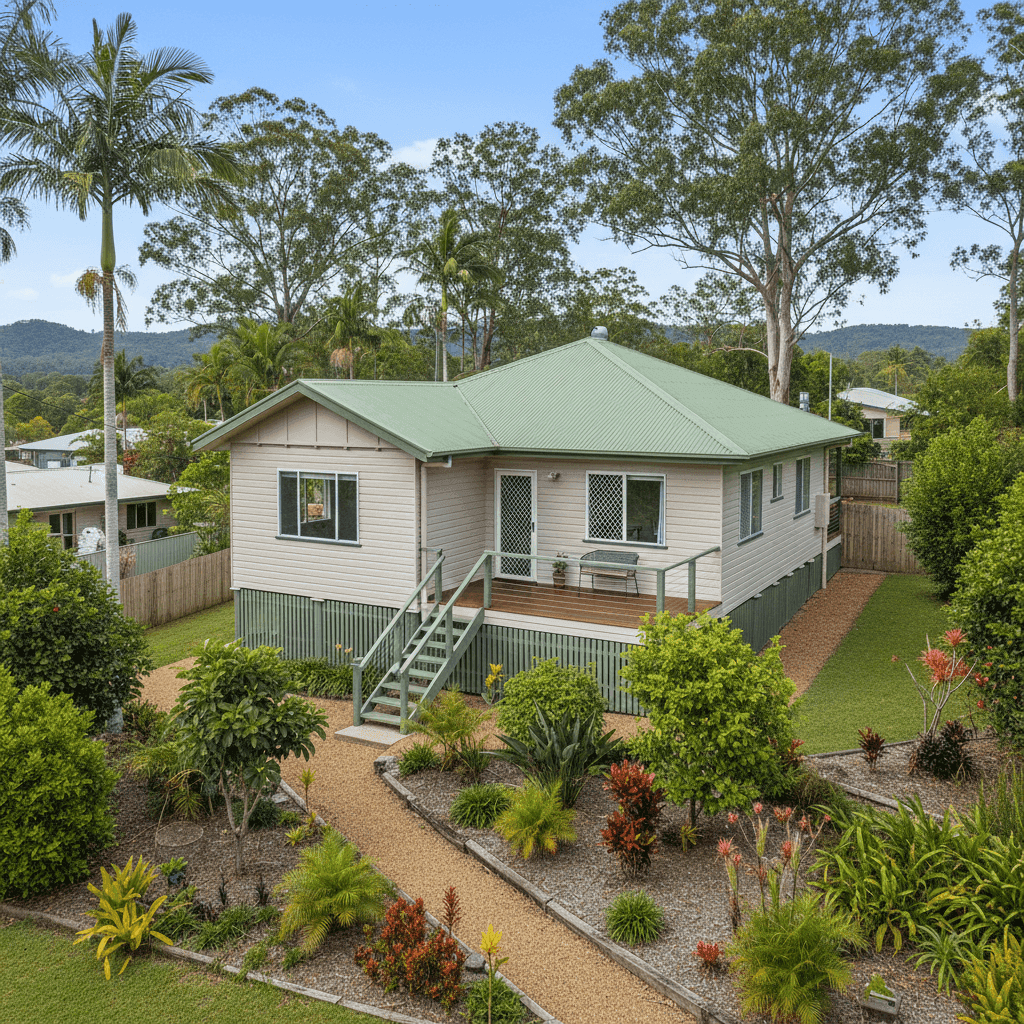
Nestled in the hinterland of the Sunshine Coast, Mooloolah Valley is a relaxed, semi-rural community known for its leafy streets, acreage properties, and a strong sense of community. If you own a free standing home here, understanding what you should be paying for home and contents insurance — and whether your current quote stacks up — is an important part of protecting one of your biggest assets.
This article breaks down a real insurance quote for a 3-bedroom, 2-bathroom free standing home in Mooloolah Valley (postcode 4553), comparing it against local, state, and national benchmarks to help you make a more informed decision.
---
Is This Quote Fair?
The quote in question comes in at $3,405 per year (or $333 per month) for combined home and contents cover, with a building sum insured of $742,000 and contents valued at $72,000. Both the building and contents excess are set at $1,000.
Our price rating for this quote is FAIR — Around Average, which is a solid result given the local pricing landscape. To put that in context:
- The suburb average for Mooloolah Valley is $5,676/yr, and the median sits at $5,180/yr
- This quote falls below the 25th percentile for the suburb, meaning it's cheaper than at least 75% of comparable quotes we've seen in the area
- The suburb's 25th percentile is $3,326/yr — so this quote sits just above the most competitive end of the local market
In short, this is a genuinely competitive result for Mooloolah Valley. Homeowners paying closer to the suburb average of $5,676 could be significantly overpaying. You can explore more local pricing data on the Mooloolah Valley insurance stats page.
---
How Mooloolah Valley Compares
To truly appreciate where this quote lands, it helps to zoom out and look at the broader picture.
| Benchmark | Average Premium | Median Premium |
|---|---|---|
| Mooloolah Valley (suburb) | $5,676/yr | $5,180/yr |
| Sunshine Coast LGA | $7,249/yr | — |
| Queensland (state) | $4,547/yr | $3,931/yr |
| National | $2,965/yr | $2,716/yr |
A few things stand out here. First, Mooloolah Valley premiums are notably higher than the Queensland state average, which itself sits well above the national figure. This is a pattern common across much of regional and coastal Queensland, where insurers price in elevated risk from weather events, bushfire exposure, and ageing housing stock.
Second, the Sunshine Coast LGA average of $7,249/yr is striking — suggesting that while Mooloolah Valley is already above the state norm, some parts of the Sunshine Coast region attract even steeper premiums, likely driven by coastal flood and storm surge risks in lower-lying suburbs.
At $3,405/yr, this quote is 25% below the Queensland state average and roughly 40% below the Mooloolah Valley suburb average — a meaningful saving that underscores the value of shopping around.
Browse Queensland home insurance statistics or check out national home insurance benchmarks to see how your own situation compares.
---
Property Features That Affect Your Premium
Every property is different, and insurers weigh up a range of characteristics when calculating your premium. Here's how the key features of this particular home are likely influencing the price:
Weatherboard Timber Walls
Weatherboard construction is common in Queensland's older housing stock, and while it has plenty of charm, it's generally considered a higher risk by insurers compared to brick veneer or double brick. Timber is more susceptible to fire, moisture damage, and termite activity — all factors that can push premiums upward. Keeping your weatherboards well-maintained and treated can help manage this risk.
Steel / Colorbond Roof
This is a positive for insurability. Colorbond roofing is durable, low-maintenance, and performs well in high-wind conditions. Compared to terracotta or concrete tiles, steel roofing is less likely to crack or dislodge during storms, which insurers generally view favourably.
Slab Foundation
A concrete slab foundation offers good structural stability and is less susceptible to movement than some alternative foundation types. Combined with the property being only slightly elevated (less than 1 metre), this suggests a relatively low flood-inundation risk for the structure itself — a meaningful consideration in Queensland.
Timber / Laminate Flooring
Flooring type influences the contents and building replacement cost calculation. Timber and laminate floors can be expensive to repair or replace following water damage, which is worth keeping in mind when setting your sum insured.
Construction Year: 1990
Homes built around this era predate some of the more stringent building codes introduced after Cyclone Larry (2006) and other significant weather events. While the 1990 build date isn't a major red flag, it's worth ensuring the home has been well-maintained and that any renovations meet current standards — both for safety and to avoid complications at claim time.
No Pool, Solar, or Cyclone Risk
The absence of a pool and solar panels simplifies the risk profile and removes some common sources of claims and premium loading. The property also falls outside a designated cyclone risk area, which is a meaningful premium advantage for a Queensland home.
---
Tips for Homeowners in Mooloolah Valley
Whether you're reviewing an existing policy or shopping for the first time, here are some practical steps to help you get the right cover at the right price.
1. Don't underinsure — but don't overinsure either With a building sum insured of $742,000, it's important this figure reflects the true cost to rebuild (not the market value of the property). Use a building cost calculator or get a professional assessment to make sure you're not left short at claim time — or paying premiums on an inflated figure.
2. Review your contents figure annually $72,000 in contents cover is a reasonable starting point, but the value of your belongings can creep up over time. Do a quick audit each year — especially after major purchases — to ensure your policy keeps pace.
3. Ask about discounts for security and safety features Many insurers offer premium reductions for smoke alarms, deadlocks, security screens, and monitored alarm systems. If your home has any of these, make sure your insurer knows about them.
4. Compare quotes before renewing The single most effective way to avoid overpaying is to shop around at renewal time. Given that Mooloolah Valley premiums vary enormously — from around $3,326 at the 25th percentile to $7,650 at the 75th percentile — the difference between a good deal and a poor one can be thousands of dollars per year.
---
Compare Home Insurance Quotes in Mooloolah Valley
Whether your current premium feels too high or you're simply not sure if you're getting a fair deal, CoverClub makes it easy to find out. We aggregate quotes from across the market so you can see exactly where your premium sits — and whether there's a better option available.
Get a home insurance quote for your Mooloolah Valley property and see how your current cover compares in minutes.