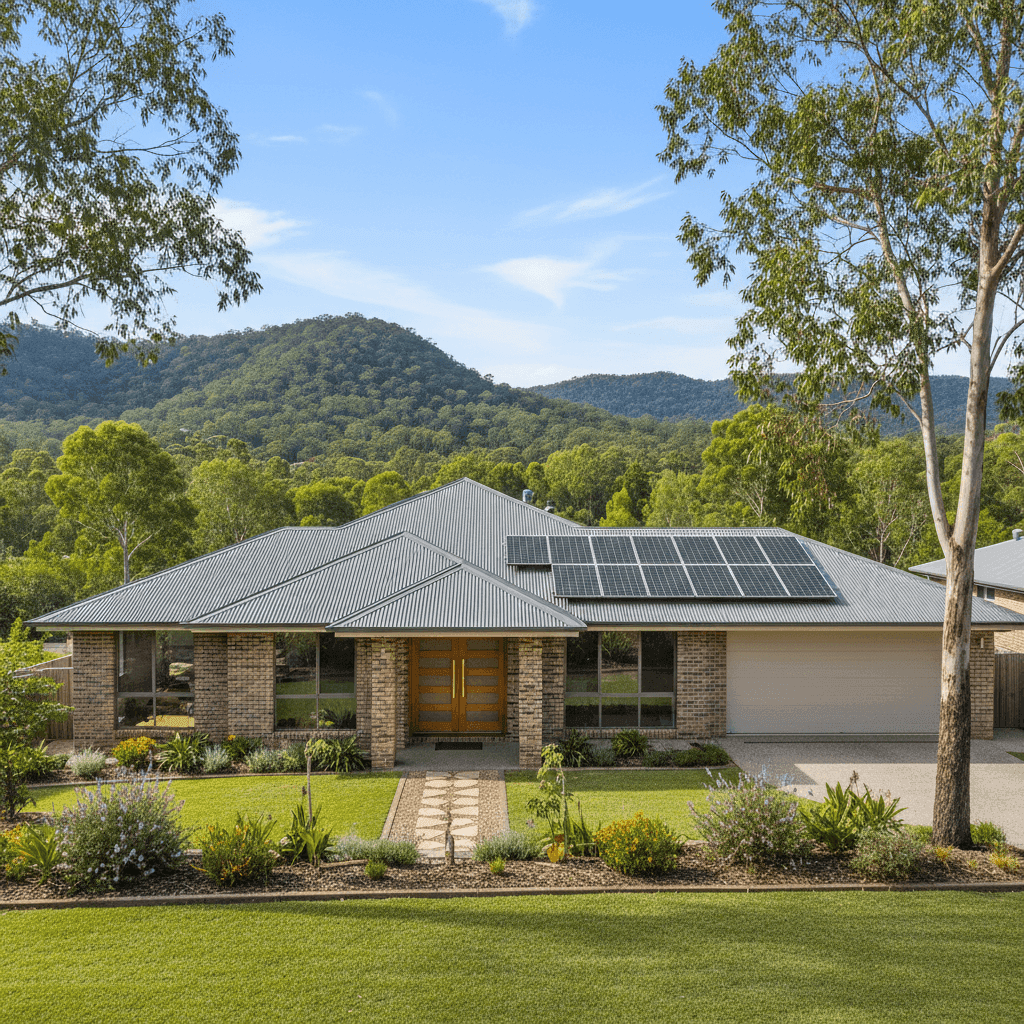
Nestled in the hinterland of the Sunshine Coast, Mooloolah Valley is a peaceful semi-rural suburb that blends lifestyle appeal with genuine liveability. For owners of free standing homes in this area, understanding what a fair home insurance premium looks like — and what drives it — can make a real difference to your household budget. This article breaks down a recent home and contents insurance quote for a four-bedroom property in Mooloolah Valley (postcode 4553) and puts it in context against local, state, and national benchmarks.
---
Is This Quote Fair?
The quote in question comes in at $2,992 per year (or $293 per month) for combined home and contents cover, with a building sum insured of $1,038,000 and contents valued at $74,000. Both the building and contents excess are set at $1,000.
Our price rating for this quote is FAIR — Around Average, which is a solid result for a property of this size and specification. Here's why that matters: the suburb's average premium sits at $4,279 per year, meaning this quote comes in roughly $1,287 below the Mooloolah Valley average. It also sits just above the suburb's 25th percentile of $2,837 per year, indicating the policyholder is securing coverage in the more competitive end of the local pricing spectrum without sacrificing meaningful protection.
In practical terms, a "Fair" rating means you're not overpaying, but there may still be room to sharpen the price further with a comparison. It's worth remembering that premium ratings reflect value relative to the market — a lower premium isn't always better if it comes with reduced coverage, higher excesses, or exclusions that matter.
---
How Mooloolah Valley Compares
To put this quote in proper perspective, it helps to zoom out and look at the broader data picture. Based on 28 quotes collected for the Mooloolah Valley area:
| Benchmark | Premium |
|---|---|
| This quote | $2,992/yr |
| Suburb 25th percentile | $2,837/yr |
| Suburb median | $3,907/yr |
| Suburb average | $4,279/yr |
| Suburb 75th percentile | $5,330/yr |
| LGA (Sunshine Coast) average | $7,249/yr |
| QLD state average | $9,129/yr |
| QLD state median | $3,903/yr |
| National average | $5,347/yr |
| National median | $2,764/yr |
A few things stand out here. The QLD state average of $9,129 per year is dramatically higher than the state median of $3,903 — a gap that reflects the outsized influence of high-risk coastal and cyclone-prone areas pulling the average upward. Mooloolah Valley, sitting in the hinterland and outside designated cyclone risk zones, benefits from a more moderate risk profile than many other Queensland postcodes.
The national average of $5,347 also skews high for similar reasons, while the national median of $2,764 is actually slightly below this quote — suggesting the property's above-average construction quality and higher-than-typical sum insured are reasonable contributors to the premium level.
The Sunshine Coast LGA average of $7,249 is notably elevated compared to Mooloolah Valley's suburb average, likely reflecting the higher risk and property values associated with coastal suburbs in the same council area.
---
Property Features That Affect Your Premium
Several characteristics of this property play a meaningful role in how insurers price the risk:
Brick Veneer Walls & Colorbond Roof Brick veneer construction is well regarded by insurers for its durability and fire resistance. Combined with a steel Colorbond roof — one of the most resilient roofing materials available in Australia — this property presents a lower structural risk profile than homes built with timber weatherboard or fibrous cement cladding. These materials can contribute to more competitive premiums.
Slab Foundation A concrete slab foundation is a standard and reliable base for modern construction. It tends to be less susceptible to subsidence and moisture-related issues compared to older pier-and-beam foundations, which is a positive signal for underwriters.
2022 Construction Being a relatively new build (constructed in 2022), this home benefits from compliance with modern Australian building codes, which have strengthened significantly in recent decades. Newer homes generally attract lower premiums due to reduced risk of structural failure, outdated wiring, or ageing plumbing.
Solar Panels The presence of solar panels adds value to the property but also introduces a modest additional risk consideration — panels can be damaged by hail or severe weather, and their replacement cost needs to be factored into the sum insured. Homeowners should confirm with their insurer whether solar panels are covered under the building policy and to what limit.
Ducted Climate Control Ducted air conditioning systems are a fixed installation and are typically covered under building insurance. However, they can be expensive to repair or replace, so it's worth verifying the policy covers mechanical breakdown or storm damage to these systems.
Above-Average Fittings Quality With above-average fittings throughout, the cost to rebuild or repair this home to its current standard is higher than a comparably sized home with standard finishes. This is appropriately reflected in the $1,038,000 building sum insured, which aligns with the 214 sqm floor area and the quality of the fit-out.
No Pool, No Cyclone Risk Zone The absence of a swimming pool removes a common liability and maintenance risk factor. And being outside a designated cyclone risk zone is a significant premium advantage for a Queensland property — cyclone cover can dramatically increase premiums for coastal and far-north Queensland homes.
---
Tips for Homeowners in Mooloolah Valley
1. Review your sum insured annually Construction costs in South East Queensland have risen considerably in recent years. A building sum insured set even two or three years ago may no longer reflect the true cost to rebuild. Use a quantity surveyor or your insurer's rebuild calculator to verify your coverage remains adequate — underinsurance is one of the most common and costly mistakes homeowners make.
2. Confirm solar panel coverage If your panels are damaged in a storm or hailstorm, you'll want to know exactly what your policy covers. Ask your insurer specifically whether solar panels, inverters, and associated wiring are included under the building sum insured, and whether there are any sub-limits that apply.
3. Compare quotes before renewal Even a "Fair" rating means there may be better value available. Insurers reprice risk regularly, and loyalty doesn't always translate into savings. Running a comparison at renewal — or even mid-term if you have the flexibility — can surface more competitive options without compromising your level of cover.
4. Consider bundling building and contents This quote already combines home and contents cover, which is often the most cost-effective approach. If you're currently holding separate policies with different providers, consolidating them may unlock a multi-policy discount and simplify your claims experience.
---
Compare Your Quote Today
Whether you're reviewing your current policy or shopping for cover on a new property, CoverClub makes it easy to see how your premium stacks up. Get a home insurance quote now and access real comparison data for Mooloolah Valley and beyond — so you can make a confident, informed decision about your cover.