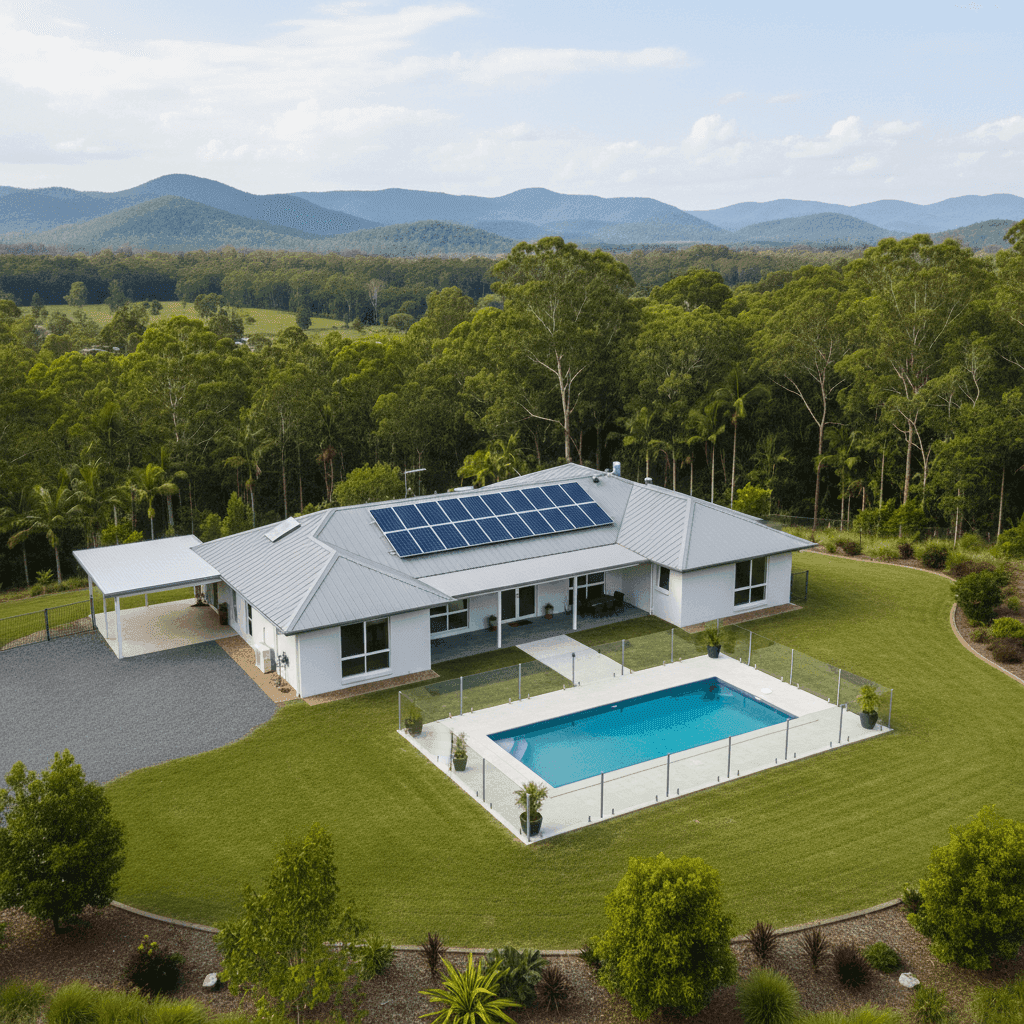
Mooloolah Valley is a quiet, semi-rural pocket of the Sunshine Coast — the kind of place where acreage blocks, leafy surrounds, and a relaxed Queensland lifestyle attract families looking for space without straying too far from the coast. But owning a freestanding home here comes with real insurance considerations, and understanding what drives your premium can save you hundreds of dollars a year.
This article breaks down a recent home and contents insurance quote for a four-bedroom, two-bathroom freestanding home in Mooloolah Valley (postcode 4553), built in 2003, with a building sum insured of $1,604,000 and contents covered for $150,000. The annual premium came in at $7,264 (or $710/month). Here's what that figure really means.
---
Is This Quote Fair?
The short answer: this quote is rated Expensive — above average for the area.
At $7,264 per year, this premium sits well above the suburb average of $4,279 and the suburb median of $3,907. It's also above the 75th percentile for Mooloolah Valley quotes ($5,330), meaning fewer than one in four comparable properties in the area are paying this much.
That said, context matters. The sum insured of $1,604,000 for the building is a significant figure — well above what many homes in the suburb are insured for — and a higher replacement value directly drives a higher premium. A 235 sqm home with standard fittings, a pool, solar panels, and ducted climate control represents a meaningful asset to replace, and insurers price accordingly.
It's also worth noting that the Queensland state average sits at $9,129 per year (though the median is a much lower $3,903, indicating the average is pulled up by high-value or high-risk properties). Compared to the state average, this quote is actually below — which provides some reassurance that the figure, while high for the suburb, isn't out of step with broader Queensland pricing dynamics.
The bottom line: this premium isn't unreasonable given the building sum insured, but there's likely room to shop around and find a more competitive rate for the same level of cover.
---
How Mooloolah Valley Compares
To put the numbers in perspective, here's how premiums in this suburb stack up against broader benchmarks:
| Benchmark | Average Premium | Median Premium |
|---|---|---|
| Mooloolah Valley (4553) | $4,279/yr | $3,907/yr |
| Sunshine Coast LGA | $7,249/yr | — |
| Queensland | $9,129/yr | $3,903/yr |
| National | $5,347/yr | $2,764/yr |
A few things stand out here. First, the Sunshine Coast LGA average of $7,249 is remarkably close to this quote — suggesting that at an LGA level, this premium is actually quite typical. Second, the gap between state averages and medians in Queensland is stark, reflecting the outsized influence of cyclone-prone and flood-affected regions on average figures.
Mooloolah Valley itself has a relatively modest suburb average of $4,279, based on a sample of 28 quotes — a reasonable dataset for a smaller locality. Homeowners here generally enjoy lower premiums than many coastal Queensland suburbs, thanks in part to lower cyclone and storm surge risk. You can explore the full breakdown on the Mooloolah Valley suburb stats page or compare against national home insurance data.
---
Property Features That Affect Your Premium
Several characteristics of this property have a direct bearing on the premium quoted. Understanding these can help you have a more informed conversation with insurers.
Fibro Asbestos External Walls
This is one of the most significant premium drivers for this property. Homes with fibro asbestos cladding are more expensive to insure because any damage — whether from storm, impact, or fire — requires specialised remediation and disposal under strict safety regulations. Repair costs are substantially higher than for brick or weatherboard homes, and insurers reflect this in their pricing.
Steel / Colorbond Roof
On the positive side, a Colorbond steel roof is generally viewed favourably by insurers. It's durable, fire-resistant, and performs well in high-wind conditions. This may help offset some of the premium loading associated with the wall construction.
Slab Foundation
A concrete slab foundation is considered low-risk for subsidence and termite ingress compared to raised timber stumps, which works in the homeowner's favour from an underwriting perspective.
Swimming Pool
Pools add liability exposure and increase the overall replacement cost of the property, contributing to a higher premium. Most insurers include pool infrastructure in the building sum insured, so it's important this is accurately reflected.
Solar Panels
Solar systems are increasingly common on Queensland homes, but they do add to the insured value of the building. Panels, inverters, and associated wiring need to be covered under the building policy — and with a quality system, this can add tens of thousands of dollars to the replacement cost.
Ducted Climate Control
Ducted air conditioning is a fixed building fixture and forms part of the building sum insured. In a 235 sqm home, a full ducted system represents a meaningful replacement cost, particularly if it needs to be reinstalled after a major event.
---
Tips for Homeowners in Mooloolah Valley
1. Review your sum insured carefully A building sum insured of $1,604,000 is substantial. Make sure this figure reflects a genuine estimate of full replacement cost — including demolition, debris removal, and the premium associated with asbestos remediation — rather than market value. Overinsuring pushes your premium up unnecessarily, while underinsuring leaves you exposed.
2. Shop the market annually Insurers adjust their pricing models regularly, and loyalty rarely pays in home insurance. Even if you're happy with your current insurer, getting two or three competing quotes at renewal time is one of the most effective ways to manage costs. CoverClub makes it easy to compare quotes in one place.
3. Ask about asbestos-specific cover Not all policies handle asbestos remediation the same way. When comparing quotes, ask insurers explicitly how they handle claims involving fibro asbestos walls — specifically whether removal and disposal costs are included in your sum insured or treated as an additional benefit.
4. Bundle smartly, but compare separately Home and contents bundling often comes with a discount, but it's worth checking whether the bundled price is actually competitive for both components. Sometimes you'll find better value splitting the covers across two providers — though this adds administrative complexity.
---
Ready to Compare?
Whether this quote is your first or you're shopping at renewal, comparing your options is always worth the effort. Head to CoverClub to get a home and contents insurance quote tailored to your Mooloolah Valley property — and see how much you could save against what you're paying now.