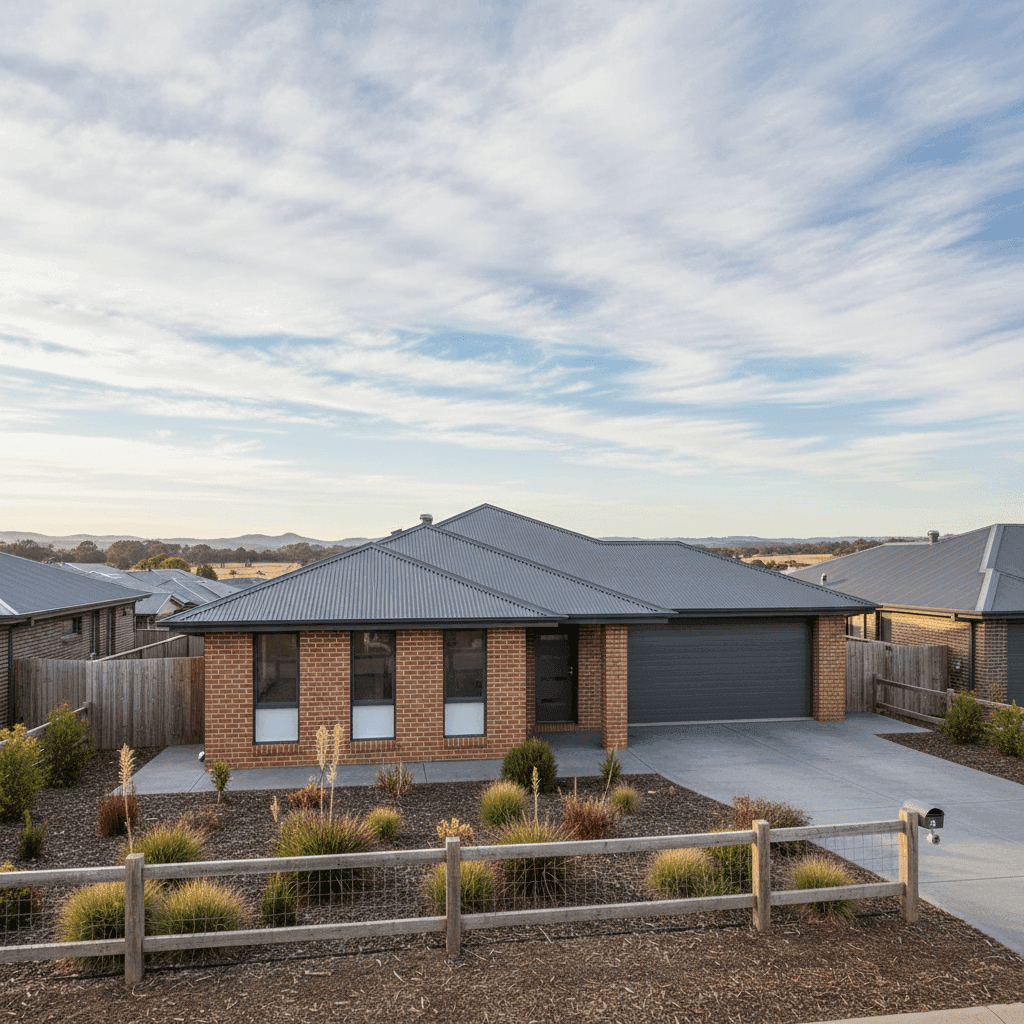
If you own a free standing home in Moonbi, NSW 2353, you're probably curious about what a fair home and contents insurance premium looks like — and whether the quote sitting in your inbox is worth accepting. We've analysed a real quote for a four-bedroom, two-bathroom brick veneer home in Moonbi to help you understand exactly where it sits in the market.
---
Is This Quote Fair?
The short answer: yes — and then some. This quote came in at $2,943 per year (or $301 per month), covering both building and contents with a building sum insured of $806,000 and contents valued at $173,000. Our pricing model rates this as CHEAP, meaning it sits meaningfully below the average for the area.
To put that in context, the suburb average for Moonbi is $3,930 per year, and the median sits at $3,844. That means this quote is roughly $987 cheaper than the average and about $901 below the median — a significant saving for what is a well-specified, mid-sized family home.
Even compared to the 25th percentile of quotes in the suburb (i.e., the cheapest quarter of the market), which sits at $3,473 per year, this quote still comes in lower. In other words, it's not just competitive — it's genuinely at the affordable end of the spectrum for Moonbi homeowners.
---
How Moonbi Compares
Understanding your local pricing context is essential before committing to any policy. Here's how Moonbi stacks up against broader benchmarks:
| Benchmark | Average Premium |
|---|---|
| Moonbi (suburb) | $3,930/yr |
| Tamworth LGA | $4,274/yr |
| New South Wales | $3,801/yr |
| National | $2,965/yr |
A few things stand out here. First, Moonbi's suburb average of $3,930 is actually higher than the NSW state average of $3,801 — suggesting that insurers price this area with a degree of caution, likely reflecting local risk factors such as bushfire exposure and regional weather variability. Second, the Tamworth LGA average of $4,274 is notably elevated, making this quote look even more attractive by comparison.
At the national level, the average sits at $2,965 and the median at $2,716. This quote of $2,943 is essentially in line with national averages — which is a strong outcome for a regional NSW property that would typically attract higher premiums than metro areas.
You can explore more local pricing data on the Moonbi suburb stats page, compare it against all NSW home insurance data, or see where it sits against national benchmarks.
> Note: Suburb comparisons are based on a sample of 16 quotes for the Moonbi 2353 postcode, so while indicative, the data should be interpreted with that sample size in mind.
---
Property Features That Affect Your Premium
Every property is different, and insurers weigh up a range of construction and location factors when calculating your premium. Here's how the key features of this particular home are likely influencing the price:
Brick Veneer Walls Brick veneer is one of the more insurer-friendly external wall types in Australia. It offers solid fire resistance and durability compared to lightweight cladding options, which can translate into lower premiums. It's also a very common construction type in regional NSW, so insurers have a well-established risk profile for it.
Steel/Colorbond Roof A Colorbond steel roof is generally viewed favourably by insurers. It's highly durable, resistant to ember attack (an important consideration in bushfire-prone regions), and less prone to hail damage than some tile alternatives. For a home in the New England tablelands region, this is a practical and insurance-smart choice.
Concrete Slab Foundation Slab foundations are typically considered low-risk from an insurance perspective. They're less susceptible to subsidence and pest-related structural issues compared to raised timber stumps, and they provide a stable base that reduces the likelihood of costly structural claims.
Ducted Climate Control This home includes ducted climate control, which adds to the replacement value of the building. Insurers factor in the cost of replacing fixed systems like ducted air conditioning when calculating building premiums, so it's important that the sum insured of $806,000 accounts for this.
Timber/Laminate Flooring Timber and laminate floors are a common feature in Australian homes and are generally straightforward to price for contents and building cover. They do carry some water damage risk (particularly laminate), so it's worth confirming your policy covers accidental water damage to flooring.
2009 Construction At around 15–16 years old, this home is relatively modern and well within the lifespan where most building systems are still in good condition. Newer builds often attract more competitive premiums than older homes, where ageing wiring, plumbing, and roofing can raise insurer concern.
No Pool or Solar Panels The absence of a swimming pool removes a common liability risk that can push premiums higher. Similarly, no solar panel system means there's no need to factor in replacement costs for rooftop equipment — keeping the sum insured and premium more straightforward.
---
Tips for Homeowners in Moonbi
Whether you're reviewing your current policy or shopping for the first time, here are four practical steps to make sure you're getting the best value:
- Check your building sum insured regularly. Construction costs have risen sharply across regional NSW in recent years. A sum insured of $806,000 for a 214 sqm home works out to roughly $3,766 per sqm — which is on the higher end but may be appropriate given the inclusion of ducted climate control and quality fittings. Use a building cost calculator annually to ensure you're not underinsured.
- Understand your bushfire exposure. Moonbi and the surrounding New England region carry bushfire risk, which is one reason local premiums tend to sit above state averages. Make sure your policy explicitly covers bushfire damage, and consider whether your property's BAL (Bushfire Attack Level) rating has been assessed.
- Review your contents sum insured. A contents value of $173,000 is a reasonable estimate for a four-bedroom home, but it's easy to underestimate. Go room by room and consider electronics, furniture, clothing, appliances, and any high-value items like jewellery or musical instruments that may need to be separately listed.
- Compare quotes before renewing. Insurers frequently adjust their pricing models, and loyalty doesn't always pay. Even if your current premium looks competitive, it's worth running a fresh comparison each year. The $987 gap between this quote and the suburb average is a reminder that the difference between the cheapest and average quote can be substantial.
---
Ready to Compare Home Insurance in Moonbi?
Whether this quote is for your own property or you're simply benchmarking what a fair price looks like in the area, CoverClub makes it easy to compare home and contents insurance options side by side. Get a quote today and see how your premium stacks up against real data from your suburb, your state, and across Australia.