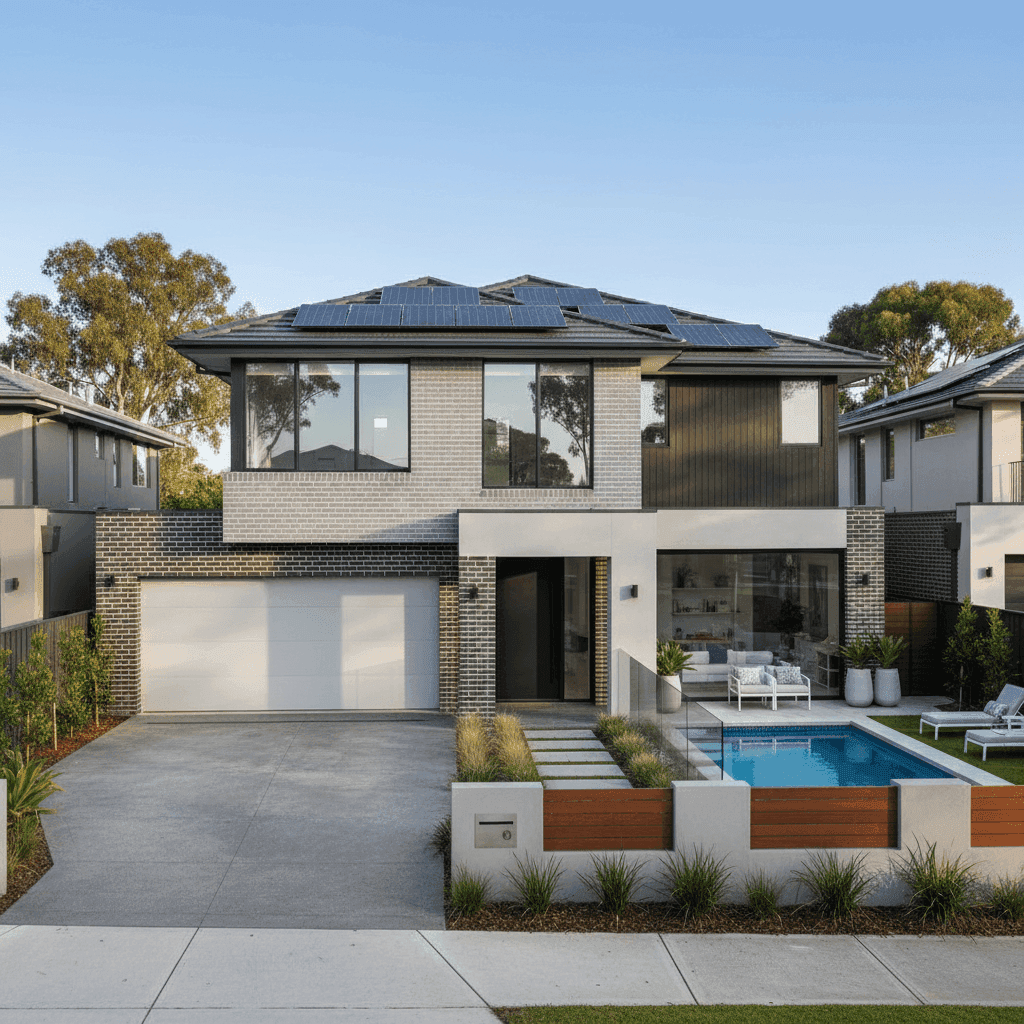
Moonee Ponds is one of Melbourne's most sought-after inner-north-west suburbs — a leafy, well-connected pocket of Victoria that blends period charm with modern living. This analysis looks at a real home insurance quote for a four-bedroom, four-bathroom free standing home in the area, and breaks down whether the price stacks up against what other homeowners are paying locally, across Victoria, and nationally.
---
Is This Quote Fair?
The short answer: yes — and then some. This property received an annual premium of $2,248 (or roughly $215/month) for combined Home and Contents cover, with a building sum insured of $1,700,000 and $80,000 in contents. That earns it a CHEAP rating, meaning it sits well below the average for the area.
To put that in perspective, the suburb average for Moonee Ponds sits at $3,724/year, and the median is even higher at $4,095/year. This quote comes in at nearly 40% below the suburb average — a substantial saving for a property of this size and quality. Even at the 25th percentile (the cheapest quarter of quotes in the suburb), premiums average $2,812/year, so this result is genuinely competitive.
For a 268 sqm brick veneer home built in 2017 — with above-average fittings, a pool, solar panels, and ducted climate control — a sub-$2,300 annual premium is a strong outcome. Insurers typically price newer builds more favourably due to modern construction standards, and that appears to be a factor working in this property's favour.
---
How Moonee Ponds Compares
Understanding where your suburb sits relative to broader benchmarks helps contextualise any quote you receive. Here's how Moonee Ponds stacks up:
| Benchmark | Average Premium | Median Premium |
|---|---|---|
| Moonee Ponds (3039) | $3,724/yr | $4,095/yr |
| Moonee Valley LGA | $2,068/yr | — |
| Victoria | $2,921/yr | $2,694/yr |
| National | $2,965/yr | $2,716/yr |
A few things stand out here. First, Moonee Ponds premiums run notably higher than the broader Moonee Valley LGA average of $2,068/year — suggesting that properties within the 3039 postcode attract a premium over neighbouring areas, likely reflecting higher land values and rebuild costs. Second, Moonee Ponds also sits above both the Victorian state average of $2,921/year and the national average of $2,965/year, which is worth keeping in mind when shopping around.
It's worth noting that the suburb sample size here is five quotes, so the local averages should be treated as a useful guide rather than a definitive benchmark. As more data comes in, these figures will sharpen.
---
Property Features That Affect Your Premium
Every property is different, and insurers weigh up a range of factors when calculating your premium. Here's how the key features of this home are likely influencing the price:
Brick veneer construction and tiled roof Brick veneer is one of the most common — and insurer-friendly — wall types in Australia. It offers solid fire resistance and durability, which typically translates to more competitive premiums compared to timber-framed or weatherboard homes. A tiled roof similarly signals longevity and resilience, and is generally viewed favourably by underwriters.
Slab foundation A concrete slab is a stable, low-maintenance foundation type that carries relatively low risk of subsidence or moisture ingress compared to older pier-and-beam setups. For a home built in 2017, this is standard and works in the homeowner's favour.
Construction year: 2017 Newer homes benefit from compliance with modern building codes — including improved fire safety, structural standards, and energy efficiency requirements. Insurers often reward this with lower base premiums, particularly compared to homes built pre-1990.
Swimming pool A pool adds liability considerations to any home insurance policy. Homeowners should confirm that their policy includes adequate liability cover for pool-related incidents, and check whether pool equipment (pumps, heating systems) is covered under the building or contents section.
Solar panels Solar systems are increasingly common on Australian rooftops, but they do add to the insured value of the building. It's important to ensure your sum insured accounts for the full replacement cost of your panels — particularly as system sizes and costs have grown. This home's $1,700,000 building sum insured should comfortably accommodate this.
Above-average fittings High-quality fixtures, finishes, and appliances lift the rebuild cost of a home significantly. Above-average fittings mean a higher sum insured is appropriate — and this policy's $1,700,000 building cover reflects that reality. Underinsurance is a genuine risk for well-appointed homes, so it's reassuring to see a sum insured that appears calibrated to the property's quality.
---
Tips for Homeowners in Moonee Ponds
1. Review your sum insured annually Construction costs in Victoria have risen sharply over recent years. A sum insured that was accurate two years ago may no longer reflect what it would actually cost to rebuild your home today. Use a building cost calculator or speak with a quantity surveyor to keep your figure current.
2. Don't overlook pool and solar panel coverage Both features add complexity to your policy. Check the fine print to confirm your pool equipment and solar system are explicitly covered — and at what value. Some policies treat solar panels as contents rather than building, which can affect your excess and payout in a claim.
3. Compare quotes before renewal The gap between this quote ($2,248) and the suburb average ($3,724) is a vivid reminder that insurers price the same property very differently. Loyalty doesn't always pay — comparing at renewal could save you well over $1,000 per year.
4. Consider your excess strategically Both the building and contents excess on this policy sit at $1,000. A higher voluntary excess can reduce your premium, but make sure you're comfortable covering that amount out of pocket in the event of a claim. For a property of this value, a $1,000 excess is reasonable — but it's worth modelling the trade-off.
---
Get Your Own Quote
Wondering how your home compares? CoverClub makes it easy to see real premium estimates for your property and benchmark them against your suburb, state, and national averages. Start comparing home insurance quotes today — it takes just a few minutes and could uncover significant savings.