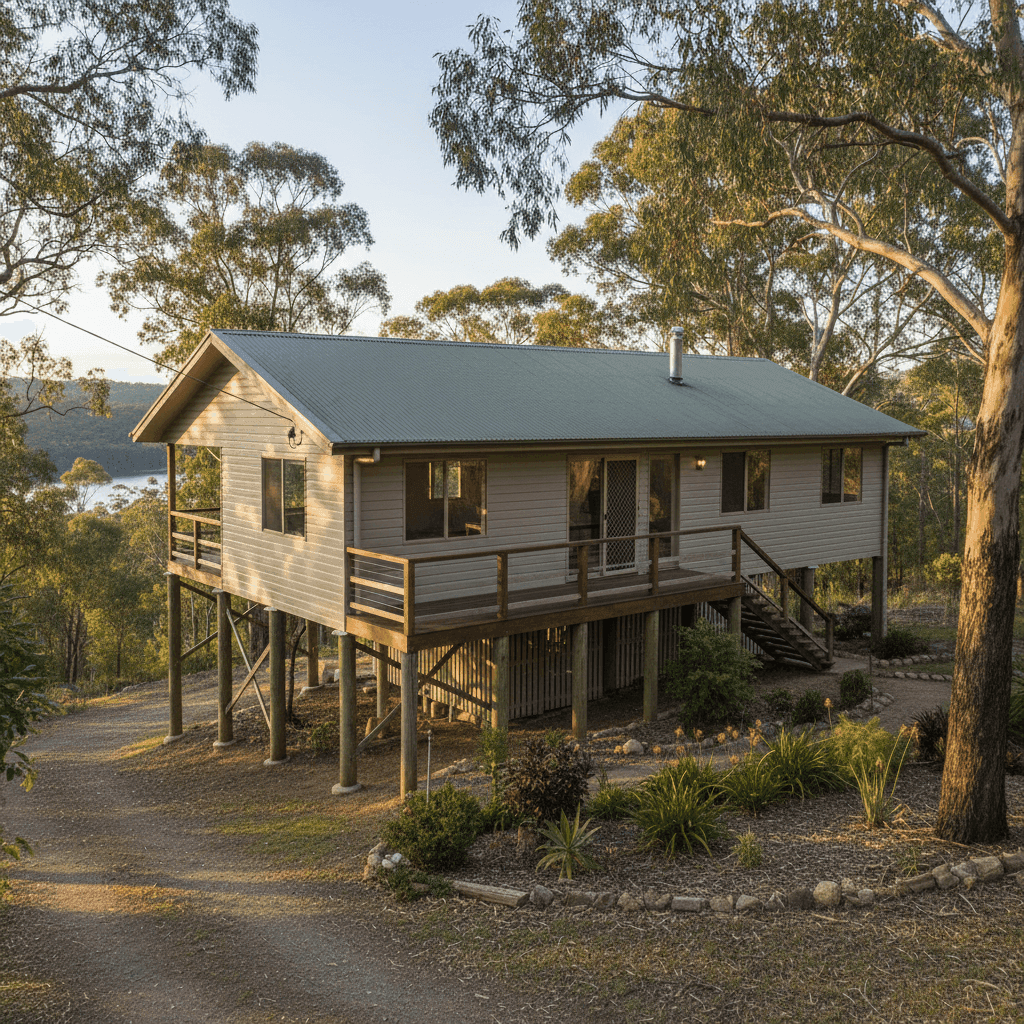
If you own a free standing home in Mooney Mooney, NSW 2083, you might be wondering whether you're paying the right amount for building insurance — or leaving money on the table. Nestled in the Hawkesbury River valley on the Central Coast fringe, Mooney Mooney is a small, scenic community with a mix of older character homes and bush surroundings. That unique setting comes with its own set of insurance considerations. In this article, we analyse a real building-only insurance quote for a 4-bedroom, 1-bathroom free standing home in the area and put the numbers into context.
---
Is This Quote Fair?
The annual premium for this property comes in at $2,554 per year (or $245/month), with a building sum insured of $598,000 and a building excess of $5,000. CoverClub's pricing engine rates this quote as CHEAP — below average for the area.
That's a meaningful finding. In a state where home insurance costs have surged in recent years, landing a below-average premium is genuinely good news for this homeowner. The $5,000 excess is on the higher side, which typically helps bring the annual premium down — so it's worth factoring that trade-off into your thinking. If you needed to make a claim, you'd be out of pocket $5,000 before the insurer contributes a cent. For some homeowners, that's an acceptable risk; for others, negotiating a lower excess (even at a slightly higher premium) may be the smarter long-term play.
---
How Mooney Mooney Compares
To understand just how competitive this quote is, let's look at the broader data. Unfortunately, there isn't enough suburb-level data to produce a reliable Mooney Mooney-specific benchmark — the suburb is small enough that sample sizes are limited. But the state and national figures tell a compelling story on their own.
| Benchmark | Premium |
|---|---|
| This Quote | $2,554/yr |
| NSW State Average | $9,528/yr |
| NSW State Median | $3,770/yr |
| National Average | $5,347/yr |
| National Median | $2,764/yr |
| Central Coast LGA Average | $8,387/yr |
This quote sits well below every single benchmark listed above. It's 73% cheaper than the NSW state average, 32% below the NSW median, and even comes in under the national median of $2,764/yr. Compared to the broader Central Coast LGA average of $8,387/yr, this premium looks exceptionally competitive.
It's worth noting that averages can be skewed by high-risk properties — flood zones, bushfire-prone areas, and coastal erosion hotspots all push premiums up significantly in NSW. The NSW state average of $9,528/yr is heavily influenced by these outliers. You can explore national home insurance statistics and Mooney Mooney suburb data directly on CoverClub for a deeper dive.
---
Property Features That Affect Your Premium
Every home is different, and insurers price risk based on a detailed picture of your property's construction, age, and location. Here's how the key features of this particular home likely influence its premium:
Construction Era (1950)
A home built in 1950 is over 70 years old. Older homes can attract higher premiums due to ageing plumbing, wiring, and structural components that may be more prone to failure. However, if the home has been well maintained or partially renovated, insurers may view it more favourably.
Hardiplank/Hardiflex External Walls
Fibre cement cladding like Hardiplank and Hardiflex is generally viewed positively by insurers. It's durable, low-maintenance, resistant to rot and termites, and performs reasonably well in fire conditions compared to timber weatherboards. This likely contributes to the competitive premium.
Steel/Colorbond Roof
Colorbond roofing is one of the most insurer-friendly roof types available. It's lightweight, durable, resistant to hail and fire, and has a long lifespan. Homes with Colorbond roofs typically attract lower premiums than those with terracotta tiles or ageing corrugated iron.
Stump Foundation (Elevated Less Than 1m)
The home sits on stumps and is slightly elevated — less than one metre off the ground. This style of construction is common in older NSW and Queensland homes. A modest elevation can help with underfloor ventilation and minor flood resilience, though it also means the subfloor space needs to be maintained to prevent issues like timber rot or pest ingress.
Timber/Laminate Flooring
Timber and laminate floors are standard in many Australian homes and don't significantly move the needle on premiums either way. However, in the event of water damage, these floor types can be costly to repair or replace — something worth keeping in mind when reviewing your sum insured.
Standard Fittings, No Pool, No Solar
With standard fittings and no pool or solar panels, this home avoids several common premium add-ons. Pools increase liability exposure, and solar panels add replacement cost complexity. The absence of both keeps things straightforward for the insurer.
---
Tips for Homeowners in Mooney Mooney
Whether you're renewing your policy or shopping around for the first time, here are four practical steps worth taking:
- Review your sum insured regularly. Building costs have risen sharply across NSW in recent years. A sum insured of $598,000 may have been accurate when the policy was first taken out, but construction costs fluctuate. Use a building cost calculator annually to make sure you're not underinsured — especially in a rural-fringe area where trades can be harder to source after a major event.
- Weigh up your excess carefully. A $5,000 building excess is a significant out-of-pocket cost if something goes wrong. If you have the financial buffer to absorb that, the lower premium makes sense. If not, ask your insurer what the premium difference would be at a $1,000 or $2,500 excess — it may be less than you expect.
- Maintain your stumps and subfloor. Homes on stump foundations are more susceptible to moisture, pest damage, and structural movement than slab homes. Regular inspections by a licensed builder or pest inspector can catch problems early and help you avoid claims — or worse, having a claim denied due to gradual deterioration.
- Compare quotes before renewal. Even if your current premium looks cheap on paper, the insurance market is competitive and prices shift year to year. Run a fresh comparison on CoverClub before your renewal date to make sure you're still getting the best deal available for your specific property.
---
Ready to Compare?
Whether this quote is your current policy or one you're considering, it's always worth seeing what else is on the market. CoverClub makes it easy to compare building and contents insurance quotes for homes across Australia — including properties with older construction, unique features, and rural-fringe locations like Mooney Mooney. Get a personalised quote today and see how your premium stacks up.