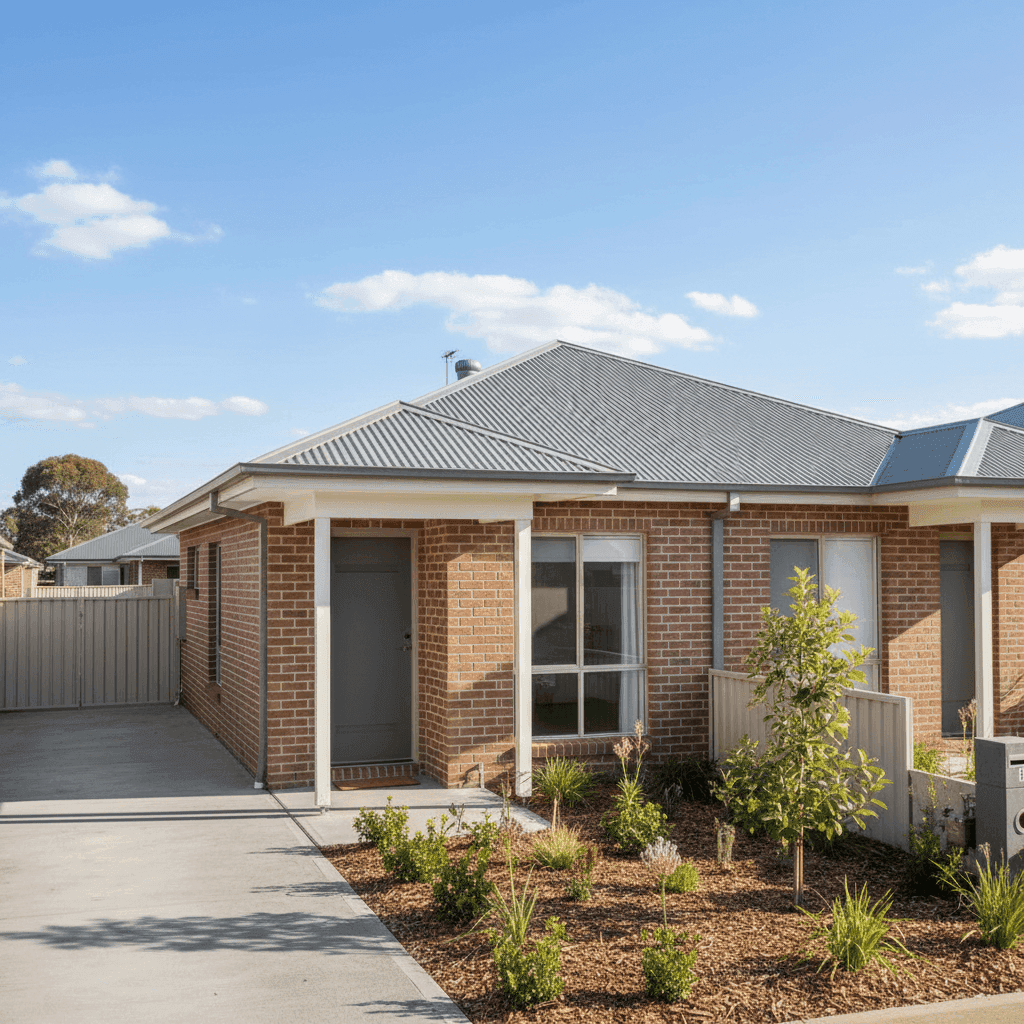
Moorebank, a well-established suburb in Sydney's south-west, has seen significant residential growth in recent years — and with new builds like this 2024-constructed semi detached entering the market, understanding what you should be paying for home insurance has never been more important. This article breaks down a real building insurance quote for a 5-bedroom, 3-bathroom semi detached in Moorebank (NSW 2170), and puts it in context against local, state, and national benchmarks.
---
Is This Quote Fair?
The annual premium on this quote comes in at $1,811 per year (or $174/month), covering the building only with a $1,000 excess and a sum insured of $692,000. Our pricing analysis rates this as FAIR — Around Average.
What does "fair" actually mean here? It sits comfortably above the suburb's 25th percentile ($1,451/yr) and just above the suburb median ($1,761/yr), placing it in the middle band of what Moorebank homeowners are paying. It's not the cheapest quote you could find, but it's also well below the suburb's 75th percentile of $2,311/yr — meaning roughly three-quarters of comparable properties are paying either the same or more.
For a brand-new semi detached built in 2024 with a $692,000 sum insured, landing near the median is a reasonable outcome. Newer builds can sometimes attract slightly higher premiums due to higher replacement costs and modern fittings, so seeing this quote hold close to the suburb midpoint is a positive sign.
---
How Moorebank Compares
To truly understand whether this premium represents good value, it helps to zoom out and look at the broader picture. Here's how Moorebank stacks up:
| Benchmark | Average Premium | Median Premium |
|---|---|---|
| Moorebank (2170) | $2,013/yr | $1,761/yr |
| Fairfield LGA | $2,137/yr | — |
| NSW | $9,528/yr | $3,770/yr |
| National | $5,347/yr | $2,764/yr |
> Based on [Moorebank suburb data](https://coverclub.com.au/stats/NSW/2170/moorebank) from 20 quotes, [NSW state data](https://coverclub.com.au/stats/NSW), and [national benchmarks](https://coverclub.com.au/stats/national).
A few things stand out immediately. The NSW state average of $9,528/yr is dramatically higher than what Moorebank homeowners are paying — though this is heavily skewed by high-risk coastal and flood-prone areas across the state. The NSW median of $3,770/yr is a more grounded comparison, and even against that figure, this $1,811 quote looks quite competitive.
Nationally, the median sits at $2,764/yr, which again puts this Moorebank quote in a favourable light. Homeowners in many parts of Australia — particularly in Queensland and northern NSW — face significantly higher premiums due to cyclone, flood, and storm risks. Moorebank's position in south-western Sydney, away from high-risk coastal zones, contributes to its more moderate insurance costs.
It's also worth noting the Fairfield LGA average of $2,137/yr. This quote, at $1,811/yr, comes in roughly $326 below the LGA average — another indicator that it's sitting in a reasonable range for the area.
---
Property Features That Affect Your Premium
Several characteristics of this property influence where the premium lands. Understanding these factors can help you make sense of your own quote and identify potential areas for adjustment.
Brick Veneer Construction Brick veneer is one of the most common external wall types in Australian suburban homes, and insurers generally view it favourably. It offers solid fire resistance and durability, which can help moderate premiums compared to timber-framed or clad exteriors.
Steel/Colorbond Roof A Colorbond steel roof is a strong asset from an insurance perspective. It's highly resistant to ember attack, performs well in storms, and has a long service life with minimal maintenance. Insurers typically price these roofs more favourably than older terracotta or concrete tiles.
Slab Foundation A concrete slab foundation is considered low-risk by most insurers. It eliminates the subsidence and moisture concerns associated with raised timber stumps, contributing to a more stable risk profile.
New Build (2024) As a property constructed in 2024, everything from the structural framing to the electrical wiring and plumbing meets current Australian building codes. This significantly reduces the likelihood of claims related to ageing infrastructure, and many insurers reward newer builds with more competitive pricing.
Ducted Climate Control The presence of ducted air conditioning is worth noting. While it adds to the overall replacement value of the home (and is factored into the sum insured), it can also represent a maintenance consideration. Ensuring your sum insured adequately covers all fixed inclusions like ducted systems is important to avoid being underinsured.
No Pool or Solar Panels The absence of a pool removes a common source of liability and maintenance-related claims. Similarly, no solar panels means one fewer complex electrical system to account for — both factors that keep the risk profile clean and straightforward.
Tile Flooring Tiles are a durable, low-maintenance flooring choice that holds up well in claims scenarios involving water damage. Compared to timber or carpet, tiles are generally easier and less costly to repair or replace.
---
Tips for Homeowners in Moorebank
1. Review your sum insured annually Construction costs in NSW have risen considerably over the past few years. A sum insured of $692,000 may be appropriate today, but it's worth revisiting each year at renewal to ensure it still reflects the true cost of rebuilding your home — including labour, materials, and any upgrades you've made.
2. Consider bundling contents cover This quote covers building only. If you haven't already arranged separate contents insurance, it's worth exploring whether bundling both under one policy could deliver a better overall premium. Many insurers offer discounts for combined policies.
3. Compare quotes before renewing Even if your current insurer offers a competitive rate, the market changes every year. Using a comparison tool like CoverClub before your renewal date takes only a few minutes and could reveal meaningful savings — or confirm that you're already on a good deal.
4. Check your excess settings A $1,000 excess is fairly standard, but adjusting this figure can have a direct impact on your premium. If you're comfortable covering a higher out-of-pocket amount in the event of a claim, increasing your excess could reduce your annual premium. Just make sure the tradeoff makes financial sense for your situation.
---
Compare Your Own Quote
Whether you're insuring a new build or reviewing an existing policy, it pays to know where your premium stands relative to the market. CoverClub makes it easy to see how your quote compares to real data from your suburb, LGA, and across Australia. Get a quote or compare your current premium at CoverClub — it's free, fast, and built specifically for Australian homeowners.