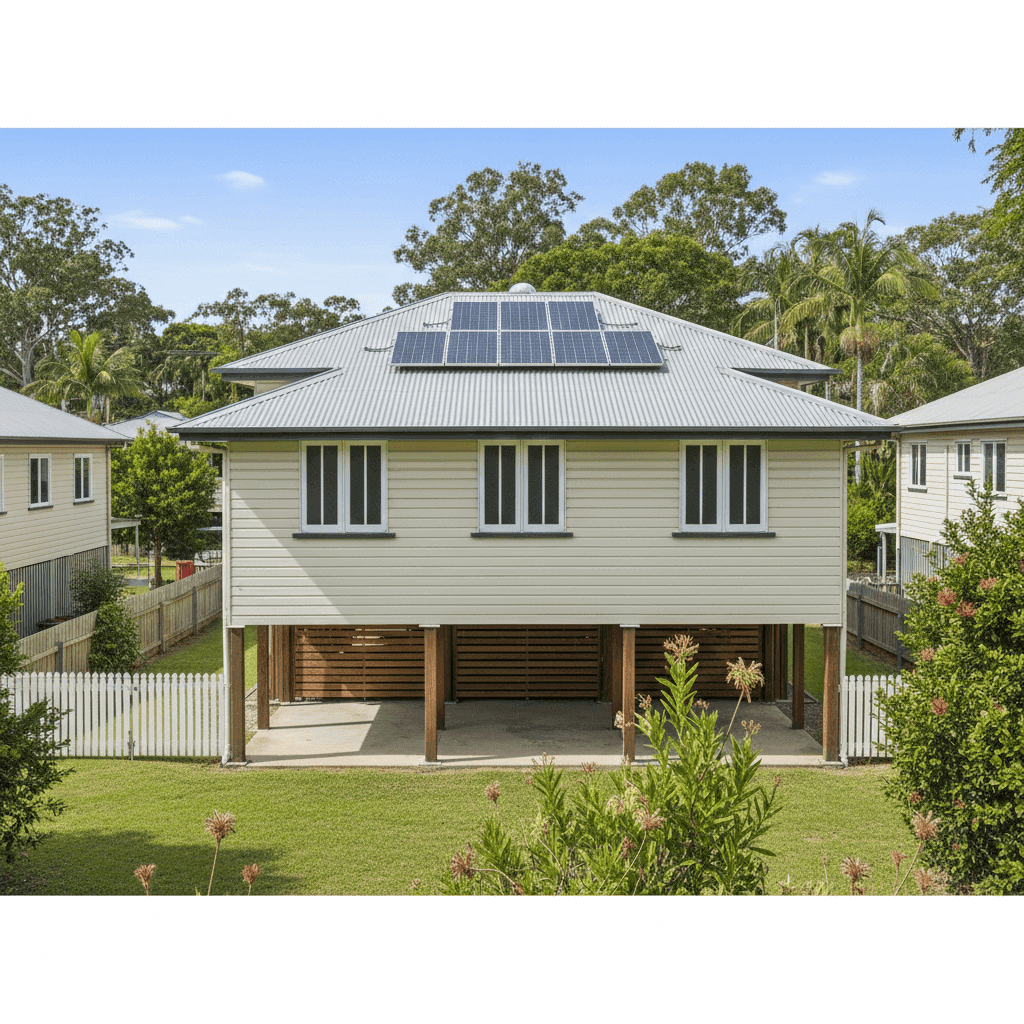
If you own or are looking to insure a free standing home in Moores Pocket, QLD 4305, you're probably wondering what a fair premium looks like — and whether you're paying too much. This analysis breaks down a real home insurance quote for a 2-bedroom weatherboard home in the suburb, benchmarks it against local, state, and national data, and highlights the property features most likely to influence what you pay.
---
Is This Quote Fair?
The quote in question came in at $2,220 per year (or roughly $206 per month) for combined Home and Contents cover — $403,000 in building sum insured and $75,000 in contents. Our price rating for this quote is CHEAP, meaning it sits meaningfully below what most homeowners in the area are paying.
To put that in perspective: the suburb average for Moores Pocket is $6,049 per year, and the median sits at $4,624. Even the 25th percentile — the cheapest quarter of quotes we've seen — comes in at $2,778. This quote undercuts even that threshold, making it genuinely competitive by any measure.
That said, it's worth noting that our Moores Pocket suburb data is based on a sample of 6 quotes, so averages can shift as more data comes in. Still, the direction is clear: this is a well-priced policy for the area.
The $2,000 excess on both building and contents is on the higher side, which typically helps bring premiums down. Homeowners should weigh up whether they're comfortable covering the first $2,000 of any claim out of pocket in exchange for lower ongoing costs.
---
How Moores Pocket Compares
Zooming out to a broader view, the pricing picture becomes even more striking.
| Benchmark | Annual Premium |
|---|---|
| This Quote | $2,220 |
| Moores Pocket Suburb Average | $6,049 |
| Moores Pocket Suburb Median | $4,624 |
| QLD State Average | $9,129 |
| QLD State Median | $3,903 |
| National Average | $5,347 |
| National Median | $2,764 |
| Ipswich LGA (Scenic Rim) Average | $8,744 |
Queensland is one of the most expensive states in the country for home insurance, largely due to its exposure to extreme weather events — cyclones in the north, flooding across river corridors, and severe storms throughout. The QLD state average of $9,129 is well above the national average of $5,347, reflecting that elevated risk profile.
The Scenic Rim LGA average of $8,744 is also notably high, suggesting that insurers price properties in this broader region with significant caution. Against that backdrop, a quote of $2,220 is remarkable — and worth understanding in the context of the specific property's features.
---
Property Features That Affect Your Premium
Several characteristics of this particular home likely contribute to its competitive pricing:
Construction Year (2010)
A home built in 2010 benefits from relatively modern construction standards. Australian building codes have tightened significantly over the decades, meaning newer homes are generally better engineered for wind and water resistance. Insurers tend to reward this with lower premiums compared to homes built in the 1960s or 1970s.
Elevated on Stumps
This is a significant factor. The home is elevated by at least one metre on stumps — a classic Queenslander-style foundation. Elevation reduces the risk of inundation during flood or storm surge events, which is a major driver of insurance costs in South East Queensland. Insurers typically view elevated homes more favourably in flood-prone regions.
Steel/Colorbond Roof
Colorbond roofing is durable, fire-resistant, and performs well in high-wind conditions. It's widely regarded as one of the better roofing choices for Australian conditions and can positively influence how insurers assess your risk.
Weatherboard Timber Walls
Weatherboard construction is common in Queensland and can be insured straightforwardly, though it does carry slightly higher fire risk than brick. The impact on premium is generally modest for well-maintained homes.
Solar Panels
The presence of solar panels adds some replacement value to the building and can occasionally nudge premiums up slightly, as panels need to be covered for storm or hail damage. However, many insurers now factor this in routinely, and the effect is often minor.
No Pool, No Cyclone Risk Zone
The absence of a pool removes a liability and structural risk factor. And while Moores Pocket is in Queensland, it falls outside the designated cyclone risk zone — a meaningful distinction that keeps premiums lower than properties further north.
Smaller Footprint (105 sqm)
At 105 square metres, this is a modestly sized home. Building sum insured is directly tied to rebuild costs, and a smaller home naturally costs less to reconstruct. The $403,000 sum insured appears appropriate for this size and construction type.
---
Tips for Homeowners in Moores Pocket
1. Review your sum insured annually Construction costs in Queensland have risen sharply over recent years. Make sure your building sum insured keeps pace with current rebuild costs — being underinsured can be just as costly as overpaying for cover. Use a building calculator or speak to a local builder for a rough estimate.
2. Consider your excess carefully This quote carries a $2,000 excess on both building and contents. If you have a healthy emergency fund, a higher excess can be a smart way to reduce premiums. But if an unexpected $2,000 outlay would be a stretch, it may be worth adjusting your excess and comparing the premium difference.
3. Maintain your elevated foundation Homes on stumps need periodic inspection to ensure the subfloor structure remains sound. Insurers may query the condition of stumps during the claims process, so keeping records of any maintenance or inspections is worthwhile.
4. Shop around at renewal time Insurance loyalty rarely pays in Australia. Premiums can shift significantly between insurers for the same property, as each company weighs risk factors differently. Use a comparison tool like CoverClub to benchmark your renewal quote before simply accepting it.
---
Compare Your Own Quote
Whether you're a first-time buyer or a long-term homeowner in Moores Pocket, it pays to know where your premium stands. CoverClub makes it easy to see how your quote compares against real data from your suburb, your state, and across Australia. Get a quote today at CoverClub and find out if you're getting a fair deal — or leaving money on the table.