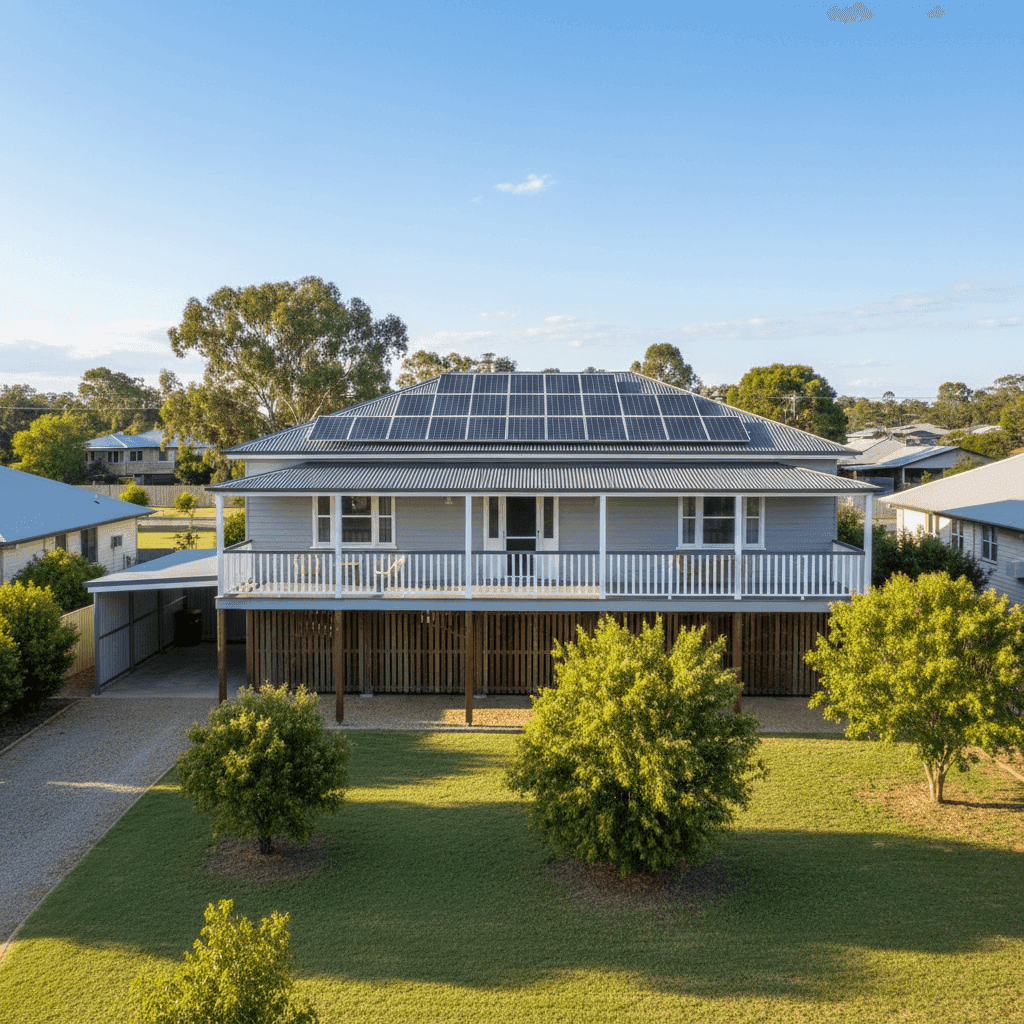
If you own a free standing home in Moree, NSW 2400, you already know this part of regional New South Wales comes with its own set of challenges — from seasonal flooding to the sheer distance from major urban centres. Getting the right building insurance at a fair price is essential, yet many homeowners in the area have little context for whether their premium is reasonable or inflated. This article breaks down a real building-only insurance quote for a four-bedroom, two-bathroom free standing home in Moree, and puts it in perspective against local, state, and national benchmarks.
---
Is This Quote Fair?
The quote in question sits at $30,839 per year (or $2,955 per month) for building-only cover on a 277 sqm home with a sum insured of $944,000 and a $1,000 building excess.
Our price rating for this quote is EXPENSIVE — above average. That said, "above average" needs unpacking, because the comparison data here tells a nuanced story.
When measured against the Moree suburb average of $43,287 per year, this quote is actually sitting well below what many local homeowners are paying. However, the suburb median premium is just $3,822 per year — a figure that's dramatically lower. This wide gap between average and median strongly suggests that a small number of very high-value or high-risk properties are pulling the average upward, while most homes in the area attract more modest premiums.
Compared to the NSW state average of $9,528/yr and the national average of $5,347/yr, this quote is substantially higher. At more than three times the state average and nearly six times the national average, it's clear that specific characteristics of this property and its location are driving the cost up considerably.
---
How Moree Compares
Understanding where Moree sits in the broader insurance landscape is key to interpreting any quote from this postcode.
| Benchmark | Average Premium | Median Premium |
|---|---|---|
| Moree (2400) | $43,287/yr | $3,822/yr |
| NSW | $9,528/yr | $3,770/yr |
| National | $5,347/yr | $2,764/yr |
A few things stand out. The Moree suburb median ($3,822) is actually very close to the NSW median ($3,770), suggesting that typical homes in Moree aren't dramatically more expensive to insure than the state norm. However, the suburb average is nearly five times the national average — a sign that outlier properties with high replacement values or elevated risk profiles can push costs into a very different tier.
With only 18 quotes in the suburb sample, the dataset is relatively small, which means a handful of high-value properties can skew the average significantly. The 25th percentile sits at $2,538/yr and the 75th percentile at $5,113/yr, which tells us that the bulk of Moree homeowners are paying between roughly $2,500 and $5,100 annually. At $30,839, this quote falls well outside that typical range — pointing to the property's specific risk profile rather than a general Moree pricing problem.
---
Property Features That Affect Your Premium
Several characteristics of this home directly influence the cost of cover. Here's what's likely contributing to the elevated premium:
High Sum Insured
At $944,000, the building sum insured is substantial. Rebuilding a 277 sqm home to current standards — including demolition, materials, labour, and compliance costs — can be expensive, particularly in regional areas where trade costs and logistics add to the bill. A higher sum insured means higher exposure for the insurer, and that flows directly into the premium.
Construction Year (1950)
Homes built in 1950 are over 70 years old. Older properties can carry hidden risks — ageing wiring, plumbing that may not meet modern standards, and structural elements that are harder and more expensive to source or replicate. Insurers typically price older homes at a higher rate to account for these unknowns.
Elevated Foundation (Stumps, Raised by at Least 1m)
This home sits on stumps and is elevated by at least one metre. While elevation can reduce flood inundation risk in some scenarios, it also introduces complexity in the event of a claim — accessing subfloor areas, repairing or replacing stumps, and ensuring structural integrity after events like storms or termite damage all add to rebuild costs.
Hardiplank/Hardiflex Exterior Walls
Fibre cement cladding like Hardiplank and Hardiflex is a durable, low-maintenance material, but it's not always the cheapest to repair or replace. Insurers factor in the cost of matching materials and skilled labour when pricing premiums for homes with this type of cladding.
Timber and Laminate Flooring
Timber flooring is particularly susceptible to water damage and can be costly to restore or replace after flooding or storm events — a relevant consideration in Moree, which sits in a flood-prone region of the Gwydir Valley.
Solar Panels and Ducted Climate Control
The presence of solar panels and ducted climate control adds to the overall replacement value of the home. Both systems are expensive to reinstall and are included in the building sum insured, contributing to a higher premium.
No Pool, No Cyclone Risk Zone
On the positive side, the absence of a pool removes one common liability risk, and the property falls outside a designated cyclone risk area — both factors that help keep the premium from climbing even higher.
---
Tips for Homeowners in Moree
If you're a homeowner in Moree looking to manage your insurance costs without sacrificing adequate protection, here are some practical steps worth considering:
- Review your sum insured regularly. Building costs fluctuate, and being over-insured is just as costly as being under-insured. Use a qualified quantity surveyor or an online building cost calculator to verify your replacement value annually. Ensure your sum insured reflects reality — not a round number picked years ago.
- Compare quotes across multiple insurers. Premiums for the same property can vary enormously between providers. Getting a fresh quote through CoverClub takes minutes and lets you see a range of options side by side, so you're not locked into paying more than you need to.
- Ask about flood and storm mitigation discounts. Some insurers offer reduced premiums for homes that have undertaken flood mitigation works — such as elevated foundations, sealed subfloor areas, or stormwater management improvements. Given Moree's flood history, it's worth asking your insurer directly what measures could reduce your risk rating.
- Consider a higher excess. If you can comfortably absorb a larger out-of-pocket cost in the event of a claim, increasing your excess from $1,000 to $2,500 or more can meaningfully reduce your annual premium. Just make sure the saving is proportionate to the increased risk you're taking on.
---
Get a Better Deal on Home Insurance in Moree
Whether you're renewing your existing policy or shopping around for the first time, comparing your options is the single most effective way to ensure you're not overpaying. CoverClub makes it easy to see real quotes from multiple insurers for your specific property — no guesswork, no obligation.
Start comparing home insurance quotes for your Moree property today →
You can also explore detailed insurance pricing data for your area at the Moree suburb stats page, or broaden your view with NSW state insurance statistics and national benchmarks.