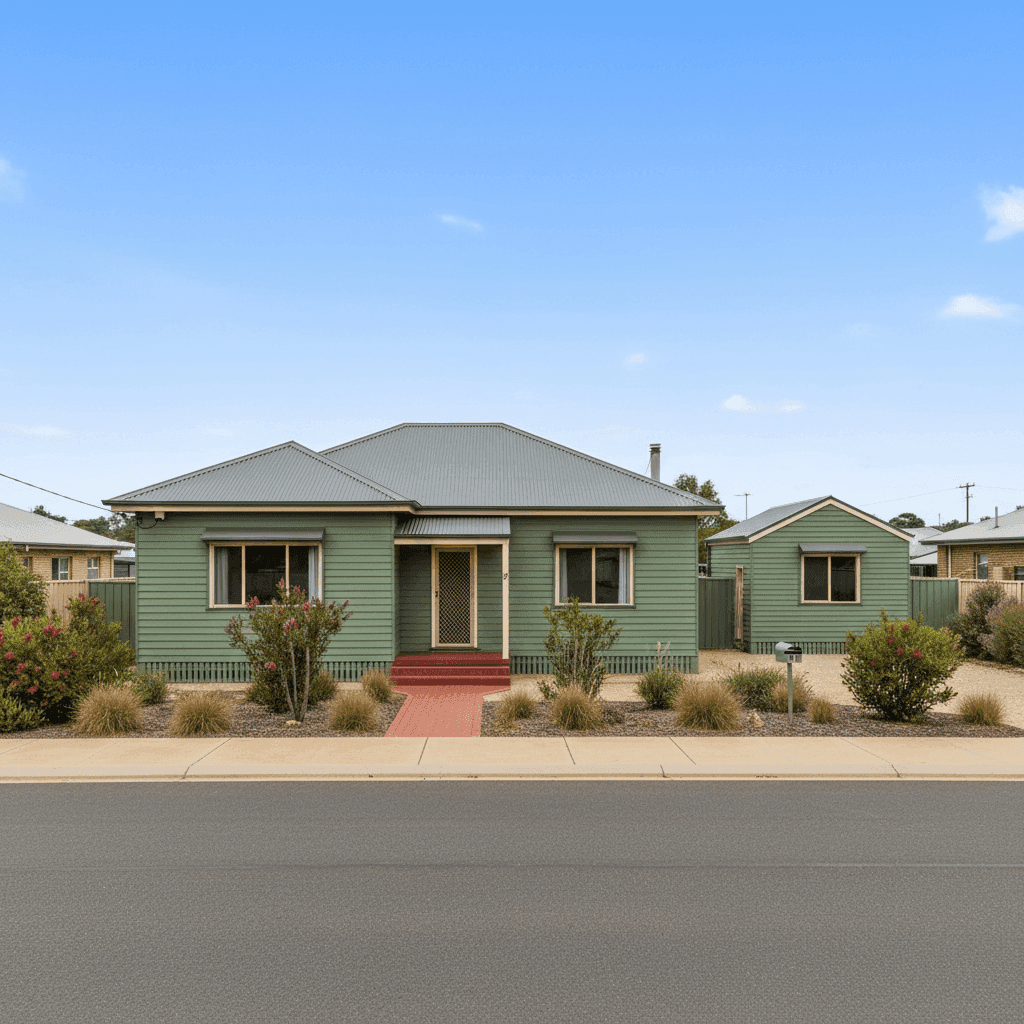
If you own a free standing home in Moree, NSW 2400, you might be wondering whether your building insurance premium is reasonable — or whether you're paying more than you need to. This article breaks down a recent quote for a three-bedroom, two-bathroom weatherboard home in Moree, compares it against local, state, and national benchmarks, and offers practical advice for homeowners in the region.
---
Is This Quote Fair?
The annual premium for this quote comes in at $3,533 per year (or $332 per month), covering building only with a $5,000 building excess. Based on data from CoverClub's Moree suburb statistics, this quote is rated CHEAP — below the suburb average — which is great news for the homeowner.
To put that into perspective, the average building insurance premium across Moree sits at $6,317 per year, with a median of $6,609. That means this quote is roughly 44% below the suburb average and nearly half the median price paid by other Moree homeowners. Even when compared against the 25th percentile of local quotes — meaning the cheapest quarter of premiums in the area — this quote at $3,533 still comes in well under the $4,644 mark.
For a region known for elevated insurance costs (more on that below), securing a premium at this level represents genuinely strong value. The sum insured of $589,000 for a 186 sqm home is reasonable for rebuild costs in regional NSW, so the coverage itself isn't being skimped on to achieve this price.
---
How Moree Compares
Moree's insurance pricing tells an interesting story when you zoom out to the NSW state level and national averages.
| Benchmark | Average Premium | Median Premium |
|---|---|---|
| Moree (suburb) | $6,317/yr | $6,609/yr |
| Gwydir LGA | $5,775/yr | — |
| NSW (state) | $3,801/yr | $3,410/yr |
| National | $2,965/yr | $2,716/yr |
The numbers are striking. Moree homeowners pay, on average, 66% more than the NSW state average, and more than double the national median. Even within the Gwydir Local Government Area, Moree's premiums sit above the LGA average of $5,775 per year.
This isn't unusual for inland northern NSW. The region is prone to significant flooding events — the Mehi River and its surrounds have a well-documented flood history — and insurers price that risk accordingly. Bushfire exposure, extreme heat, and the general remoteness of the area (which can affect rebuild costs and tradesperson availability) all contribute to the elevated pricing seen across the suburb.
The wide spread between the 25th percentile ($4,644) and 75th percentile ($8,090) also tells you that premiums in Moree vary enormously depending on the specific property, insurer, and level of cover chosen. Shopping around is not just advisable here — it's essential.
---
Property Features That Affect Your Premium
Several characteristics of this particular property are worth examining in the context of insurance pricing:
Weatherboard timber walls are one of the most significant factors. Timber-framed and clad homes are considered higher risk by insurers due to their susceptibility to fire, rot, and pest damage compared to brick veneer or double brick construction. For a 1967-built home, this is a common construction type in regional NSW, but it does attract higher premiums from many insurers.
Steel/Colorbond roofing is generally viewed favourably by insurers. It's durable, fire-resistant, and performs well in extreme weather conditions — a real advantage in a region that experiences everything from hailstorms to intense heat.
Slab foundation is a neutral to positive factor. It's a stable, widely used construction method that doesn't carry the added complexity of stumped or suspended floors.
Ducted climate control is a notable inclusion. Ducted systems are expensive to repair or replace, and their presence increases the overall rebuild cost of the home — which is reflected in the sum insured. Ensuring your sum insured accounts for this system is important.
The granny flat is a significant consideration. Secondary dwellings add substantial value to a property's rebuild cost. Homeowners must confirm with their insurer that the granny flat is explicitly covered under the building policy, as some policies require it to be listed separately or may have specific conditions around its coverage.
No pool and no solar panels simplify the risk profile slightly, removing two common sources of claims and liability.
The 1967 construction year is worth flagging. Older homes can have ageing electrical wiring, plumbing, and structural elements that increase the likelihood of certain claims. Some insurers apply age-related loadings, while others will inspect or require statutory declarations about the state of key systems.
---
Tips for Homeowners in Moree
1. Check your flood cover carefully Flood is one of the biggest risks in Moree, and not all policies include it by default. Some insurers distinguish between "flood" (rising water from a river or lake) and "storm surge" or "rainwater runoff." Read the Product Disclosure Statement (PDS) carefully and confirm that riverine flood is explicitly covered — don't assume it is.
2. Confirm the granny flat is covered As noted above, the granny flat needs to be explicitly included in your building sum insured. Contact your insurer directly and ask them to confirm in writing that the secondary dwelling is covered. If it's not, you may need to increase your sum insured or take out a separate policy.
3. Review your sum insured annually Construction costs in regional NSW have risen sharply in recent years. A sum insured that was accurate two or three years ago may now fall short of what it would actually cost to rebuild. Use a building cost calculator or speak with a local builder to get a realistic estimate, and update your policy accordingly.
4. Use a comparison platform before renewing Given the enormous spread in premiums across Moree — from under $4,644 to over $8,090 — there is clearly significant variation between insurers. Never simply auto-renew without checking what else is available. Even a modest saving of $500–$1,000 per year adds up quickly over the life of your ownership.
---
Compare Your Home Insurance Today
Whether you're a long-term Moree resident or new to the area, it pays to know exactly where your premium stands. CoverClub makes it easy to see how your quote compares to your neighbours and to homeowners across NSW and Australia. Get a quote now at CoverClub and find out if you're getting the best deal on your building insurance — or leaving money on the table.