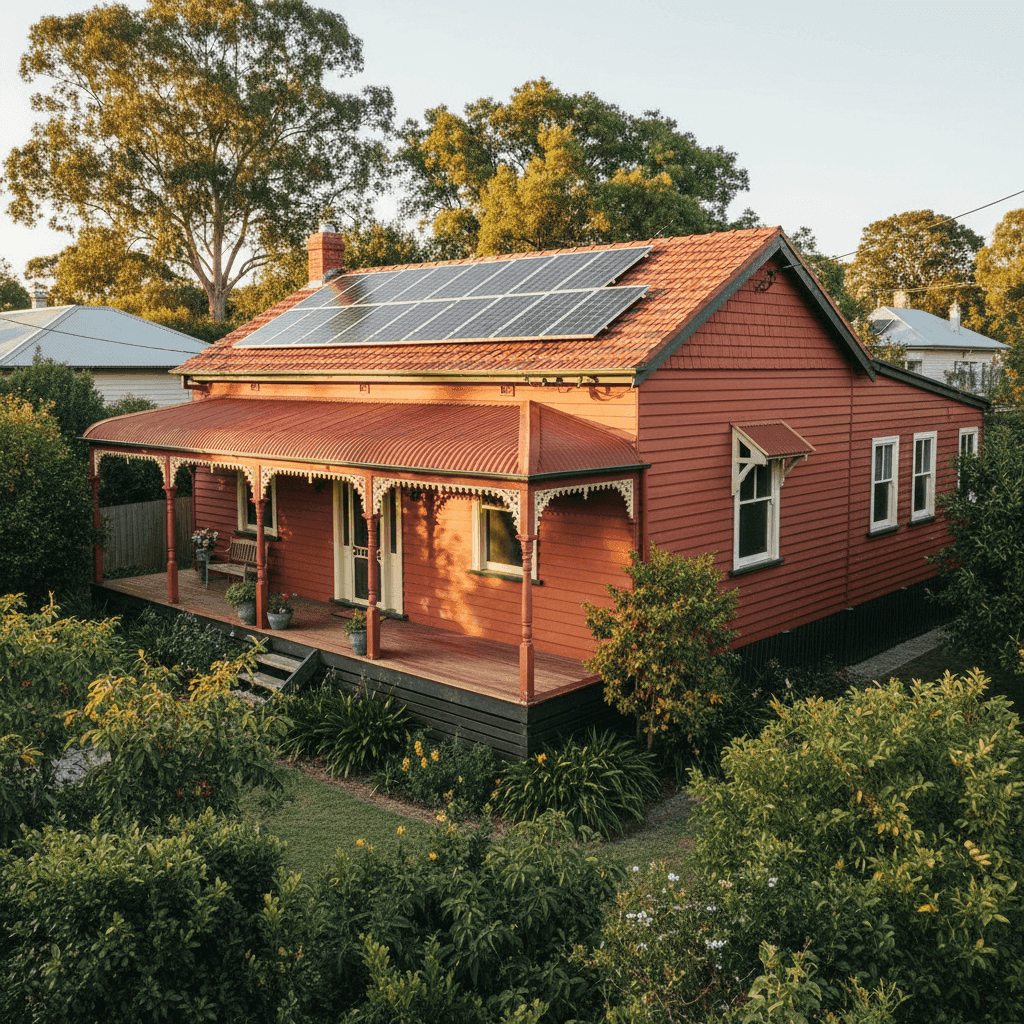
Morpeth is one of the Hunter Valley's most charming historic townships — a village of wide verandahs, century-old streetscapes, and character homes that tell the story of colonial New South Wales. If you own a free standing home here, you already know that heritage and charm come with their own set of insurance considerations. This article breaks down a recent home and contents insurance quote for a 3-bedroom, 2-bathroom property in Morpeth (NSW 2321), rated Fair (Around Average) by CoverClub, and explores what's driving the cost — and how you might manage it.
---
Is This Quote Fair?
The quoted annual premium of $2,077 (or $199/month) covers both building (sum insured: $618,000) and contents ($47,000), with a $2,000 excess on each. CoverClub's price rating system has assessed this as Fair — Around Average, which is a reasonable outcome for a property with several risk-influencing characteristics.
To put that in context:
- The suburb average for Morpeth is $2,311/yr, and the median sits at $2,303/yr — meaning this quote comes in roughly $230 below the local average, which is a solid result.
- The 25th percentile for the suburb is $1,697/yr, so there are cheaper quotes available in the market, though those may reflect different cover levels or excess structures.
- The 75th percentile sits at $2,882/yr, so this quote is comfortably below the more expensive end of the local range.
In short, while this isn't the cheapest quote in the suburb, it's meaningfully below average — a reasonable outcome given the property's age, construction type, and heritage status.
---
How Morpeth Compares
One of the most telling ways to assess a quote is to zoom out and look at the broader picture. Morpeth's suburb insurance data shows a local average of $2,311/yr — which is actually quite moderate compared to wider benchmarks.
| Benchmark | Average Premium |
|---|---|
| Morpeth (suburb) | $2,311/yr |
| Port Stephens LGA | $3,116/yr |
| NSW (state) | $9,528/yr avg / $3,770/yr median |
| National | $5,347/yr avg / $2,764/yr median |
A few things stand out here. The NSW state average of $9,528/yr is dramatically skewed by high-risk coastal and flood-prone areas across the state — the median of $3,770/yr is a more representative figure. Even so, Morpeth's local median of $2,303/yr sits well below the state median, suggesting the suburb is considered relatively manageable from an insurer's risk perspective.
Compared to the national median of $2,764/yr, Morpeth's median is actually slightly lower — which is encouraging for local homeowners. The Port Stephens LGA average of $3,116/yr is higher than the Morpeth suburb average, likely reflecting the diversity of property types across the broader local government area, including waterfront and coastal homes that attract higher premiums.
> Note: The suburb sample size for Morpeth is 16 quotes, so while directionally useful, these figures should be interpreted with some caution. More data over time will sharpen the picture.
---
Property Features That Affect Your Premium
Several characteristics of this particular property are worth understanding, as they directly influence how insurers price the risk.
Heritage Listing
This is arguably the most significant factor. Heritage-listed homes in NSW are subject to strict council and state government requirements around restoration and repair — insurers must account for the fact that like-for-like replacement of heritage materials (such as original weatherboard timber, period joinery, or ornate detailing) is considerably more expensive than standard modern construction. This typically pushes premiums higher, and it's why the building sum insured of $618,000 is substantial for a 3-bedroom home.
Weatherboard Timber Construction
Weatherboard homes — especially those built in 1948 — are beloved for their character, but they present a higher fire risk than brick or rendered construction. Timber walls are more susceptible to fire spread, and older homes may have wiring or plumbing that doesn't meet contemporary standards. Insurers price this risk accordingly.
Tiled Roof
Terracotta or concrete tile roofs are generally viewed favourably by insurers compared to older materials like corrugated iron or asbestos sheeting. Tiles offer good durability and weather resistance, which can work in your favour at premium time.
Stump Foundation & Elevated Position
The property sits on stumps and is elevated by less than 1 metre. Stump foundations are common in older NSW homes and can be a double-edged sword — they allow for good airflow and can reduce some flood inundation risk, but ageing stumps may require maintenance or replacement over time. Insurers will consider the structural implications.
Timber/Laminate Flooring
Original timber flooring is a feature many buyers love, but it also adds to the replacement cost in the event of a claim — particularly in a heritage-listed home where matching materials may be required.
Solar Panels
The presence of solar panels adds a modest amount to the insured value of the property. Panels are generally covered under building insurance, and their inclusion is increasingly standard in Australian home policies.
---
Tips for Homeowners in Morpeth
1. Review Your Building Sum Insured Carefully
Heritage homes are notoriously difficult to accurately value for insurance purposes. The cost to rebuild using period-appropriate materials and tradespeople can far exceed a standard construction estimate. Consider engaging a qualified quantity surveyor who specialises in heritage properties to confirm your sum insured is adequate — underinsurance is a real risk.
2. Ask About Heritage-Specific Cover
Not all home insurers handle heritage properties equally. Some offer specialist cover that accounts for the unique restoration requirements of listed buildings. When comparing quotes, ask explicitly whether the policy covers like-for-like heritage restoration, not just standard replacement.
3. Consider Your Excess Level
Both the building and contents excess on this quote are set at $2,000 — which is on the higher side. A higher excess typically reduces your annual premium, but it means more out-of-pocket in the event of a claim. Review whether this trade-off suits your financial situation, and compare quotes with different excess levels to find the right balance.
4. Compare Quotes Regularly
The home insurance market in NSW is competitive, and premiums can shift significantly from year to year. Even if your current insurer has treated you well, it's worth getting fresh quotes annually — particularly for a heritage property where pricing varies considerably between providers. CoverClub makes it easy to compare multiple insurers side by side.
---
Ready to Compare?
Whether you're reviewing your existing policy or shopping for cover for the first time, comparing quotes is the single most effective way to ensure you're not overpaying. Get a home insurance quote at CoverClub and see how your premium stacks up against the market in seconds. With suburb-level benchmarking and transparent pricing data, CoverClub puts you in the driver's seat.