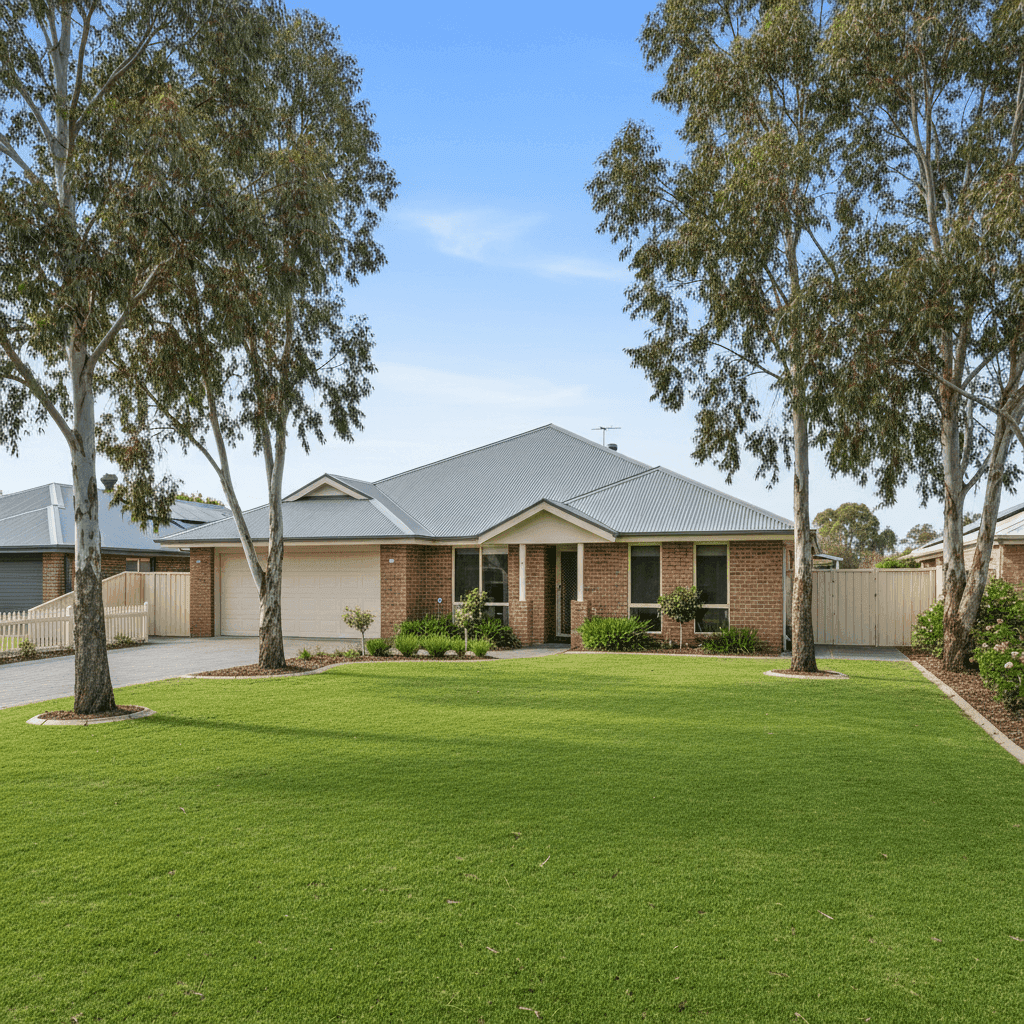
If you own a free standing home in Mortlake, VIC 3272, you've probably wondered whether your home insurance premium is competitive — or whether you're quietly paying more than you need to. Mortlake is a small rural town in south-western Victoria, known for its agricultural surrounds and tight-knit community. Like many regional Victorian towns, insurance costs here can vary significantly depending on the insurer, the property's characteristics, and the level of cover you choose. This article takes a close look at a real home and contents insurance quote for a three-bedroom, two-bathroom free standing home in Mortlake, breaking down whether the price stacks up and what homeowners in the area can do to get better value.
---
Is This Quote Fair?
The quote in question comes in at $2,275 per year (or $218/month) for a combined home and contents policy, covering a building sum insured of $600,000 and $100,000 in contents. Our price rating for this quote is Expensive — Above Average.
To understand why, it helps to look at the local context. The suburb average premium for Mortlake sits at just $1,257 per year, with a median of $1,244. That means this particular quote is running at roughly 81% above the suburb average — a significant gap that warrants closer inspection.
It's worth noting that the suburb sample includes 16 quotes, which is a reasonably small dataset. Even so, the pricing distribution is fairly tight: the 25th percentile sits at $1,111/yr and the 75th percentile at $1,394/yr. At $2,275, this quote sits well outside that upper band, making it an outlier by local standards.
That said, "expensive relative to the suburb" doesn't automatically mean the quote is wrong or unreasonable. The sum insured of $600,000 for the building is on the higher end for a 139 sqm home, and the contents cover of $100,000 adds meaningful value to the policy. Higher sums insured naturally push premiums up, and some of the cheaper quotes in the suburb may reflect lower coverage levels. Still, the gap is large enough that it's well worth shopping around.
---
How Mortlake Compares
Zooming out to a broader picture, this quote actually looks more reasonable when placed alongside Victorian state averages. The state average premium is $3,000/yr, with a median of $2,718/yr — both notably higher than what Mortlake homeowners typically pay. At $2,275, this quote falls below the state average, which is a positive sign.
Looking at the national picture, the average premium across Australia is $5,347/yr, though the national median is a more moderate $2,764/yr. The wide gap between the mean and median at the national level reflects the outsized premiums paid in high-risk areas like northern Queensland and coastal flood zones — regions that skew the average considerably. On a national median basis, this Mortlake quote is sitting just below the midpoint, which is broadly reasonable.
Within the Ararat LGA (which encompasses Mortlake), the average premium is $2,988/yr — again, higher than this quote. So while the quote looks expensive within the suburb itself, it's actually tracking below both state and LGA averages.
| Benchmark | Premium |
|---|---|
| This Quote | $2,275/yr |
| Mortlake Suburb Average | $1,257/yr |
| Mortlake Suburb Median | $1,244/yr |
| Ararat LGA Average | $2,988/yr |
| VIC State Average | $3,000/yr |
| National Median | $2,764/yr |
| National Average | $5,347/yr |
---
Property Features That Affect Your Premium
Several characteristics of this property have a direct bearing on the premium being quoted.
Brick veneer construction is generally viewed favourably by insurers. It offers solid fire resistance and structural durability, and tends to attract lower premiums compared to timber-framed or weatherboard homes. This is a positive factor for this property.
Steel/Colorbond roofing is another tick in the right column. Colorbond is highly durable, resistant to corrosion, and performs well in bushfire-prone and high-wind environments. Insurers typically view it as lower risk than terracotta tiles, which can crack or dislodge.
Stump foundations are common in older Victorian homes, particularly those built in the 1970s like this one (construction year: 1975). While stumps can be perfectly sound, older timber stumps may be subject to rot or pest damage over time, which some insurers factor into their risk assessment. Concrete or steel restumping can improve both the structural integrity of the home and potentially the premium.
Carpet flooring is a standard feature that doesn't significantly influence building premiums, though it does factor into contents replacement costs in the event of water damage or flooding.
The standard fittings quality means the home doesn't carry the premium loading that high-end or bespoke finishes would attract — a cost-saving factor in the overall calculation.
The absence of a pool, solar panels, and ducted climate control also keeps the risk profile relatively straightforward, with no additional liability or equipment replacement costs to price in.
---
Tips for Homeowners in Mortlake
1. Review your sum insured carefully. At $600,000 for a 139 sqm home, the building sum insured is worth double-checking against a current rebuild cost estimate. Overinsuring can inflate your premium unnecessarily, while underinsuring leaves you exposed. Use a quantity surveyor or an online rebuild calculator to get an accurate figure.
2. Shop around — seriously. With the suburb median sitting at $1,244/yr, there's clearly a wide range of pricing in the market for Mortlake properties. Getting three or more comparable quotes — with similar sums insured and excess levels — can make a substantial difference. Platforms like CoverClub make it straightforward to compare options side by side.
3. Consider your excess settings. Both the building and contents excess on this policy are set at $1,000. Opting for a higher voluntary excess (say, $2,000 or $2,500) can reduce your annual premium meaningfully, provided you're comfortable covering that amount out of pocket in the event of a claim.
4. Check for loyalty discounts and bundling benefits. Some insurers offer discounts when you hold both home and contents cover under the same policy — which this quote already does. However, if you also hold car or landlord insurance, it's worth asking whether a multi-policy discount applies. Loyalty discounts can sometimes be negotiated, especially if you've been with the same insurer for several years.
---
Ready to Find a Better Rate?
Whether you're renewing your existing policy or shopping for the first time, comparing quotes is the single most effective way to make sure you're not overpaying. Head to CoverClub to get a personalised home and contents insurance quote for your Mortlake property — it takes just a few minutes and could save you hundreds of dollars a year. You can also explore suburb-level insurance data for Mortlake and Victorian insurance benchmarks to see exactly how your premium stacks up.