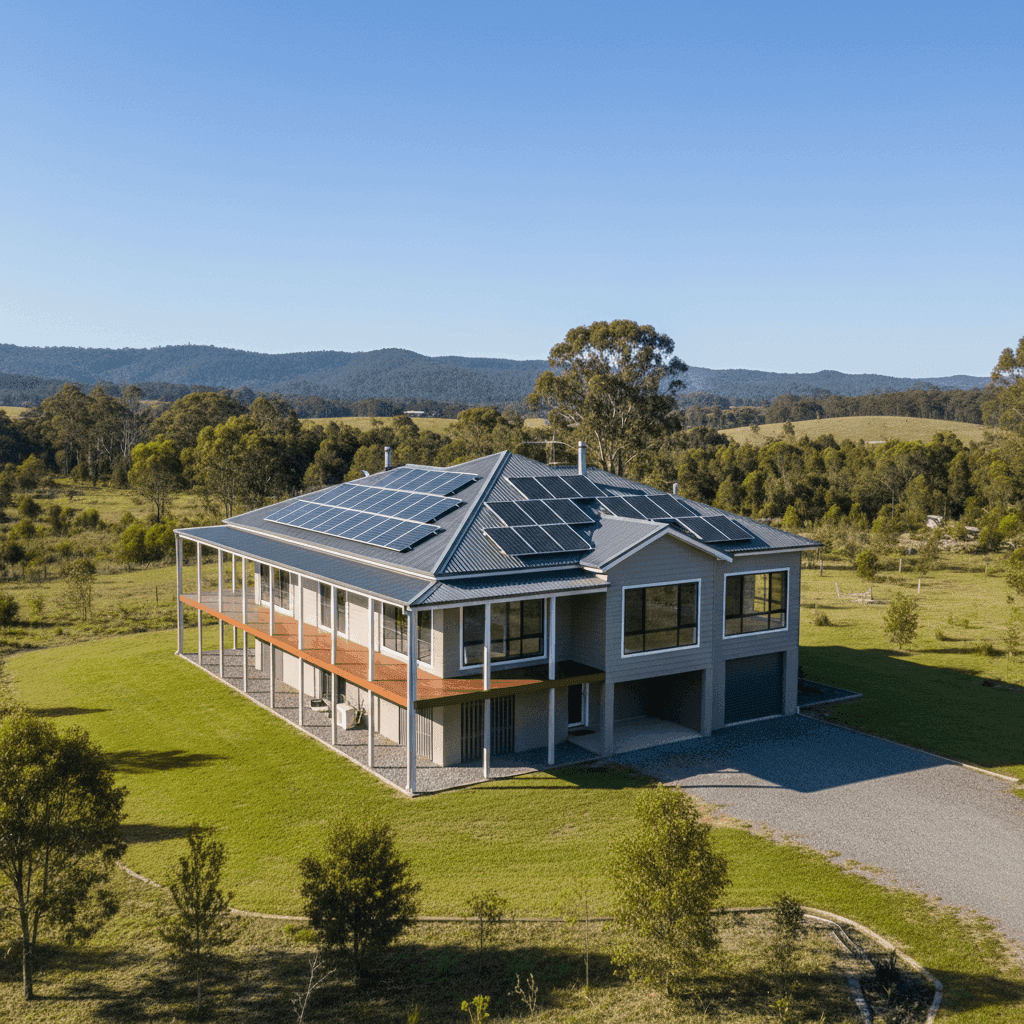
If you own a free standing home in Mossiface, VIC 3885, you'll know that finding the right home insurance at a fair price takes a little research. Nestled in the East Gippsland region of Victoria, Mossiface is a rural locality that comes with its own unique set of risk factors and insurance considerations. This article breaks down a real home and contents insurance quote for a five-bedroom property in the area, compares it against local, state, and national benchmarks, and offers practical tips to help you get better value on your cover.
---
Is This Quote Fair?
The quote in question comes to $5,665 per year (or $558 per month) for combined home and contents insurance, covering a building sum insured of $1,656,000 and contents valued at $123,000. The building excess sits at $3,000 and the contents excess at $1,000.
Our price rating for this quote is EXPENSIVE — above average.
To put that in perspective, the average home insurance premium across Victoria sits at $2,921 per year, with a state median of $2,694. Nationally, the average is $2,965 per year (median: $2,716). This quote is running at roughly 93% above the Victorian state average and nearly double the national average — a significant gap that warrants a closer look.
That said, it's important not to compare apples with oranges. This is a large, high-value property with a substantial building sum insured of over $1.6 million. The contents cover, at $123,000, is also meaningful. When you factor in the size, construction type, elevation, and rural location, some premium loading is entirely expected. The question is whether the degree of loading is justified — and whether there's room to shop around.
---
How Mossiface Compares
Unfortunately, there isn't enough suburb-level data available to provide a precise Mossiface-specific average, so we're working from the next best reference points.
The East Gippsland LGA average of $3,076 per year is the most relevant local benchmark. This is already higher than both the Victorian state average and the national average, which tells us that insurers view this region as carrying elevated risk compared to metropolitan and suburban areas. Bushfire exposure, remoteness, and limited emergency service access are all factors that can push premiums higher in regional Gippsland.
Even against the East Gippsland LGA average, this quote is still running at approximately 84% above the local benchmark — reinforcing the "expensive" rating. However, the LGA average covers a wide range of properties, many of which are smaller and less valuable than this one. A 305 sqm, five-bedroom home with a $1.656 million building sum insured is not a typical property, and its premium should be expected to sit well above the average.
| Benchmark | Annual Premium |
|---|---|
| This Quote | $5,665 |
| East Gippsland LGA Average | $3,076 |
| VIC State Average | $2,921 |
| National Average | $2,965 |
---
Property Features That Affect Your Premium
Several characteristics of this property directly influence the premium calculation. Here's what's likely driving the cost:
Large Home with High Sum Insured
At 305 sqm and five bedrooms, this is a substantial dwelling. The building sum insured of $1,656,000 reflects the full replacement cost of a large, modern home — and insurers price accordingly. A higher sum insured means a higher potential payout, which flows directly into the premium.
Hardiplank / Hardiflex External Walls
Fibre cement cladding such as Hardiplank and Hardiflex is generally viewed favourably by insurers due to its fire resistance and durability. Compared to weatherboard or brick veneer, this wall type can help moderate premiums, though it's one factor among many.
Steel / Colorbond Roof
Colorbond steel roofing is a strong performer in terms of weather resistance and longevity. It's well-suited to the variable conditions of regional Victoria and is generally regarded positively by insurers. This is unlikely to be adding a loading to your premium.
Elevated on Stumps (At Least 1 Metre)
The property is elevated by at least one metre on stumps, which is a notable feature. While elevation can reduce flood risk by keeping the structure above potential inundation levels, it can also introduce other considerations — such as the cost of repairing or replacing the subfloor structure and the additional complexity of rebuilding an elevated home. Insurers may apply some loading for this construction type.
Timber / Laminate Flooring
Timber and laminate flooring can be more costly to repair or replace following water damage compared to tiles. This is a relatively minor factor but can contribute to contents and building repair estimates.
Solar Panels
The presence of solar panels adds to the replacement value of the property. Many insurers include solar panels under building cover, and their replacement cost — which can run into the tens of thousands — is factored into the sum insured and the premium.
Rural East Gippsland Location
Location is one of the most significant premium drivers. East Gippsland is a bushfire-prone region, and properties in rural areas face higher risk scores from insurers. Limited access to fire services, longer emergency response times, and exposure to extreme weather events all contribute to higher base premiums in this part of Victoria.
---
Tips for Homeowners in Mossiface
1. Review Your Building Sum Insured Carefully
At $1,656,000, the building sum insured is significant. It's worth periodically reviewing this figure with a quantity surveyor or using an online rebuild cost calculator to ensure it accurately reflects current construction costs — neither over-insuring nor under-insuring. Over-insuring means you're paying more premium than necessary; under-insuring can leave you seriously exposed after a major claim.
2. Compare Multiple Quotes
The most effective way to combat an above-average premium is to shop around. Different insurers apply different risk models, and the variation in quotes for the same property can be substantial. Use a comparison tool like CoverClub to see multiple options side by side without having to contact each insurer individually.
3. Consider Your Excess Levels
This policy carries a $3,000 building excess and a $1,000 contents excess. Opting for a higher voluntary excess is one of the most straightforward ways to reduce your annual premium. If you have a solid emergency fund and are unlikely to make small claims, a higher excess can deliver meaningful savings over time.
4. Ask About Bushfire Mitigation Discounts
Some insurers offer premium discounts for properties where active bushfire risk mitigation measures are in place — such as cleared buffer zones, ember guards on vents, and non-combustible decking materials. It's worth asking your insurer directly whether any of these measures could reduce your premium, particularly given the bushfire risk profile of East Gippsland.
---
Ready to Compare?
A premium of $5,665 per year is a significant household expense, and you deserve to know whether you're getting fair value. Whether you're renewing your existing policy or shopping for the first time, comparing quotes is the smartest first step. Head to CoverClub to compare home and contents insurance options for your Mossiface property — it takes just a few minutes and could save you hundreds of dollars a year.