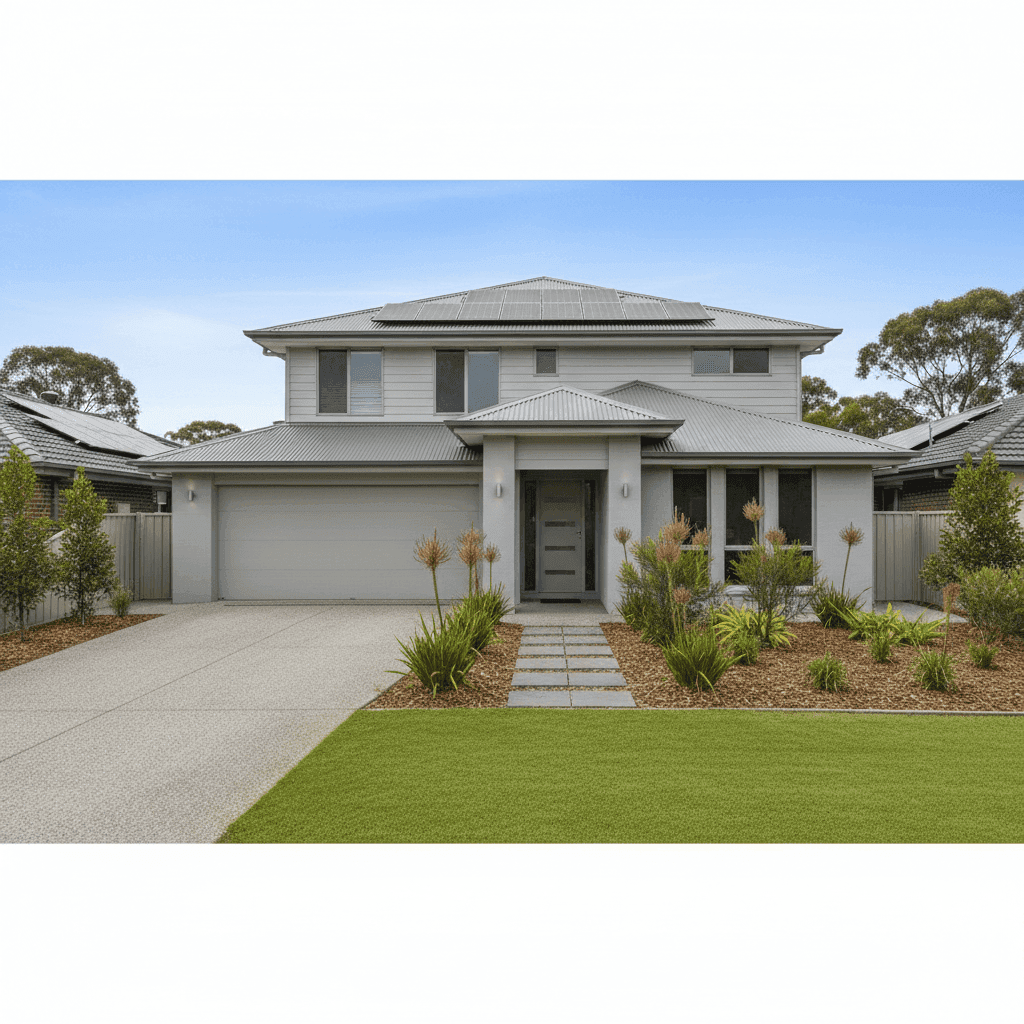
Mount Annan is one of south-west Sydney's most sought-after residential pockets — a master-planned suburb in the Campbelltown LGA known for its leafy streets, the Australian Botanic Garden, and a strong mix of modern family homes. If you own a large, free-standing home here, you're likely paying close attention to the cost of protecting it. This article breaks down a real home and contents insurance quote for a six-bedroom property in Mount Annan (postcode 2567) and puts it in context against local, state, and national pricing data.
---
Is This Quote Fair?
The annual premium for this quote comes in at $2,452 per year (or $241 per month), covering a building sum insured of $1,268,000 and $70,000 in contents. Our independent price rating for this quote is Fair — Around Average.
That rating makes sense when you look at the numbers in detail. For a property of this size — 363 sqm, six bedrooms, four bathrooms, built in 2013 — a building sum insured of $1.268 million is substantial, and it's the primary driver of the premium. The contents cover of $70,000 is relatively modest by comparison, which helps keep the overall cost from climbing further.
A building excess of $3,000 is on the higher side and will meaningfully reduce the premium, while the contents excess of $600 sits in a more typical range. If you're comfortable absorbing a larger out-of-pocket cost in the event of a claim, that $3,000 building excess is doing real work to keep your annual outlay down.
Overall, "Fair" is an honest assessment — this isn't a bargain, but it's not an outlier either. For a home of this calibre in greater Sydney, it's a reasonable starting point.
---
How Mount Annan Compares
Understanding where your premium sits relative to your neighbours — and to the broader market — is one of the most useful things you can do as a homeowner. Here's how this quote stacks up:
| Benchmark | Premium |
|---|---|
| This quote | $2,452 / yr |
| Mount Annan suburb average | $1,735 / yr |
| Mount Annan suburb median | $1,377 / yr |
| Mount Annan 25th percentile | $911 / yr |
| Mount Annan 75th percentile | $2,506 / yr |
| Campbelltown LGA average | $2,555 / yr |
| NSW state average | $3,801 / yr |
| NSW state median | $3,410 / yr |
| National average | $2,965 / yr |
| National median | $2,716 / yr |
A few things stand out here. First, this quote sits above the Mount Annan suburb average and median — but that's largely expected given the property's size. A six-bedroom, four-bathroom home with a building sum insured of $1.268 million is considerably larger than a typical Mount Annan dwelling, so a higher-than-median premium is appropriate rather than alarming.
Second, and perhaps more encouragingly, this quote comes in well below both the NSW state average ($3,801) and the national average ($2,965). That's a meaningful gap — roughly $1,350 less per year than the average NSW homeowner pays. It also sits just below the suburb's 75th percentile ($2,506), meaning around three-quarters of comparable quotes in the area are cheaper, but only slightly so.
You can explore the full pricing landscape for this postcode on the Mount Annan suburb stats page, or zoom out to see NSW-wide home insurance data and national benchmarks.
> Note: The suburb sample size for Mount Annan is 18 quotes, which is a reasonable but modest dataset. Treat suburb-level averages as a useful guide rather than a definitive benchmark.
---
Property Features That Affect Your Premium
Every insurer assesses risk differently, but the physical characteristics of your home play a significant role in how your premium is calculated. Here's how the features of this particular property are likely influencing the cost:
Hebel external walls Hebel (autoclaved aerated concrete) is increasingly popular in Australian new builds for its thermal performance and fire resistance. Many insurers view Hebel favourably from a risk perspective, though it can be more costly to repair than brick veneer, which may be reflected in the sum insured.
Steel/Colorbond roof Colorbond roofing is widely regarded as one of the more insurer-friendly roof types in Australia. It's durable, fire-resistant, and performs well in high-wind conditions. This is likely contributing positively to the premium calculation.
Slab foundation and tiled flooring A concrete slab foundation is a low-risk construction method that's standard for homes of this era in NSW. Combined with tile flooring, the property has a relatively low susceptibility to water and moisture damage compared to homes with timber subfloors.
Solar panels Solar panels add value to a property but also add complexity to an insurance policy. They increase the replacement cost of the home and can be a source of claims if damaged by hail or storm. It's worth confirming with your insurer that solar panels are explicitly included in your building cover.
Ducted climate control Ducted air conditioning systems are expensive to replace and can be a source of water damage claims if poorly maintained. Insurers typically factor this into the building sum insured, and it's important to ensure your coverage accurately reflects the cost of reinstating the system.
No pool, no cyclone risk The absence of a pool removes a common liability exposure, and Mount Annan sits well outside any designated cyclone risk zone — both factors that help keep the premium from climbing higher.
Construction year: 2013 A home built in 2013 is modern enough to comply with updated building codes introduced after significant weather events in the early 2000s, which generally translates to better structural resilience and lower risk profiles with many insurers.
---
Tips for Homeowners in Mount Annan
1. Review your building sum insured annually Construction costs in NSW have risen sharply over the past few years. A sum insured set even two or three years ago may no longer reflect the true cost of rebuilding your home. Use a building cost calculator or speak with a quantity surveyor to ensure you're not underinsured — particularly important for a large home like this one.
2. Confirm solar panel coverage explicitly Don't assume your solar panels are automatically covered under your building policy. Ask your insurer directly whether panels are included, what events are covered (e.g. hail, storm, fire), and whether the inverter is also covered. Some policies treat panels as a separate item.
3. Consider your excess strategy carefully The $3,000 building excess on this policy is doing meaningful work to reduce the annual premium. Before adjusting it downward, weigh the premium saving against the realistic likelihood of making a claim. For catastrophic events (storm, fire, flood), a $3,000 excess is manageable — but it does mean smaller claims may not be worth lodging.
4. Shop the market every 12 months Insurers regularly reprice their books, and loyalty doesn't always pay. Even if your current premium feels reasonable, comparing quotes at renewal could reveal a materially better deal — especially given the spread in Mount Annan pricing between the 25th percentile ($911) and 75th percentile ($2,506).
---
Ready to Compare?
Whether you're renewing your policy or shopping for the first time, comparing quotes is the single most effective way to make sure you're not overpaying. Get a home insurance quote at CoverClub and see how your premium stacks up against real data from your suburb and beyond.