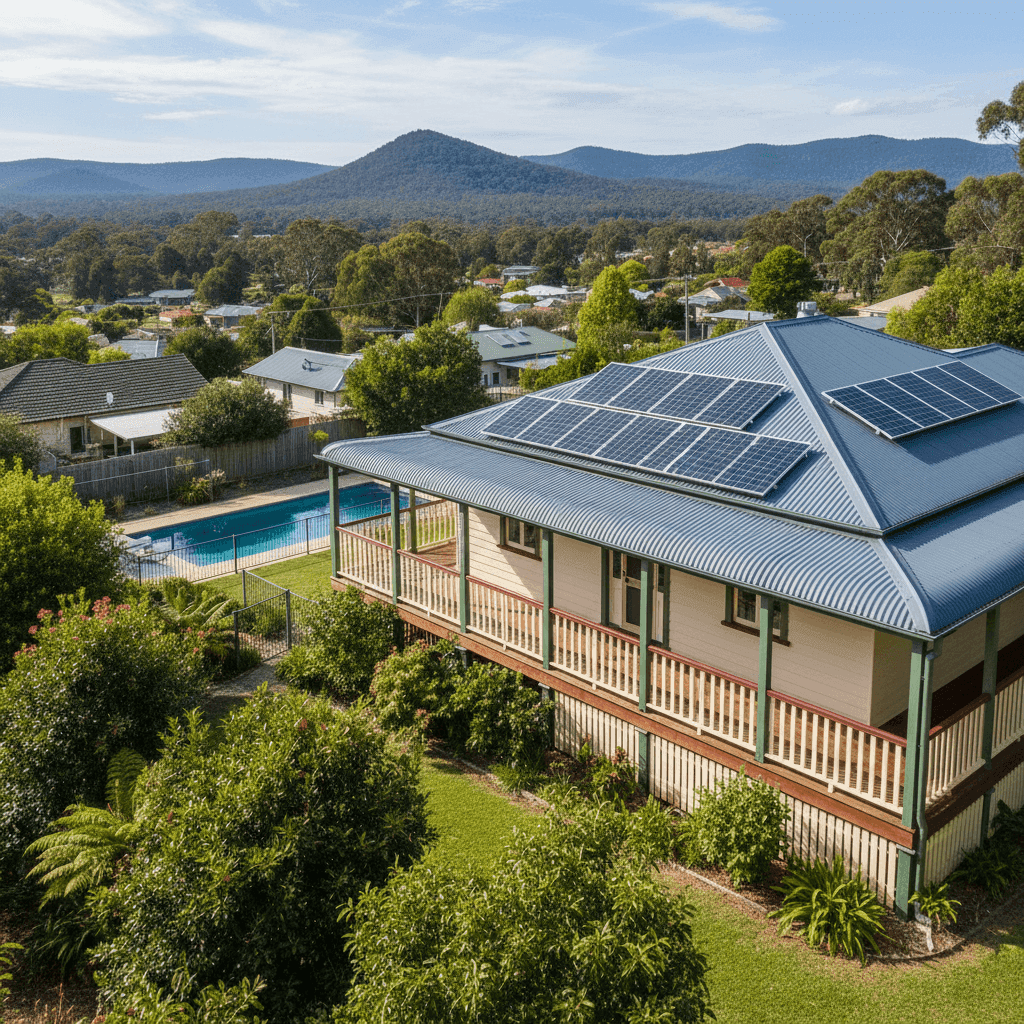
Mount Burnett is a quiet, semi-rural locality nestled in the Dandenong Ranges foothills of Victoria's Cardinia Shire — the kind of place where tree-lined streets, elevated blocks, and character homes are part of the appeal. But that same charm can come with insurance considerations that are worth understanding before you sign on the dotted line. In this article, we analyse a recent home and contents insurance quote for a four-bedroom, three-bathroom free standing home in Mount Burnett (postcode 3781), breaking down whether the premium is competitive and what's driving the cost.
---
Is This Quote Fair?
The quoted annual premium for this property is $4,521 per year (or $433 per month), covering a building sum insured of $825,000 and contents valued at $90,000, each with a $1,000 excess.
Based on available market data, this quote is rated Expensive — above average for the region. Here's how it stacks up:
| Benchmark | Annual Premium |
|---|---|
| This Quote | $4,521 |
| LGA (Cardinia) Average | $3,089 |
| VIC State Average | $3,000 |
| VIC State Median | $2,718 |
| National Average | $5,347 |
| National Median | $2,764 |
At first glance, the national average of $5,347 might make this quote seem reasonable — and it's true that this property sits well below that figure. However, when benchmarked against the Victorian state average of $3,000 and the Cardinia LGA average of $3,089, the premium is notably higher. Homeowners in this postcode should be aware they may be paying a premium that warrants shopping around.
That said, context matters enormously. This is not a standard suburban home — it's a sizeable 214 sqm weatherboard property on stumps, with a pool, solar panels, and ducted climate control, insured for $825,000. Each of these features adds legitimate cost to the policy, and we'll explore each one below.
---
How Mount Burnett Compares
Unfortunately, suburb-level data for Mount Burnett (3781) is limited, which itself can be a signal — smaller, less densely populated localities sometimes attract higher premiums simply because insurers have less claims history to price against, leading to more conservative (i.e. higher) risk assessments.
What we do know is that the Cardinia LGA average sits at $3,089 per year — already slightly above the broader Victorian state average. This suggests that properties across Cardinia Shire tend to attract modestly elevated premiums compared to metropolitan Melbourne, likely reflecting factors such as bushfire exposure, rural road access for emergency services, and the prevalence of timber construction in the area.
When viewed against national benchmarks, the picture shifts. Australia's national average premium of $5,347 reflects the outsized influence of high-risk zones — particularly cyclone-prone Queensland and flood-affected northern NSW. By that measure, $4,521 for a well-appointed property in the Dandenong Ranges is not extraordinary. But for a Victorian homeowner used to seeing state averages closer to $3,000, it's still a significant outlay.
You can explore more local data at the Mount Burnett insurance stats page.
---
Property Features That Affect Your Premium
Several characteristics of this home have a meaningful impact on the insurance cost. Understanding them helps you make sense of the quote — and identify where you might have leverage.
Weatherboard Timber Walls
Weatherboard construction is one of the most common wall types in older Victorian homes, but it carries higher risk than brick veneer or double brick. Timber is more susceptible to fire, termite damage, and general weathering, which insurers factor into their pricing. In a semi-rural area like Mount Burnett, where bushfire risk is a real consideration, this weighting is likely more pronounced.
Steel/Colorbond Roof
On the positive side, a Colorbond steel roof is generally viewed favourably by insurers. It's durable, fire-resistant, and low-maintenance compared to terracotta tiles or older iron sheeting. This may partially offset the risk associated with the timber wall construction.
Stump Foundation & Elevated Design
The home sits on stumps and is elevated by less than one metre. Elevated homes can be more vulnerable to underfloor wind damage and pest ingress, but they also tend to fare better in surface water events. Insurers assess this on a case-by-case basis, and the modest elevation here is unlikely to be a major premium driver either way.
Swimming Pool
A pool adds to the replacement value of the property and introduces liability considerations, both of which contribute to a higher sum insured and, consequently, a higher premium.
Solar Panels
Solar panels are now a standard feature on many Australian homes, but they do add to the insured value of the building. At 214 sqm with a full ducted climate control system and solar array, this home's $825,000 building sum insured reflects a well-equipped, higher-value dwelling.
High Building Sum Insured
At $825,000, the building cover is the dominant cost driver in this policy. This figure should represent the full cost to rebuild the home from scratch — not its market value. Given the size, construction type, and features involved, this figure is plausible, but it's worth verifying with a quantity surveyor to ensure you're not over-insured (which costs you money) or under-insured (which could leave you exposed at claim time).
---
Tips for Homeowners in Mount Burnett
1. Review Your Sum Insured Carefully
The single biggest lever on your premium is the building sum insured. If your $825,000 figure was estimated rather than professionally assessed, consider commissioning a building replacement cost assessment. Over-insurance is common and quietly expensive.
2. Compare Multiple Quotes
A premium rated "expensive" relative to state and LGA averages is a clear signal to shop around. Insurers price risk differently, and for a weatherboard home in a semi-rural Victorian postcode, the spread between the cheapest and most expensive quotes can be substantial. Get a comparison quote at CoverClub to see what else is available.
3. Consider Your Excess Level
This policy carries a $1,000 excess on both building and contents. Opting for a higher excess — say $2,000 or $2,500 — can meaningfully reduce your annual premium. If you have the financial buffer to cover a larger out-of-pocket cost in the event of a claim, this is often a smart trade-off.
4. Ask About Bushfire and Ember Attack Preparedness Discounts
Some insurers offer premium reductions for homes that have taken active steps to reduce bushfire risk — such as maintaining a defendable space, installing ember guards on vents, or using fire-resistant materials in renovations. Given Mount Burnett's location in the Dandenong Ranges, it's worth asking your insurer whether any mitigation measures could reduce your premium.
---
Ready to Find a Better Deal?
Whether this quote turns out to be the right one for your situation or simply a useful benchmark, the best way to know you're getting value is to compare. At CoverClub, we make it easy to see how your premium stacks up and explore alternatives — all in one place. Start comparing home insurance quotes today and make sure your Mount Burnett home is protected at the right price.