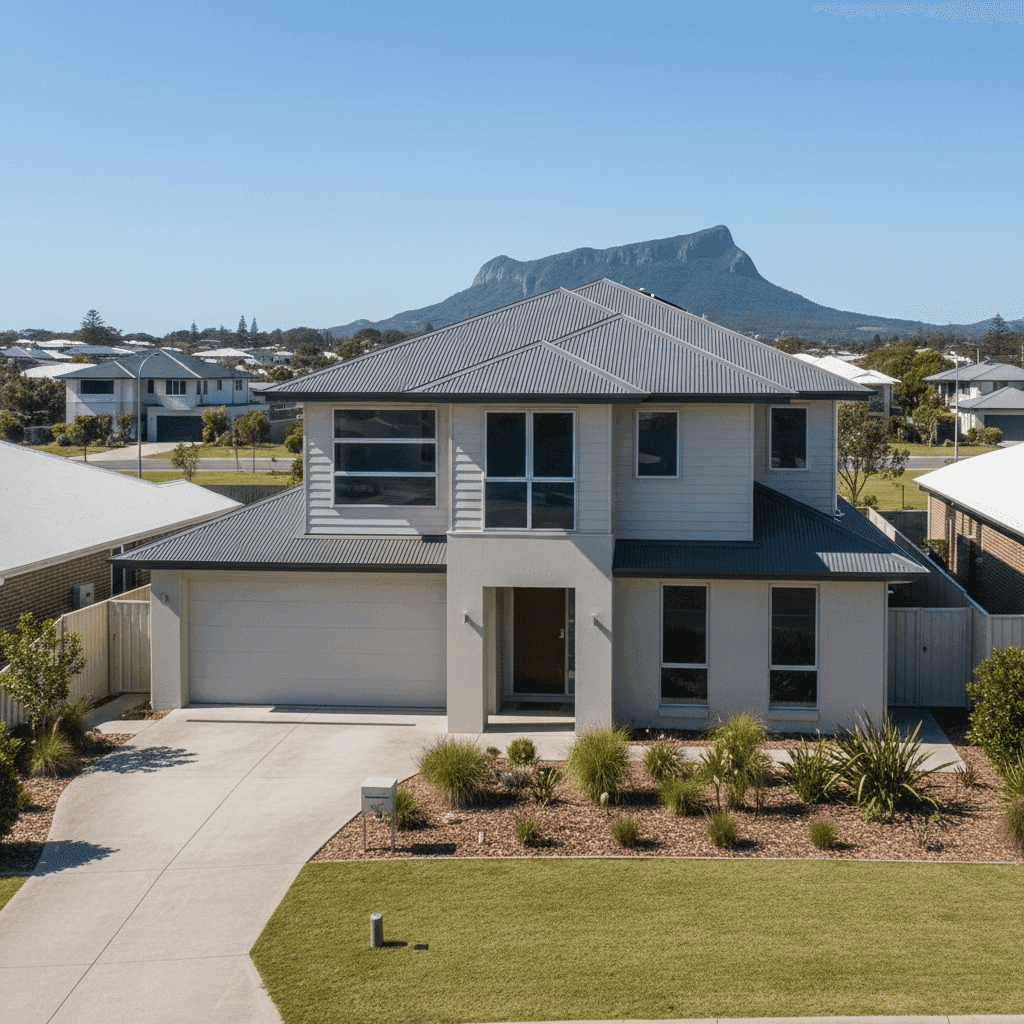
Mount Coolum is one of the Sunshine Coast's most sought-after pockets — a relaxed beachside suburb sitting between the surf at Coolum Beach and the hinterland greenery of Noosa. It's the kind of place where well-built modern homes are the norm, and for good reason. But what does it actually cost to insure a home here? We've taken a close look at a real quote for a 3-bedroom, 2-bathroom free-standing home in Mount Coolum (postcode 4573) to give you a clear picture of the local insurance landscape.
---
Is This Quote Fair?
The annual premium for this property came in at $1,914 per year (or about $190 per month), covering both home and contents with a building sum insured of $500,000 and contents valued at $40,000. CoverClub rates this quote as CHEAP — below average for the area.
To put that in perspective: the suburb average for Mount Coolum sits at $3,144 per year, with a median of $3,191. That means this quote is coming in at roughly 39% below the local average — a genuinely strong result for the homeowner.
The building excess is $3,000 and the contents excess is $1,000, which are on the higher side and likely contribute to keeping the premium down. Higher excesses are a common and effective lever for reducing what you pay upfront each year, provided you're comfortable covering more out of pocket in the event of a claim.
Overall, this quote represents solid value for a well-specified modern home in a coastal Queensland suburb.
---
How Mount Coolum Compares
Understanding where your suburb sits in the broader pricing landscape is key to knowing whether you're getting a fair deal. Here's how Mount Coolum stacks up:
| Benchmark | Annual Premium |
|---|---|
| This Quote | $1,914 |
| Mount Coolum Suburb Average | $3,144 |
| Mount Coolum Suburb Median | $3,191 |
| Mount Coolum 25th Percentile | $2,459 |
| Mount Coolum 75th Percentile | $4,037 |
| QLD State Average | $9,129 |
| QLD State Median | $3,903 |
| National Average | $5,347 |
| National Median | $2,764 |
| Noosa LGA Average | $18,770 |
(Based on 32 quotes sampled for the Mount Coolum suburb area.)
A few things stand out here. First, the QLD state average of $9,129 is dramatically higher than what Mount Coolum homeowners are typically paying — this is largely driven by high-risk postcodes in Far North Queensland, where cyclone exposure sends premiums soaring. Mount Coolum is not classified as a cyclone risk area, which is a meaningful advantage.
Second, the Noosa LGA average of $18,770 is extraordinarily high. This reflects the significant flood, storm surge, and bushfire risk exposure across parts of the broader Noosa local government area — particularly riverfront and low-lying properties. Mount Coolum's own suburb average of $3,144 is far more modest, suggesting insurers view this specific pocket as comparatively lower risk.
Against the national average of $5,347, Mount Coolum looks very affordable. Even the suburb's 75th percentile ($4,037) sits well below the national average, making this a relatively cost-effective area to insure a home.
---
Property Features That Affect Your Premium
Several characteristics of this particular property work in the homeowner's favour when it comes to insurance pricing:
Hardiplank/Hardiflex External Walls Fibre cement cladding like Hardiplank is a popular choice in coastal Queensland for good reason — it's resistant to moisture, rot, and termites, and performs well in the humid subtropical climate. Insurers generally view this material favourably compared to timber weatherboard, which can be more vulnerable to fire and moisture damage.
Steel/Colorbond Roof Colorbond is widely regarded as one of the most resilient roofing options available in Australia. It handles high winds, heavy rain, and hail far better than older materials like terracotta tiles or corrugated iron, and it's less susceptible to the kind of storm damage that drives up claims — and premiums — in coastal areas.
Concrete Slab Foundation A slab foundation is straightforward for insurers to assess and is associated with lower subsidence and settlement risk compared to older stump or pier foundations. Combined with tile flooring, the home has a solid, low-maintenance base that reduces exposure to certain types of damage.
Constructed in 2014 A home built in 2014 benefits from more recent building codes, including improved cyclone tie-down requirements and flood-resilient construction standards that were tightened after major Queensland weather events in the early 2010s. Newer builds typically attract more competitive premiums than older homes requiring maintenance or upgrades.
Slightly Elevated (Less Than 1m) The property is noted as elevated by less than one metre. While this is a modest elevation, it can still offer some protection against minor surface water ingress during heavy rainfall events — a relevant consideration on the Sunshine Coast.
No Pool, Solar Panels, or Ducted Climate Control Each of these features adds complexity and replacement cost to a home's insurance profile. The absence of all three keeps the risk profile simple and the premium lean.
---
Tips for Homeowners in Mount Coolum
Whether you're reviewing your existing cover or shopping for the first time, here are some practical steps to make sure you're getting the best outcome:
- Review your sum insured annually. Building costs in Queensland have risen significantly in recent years due to labour shortages and materials inflation. A $500,000 sum insured may be appropriate today, but it's worth checking against a current building cost estimate each year to avoid being underinsured if you ever need to make a claim.
- Consider your excess carefully. The $3,000 building excess on this policy is relatively high. If you have the savings to cover that amount comfortably, it's a smart way to reduce your annual premium. If not, it may be worth comparing policies with a lower excess — even if the annual cost is slightly higher.
- Don't overlook contents cover. At $40,000, the contents sum insured here is on the modest side. Take the time to walk through your home and estimate the replacement cost of your furniture, appliances, electronics, clothing, and valuables. Many Australians find they're underinsured for contents when they actually sit down and add it up.
- Compare quotes every year. The insurance market is competitive, and loyalty doesn't always pay. Insurers frequently adjust their pricing models, and a policy that was the best value two years ago may no longer be. Use a comparison tool like CoverClub to benchmark your renewal against the current market.
---
Ready to See What You Could Pay?
Whether you're a Mount Coolum local or looking to buy in the area, it pays to know your numbers. CoverClub makes it easy to compare home and contents insurance quotes from multiple insurers in minutes — so you can see exactly how your premium stacks up against your neighbours. Get a quote today and find out if you're paying too much.