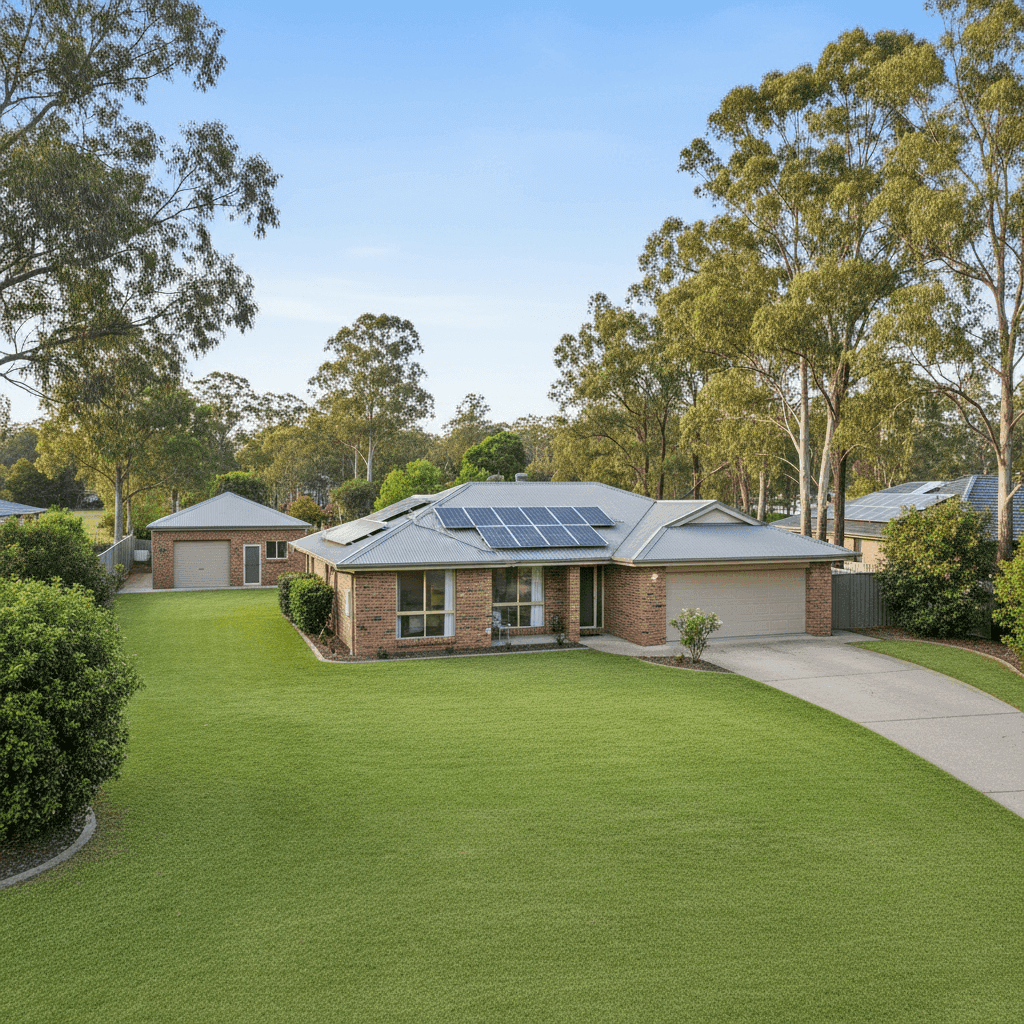
Mount Cotton is a leafy, semi-rural suburb nestled in the Redland City Council area, about 35 kilometres south-east of Brisbane. Known for its larger allotments, quiet streets, and proximity to the Moreton Bay coastline, it's a popular choice for families looking for space without straying too far from the city. For homeowners here, understanding what you're paying for home insurance — and whether that price stacks up — is an important part of protecting what is likely your most valuable asset.
This article breaks down a real home and contents insurance quote for a five-bedroom free standing home in Mount Cotton (postcode 4165), comparing the premium against local, state, and national benchmarks.
---
Is This Quote Fair?
The quote in question comes in at $3,505 per year (or $335 per month), covering a building sum insured of $696,000 and $100,000 in contents. Both the building and contents carry a $2,000 excess.
Our pricing analysis rates this quote as Fair — Around Average, which is a reasonable outcome for a property of this size and specification. Here's why that rating makes sense in context:
- The Mount Cotton suburb average sits at $4,440/yr, with a median of $4,234/yr
- This quote falls below both the suburb average and median — a positive sign
- It also sits just above the suburb's 25th percentile of $3,348/yr, meaning roughly 75% of comparable quotes in the area are more expensive
In short, while the premium isn't the cheapest on the market, it's meaningfully below what many Mount Cotton homeowners are paying. For a five-bedroom home with a granny flat and solar panels — both of which add to the insured value — landing below the suburb median is a solid result.
---
How Mount Cotton Compares
To put this quote into broader perspective, it helps to look at how Mount Cotton's insurance costs sit relative to Queensland and the national picture.
| Benchmark | Average Premium | Median Premium |
|---|---|---|
| Mount Cotton (4165) | $4,440/yr | $4,234/yr |
| Redland LGA | $3,312/yr | — |
| Queensland | $4,547/yr | $3,931/yr |
| National | $2,965/yr | $2,716/yr |
A few things stand out here. First, Mount Cotton premiums are broadly in line with the Queensland state average — this is typical for south-east Queensland suburbs, where flood mapping, storm risk, and ageing housing stock all contribute to elevated pricing compared to the national norm.
Second, the national average of $2,965/yr is significantly lower than what most Queensland homeowners pay. This gap reflects the heightened natural hazard exposure across much of Queensland — particularly storm, hail, and flood events — which insurers price into their risk models.
Interestingly, the Redland LGA average of $3,312/yr is notably lower than the Mount Cotton suburb average, suggesting that pricing within the LGA varies considerably by specific location and property type. Mount Cotton's slightly elevated suburb average may reflect the prevalence of larger homes and higher sum insured values in the area.
This quote, at $3,505/yr, sits comfortably below the Queensland state average and is competitive within the Redland LGA context.
---
Property Features That Affect Your Premium
Several characteristics of this property directly influence the insurance premium. Understanding these factors can help you make sense of what you're paying — and where there might be room to adjust.
Brick Veneer Construction Brick veneer external walls are generally viewed favourably by insurers. They offer solid fire resistance and structural durability, which can contribute to more competitive premiums compared to timber-framed or weatherboard homes.
Steel/Colorbond Roof Colorbond roofing is a popular choice in Queensland and tends to perform well in storm conditions. It's lighter than concrete tiles, resistant to cracking, and generally easier to repair or replace — all factors that can keep insurance costs in check.
Slab Foundation A concrete slab foundation is standard in Queensland construction and is generally considered low-risk by insurers, with fewer concerns around subsidence or moisture ingress compared to suspended timber floors.
1977 Construction Year Homes built in the late 1970s can attract slightly higher premiums due to older wiring, plumbing, and building materials that may not meet current standards. That said, brick veneer construction from this era is typically robust, and a well-maintained home can still attract competitive rates.
Solar Panels Solar panels add value to the property and need to be factored into the building sum insured. Insurers also consider the added complexity of repairs involving rooftop systems. Ensuring your sum insured adequately covers the replacement cost of your solar installation is important.
Granny Flat The presence of a granny flat adds additional floor space and structural value, which is reflected in the higher building sum insured of $696,000. It's worth confirming with your insurer that the granny flat is explicitly covered under your policy, including any fixtures and fittings within it.
214 sqm Building Size At 214 sqm, this is a substantial home. Building sum insured calculations should account for full reconstruction costs, including demolition, materials, and labour — not just the market value of the property. At $696,000, the sum insured works out to roughly $3,252 per sqm, which is within a reasonable range for Queensland construction costs, though it's worth reviewing periodically as building costs continue to rise.
---
Tips for Homeowners in Mount Cotton
1. Review your sum insured regularly Construction costs in Queensland have risen sharply over the past few years. If your building sum insured hasn't been updated recently, you could be underinsured — meaning you'd face a shortfall in the event of a total loss. Use a building cost calculator or speak to a quantity surveyor to verify your figure annually.
2. Confirm your granny flat is fully covered Not all policies automatically extend full cover to secondary dwellings. Check your Product Disclosure Statement (PDS) to confirm the granny flat — including its fixtures, fittings, and any contents — is included in your cover.
3. Itemise high-value contents With $100,000 in contents cover, it's worth creating a detailed home inventory. High-value items like electronics, jewellery, and artwork may need to be separately listed (scheduled) to ensure they're fully covered in a claim.
4. Compare quotes at renewal time Insurance premiums can shift significantly from year to year, and loyalty doesn't always pay. Even if your current quote is competitive, it's worth running a comparison at each renewal to ensure you're still getting good value. Compare home insurance quotes at CoverClub to see how your current premium stacks up.
---
Ready to Compare?
Whether you're a Mount Cotton local reviewing your current policy or a new homeowner getting your first quote, CoverClub makes it easy to see how your premium compares to others in your suburb, across Queensland, and nationally. Get a home insurance quote today and find out if you're paying a fair price — or if there's a better deal waiting for you.