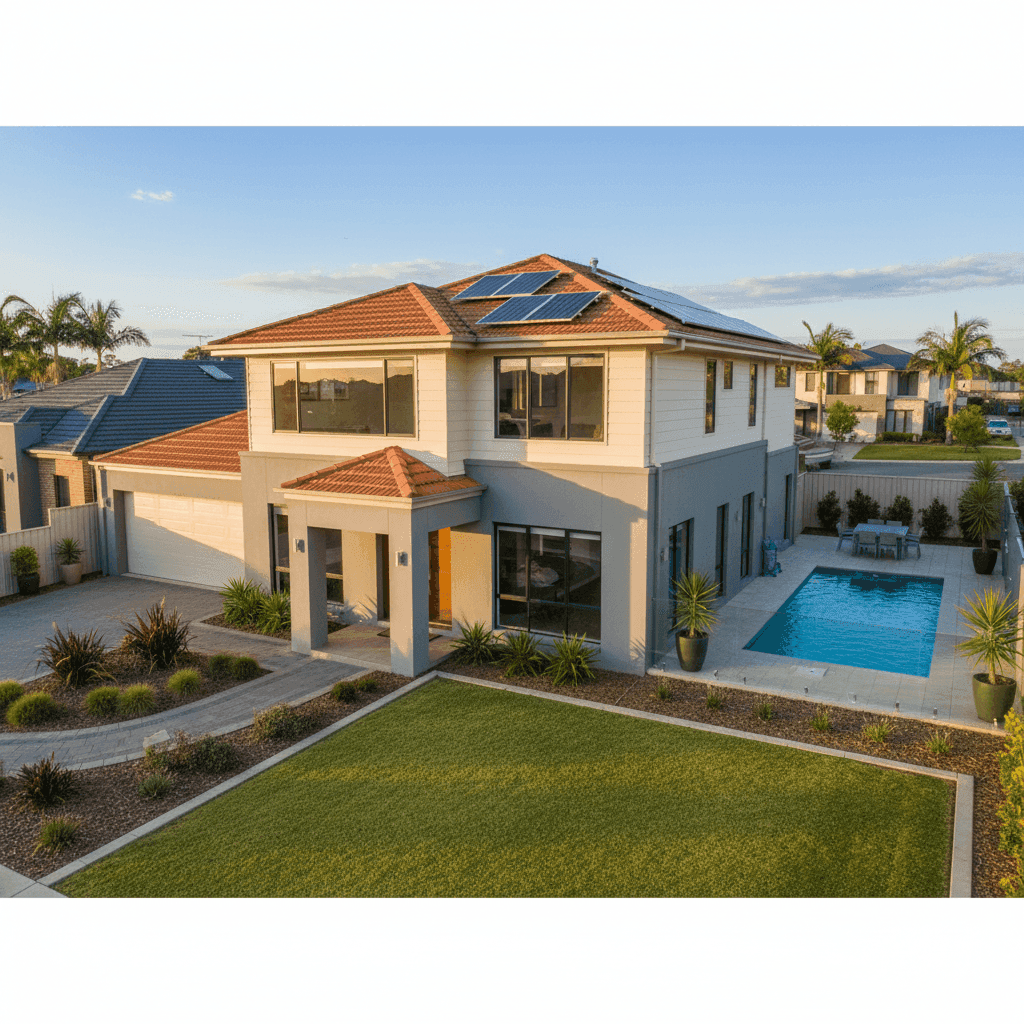
Mount Druitt, nestled in Sydney's Greater Western suburbs within the Blacktown local government area, is home to a growing number of modern, well-appointed properties. This article takes a close look at a real home and contents insurance quote for a five-bedroom, four-bathroom free-standing home in Mount Druitt NSW 2770 — built in 2021, fitted with solar panels, a pool, and ducted climate control — and breaks down whether the annual premium of $2,864 represents fair value or whether there's room to do better.
---
Is This Quote Fair?
The short answer: this quote sits in the expensive range relative to the local market.
At $2,864 per year (or around $280 per month), this premium is notably higher than both the suburb average of $1,860/yr and the suburb median of $1,728/yr. In fact, it clears the 75th percentile for Mount Druitt — meaning it's more expensive than at least three-quarters of comparable quotes sourced in the area.
That said, context matters. This is a large, high-value property with a building sum insured of $1,100,000 and contents cover of $100,000 — a total insured value of $1.2 million. The above-average fittings quality, pool, solar panels, and ducted air conditioning all contribute to a higher replacement cost, which insurers price accordingly.
When you stack this quote against New South Wales averages, the picture shifts considerably. The NSW average home insurance premium sits at $3,801/yr, with a median of $3,410/yr — both well above what's being quoted here. So while this premium looks steep at the suburb level, it's actually below the state average by nearly $1,000 per year.
The verdict: the quote is above average for Mount Druitt, but reasonable given the property's size, age, and features — and it's competitive when benchmarked against broader NSW pricing.
---
How Mount Druitt Compares
Understanding where your suburb sits in the broader insurance landscape can help you gauge whether you're getting a fair deal.
| Benchmark | Average Premium | Median Premium |
|---|---|---|
| Mount Druitt (2770) | $1,860/yr | $1,728/yr |
| Blacktown LGA | $2,135/yr | — |
| New South Wales | $3,801/yr | $3,410/yr |
| National | $2,965/yr | $2,716/yr |
A few things stand out here. Mount Druitt premiums are significantly lower than both the NSW and national averages, which is largely a reflection of the suburb's relatively low exposure to catastrophic weather events — no cyclone risk, lower flood and bushfire exposure compared to many regional and coastal NSW areas.
At $2,864/yr, this particular quote sits above the national average of $2,965/yr by just $101 — essentially on par with what Australians pay on average across the country. For a large, modern home with premium features, that's a reasonable outcome.
The Blacktown LGA average of $2,135/yr is a useful local reference point. This quote exceeds that figure, but again, the higher sum insured and additional features (pool, solar, ducted HVAC) justify some of that gap.
---
Property Features That Affect Your Premium
Several characteristics of this property have a direct bearing on the insurance premium quoted. Here's how each one plays into the pricing:
New construction (2021): Newer homes are generally cheaper to insure on a per-square-metre basis because they meet current building codes, use modern materials, and are less prone to structural issues. This works in the homeowner's favour.
Tiled roof: Terracotta or concrete tile roofs are considered durable and resilient. Compared to older materials like fibro or corrugated iron, tiles attract more favourable pricing from most insurers.
Slab foundation: A concrete slab is one of the most stable foundation types and is standard for modern Australian homes. It carries minimal additional risk from a structural standpoint.
Above-average fittings: Kitchens and bathrooms with premium finishes — stone benchtops, quality tapware, custom cabinetry — cost significantly more to repair or replace. Insurers factor this into the building sum insured, which is why the $1,100,000 figure is appropriate for a property of this standard.
Swimming pool: A pool adds both value and liability to a property. It increases the cost of rebuilding and may attract a small loading on the premium, particularly for public liability coverage.
Solar panels: Rooftop solar systems are an increasingly common feature but can be costly to replace. Most policies include them under the building cover, and their presence can nudge the premium upward slightly.
Ducted climate control: Like solar panels, ducted air conditioning systems are expensive to repair or replace and contribute to a higher overall building replacement value.
Slightly elevated (less than 1m): The property is elevated by less than one metre — a minor factor, but one that can offer marginal protection against surface water ingress in heavy rain events.
---
Tips for Homeowners in Mount Druitt
Whether you're reviewing an existing policy or shopping around for the first time, these practical steps can help you get better value on your home insurance.
1. Make sure your sum insured reflects true rebuild cost At $1,100,000, this building sum insured is substantial — but it's important to verify it covers the full cost of rebuilding, not just the market value. For a large, modern home with above-average fittings, underinsurance is a real risk. Use a building cost calculator or speak with a quantity surveyor to validate your figure.
2. Review your contents cover annually Contents values change over time as you acquire new items or upgrade appliances. A $100,000 contents sum may be appropriate, but it's worth doing a room-by-room stocktake each year to ensure you're not left short after a claim.
3. Compare multiple quotes before renewing Loyalty doesn't always pay in insurance. Premiums can vary significantly between providers for the same level of cover. Compare quotes at CoverClub to see what competing insurers are offering for your specific property and risk profile.
4. Ask about discounts for security and safety features Some insurers offer reduced premiums for homes with monitored alarm systems, deadbolts, or smoke detectors. It's worth asking your insurer whether any of your property's features qualify for a discount that isn't automatically applied.
---
Ready to See What Else Is Out There?
If you're a homeowner in Mount Druitt or anywhere across New South Wales, it pays to compare. Insurance markets are competitive, and the right policy for your property may be priced very differently across providers. Head to CoverClub to get a personalised quote comparison for your home — it takes just a few minutes and could save you hundreds of dollars a year.