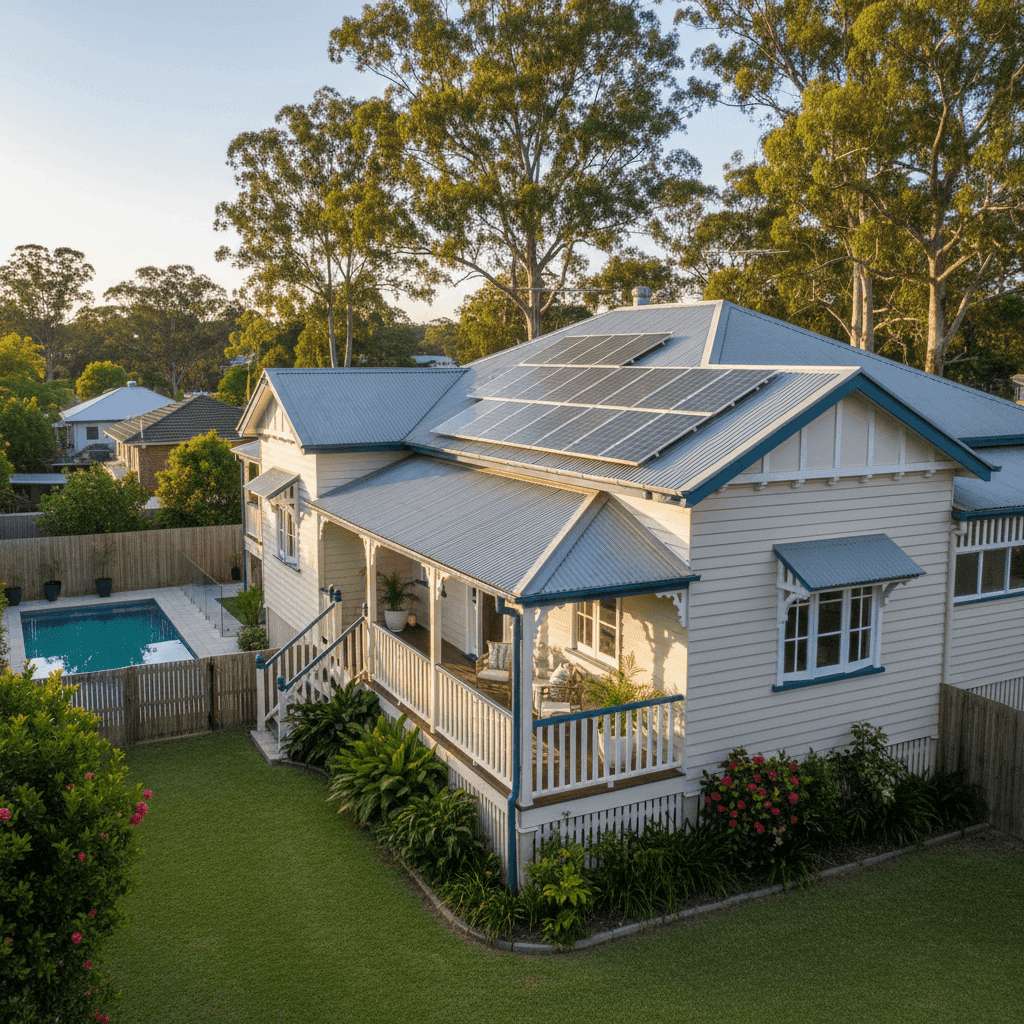
Mount Gravatt East is a well-established suburb in Brisbane's south-east corridor, popular with families drawn to its leafy streets, good schools, and convenient access to the city. For owners of a free standing home in this area, understanding what you should be paying for home and contents insurance — and why — is an important part of protecting one of your most significant assets. This article breaks down a real insurance quote for a five-bedroom, two-bathroom home in Mount Gravatt East (QLD 4122) and puts it in context against local, state, and national benchmarks.
---
Is This Quote Fair?
The annual premium on this quote comes in at $2,489 per year (or $244 per month), covering both building and contents. Our price rating for this quote is CHEAP — below average — which is genuinely good news for the homeowner.
To put that in perspective: the Queensland state average premium sits at $4,547 per year, with a state median of $3,931. That means this quote is coming in at roughly 45% below the QLD average — a significant saving. Even against the national average of $2,965 and national median of $2,716, this premium is competitive, sitting below both benchmarks.
For a property of this size — 325 sqm with above-average fittings, a pool, solar panels, and ducted climate control — a sub-$2,500 annual premium represents solid value. The building sum insured is set at $1,000,000 with a $3,000 excess, and contents are covered for $125,000 with a $1,000 excess. The higher building excess is worth noting, as it means the homeowner absorbs more cost in the event of a claim, which likely contributes to keeping the premium lower.
---
How Mount Gravatt East Compares
While there isn't enough suburb-level data to produce a specific Mount Gravatt East average at this stage, we can draw meaningful comparisons using the Brisbane LGA and Queensland state figures.
| Benchmark | Annual Premium |
|---|---|
| This Quote | $2,489 |
| National Median | $2,716 |
| National Average | $2,965 |
| Brisbane LGA Average | $4,485 |
| QLD State Median | $3,931 |
| QLD State Average | $4,547 |
The Brisbane LGA average of $4,485 is particularly telling. Brisbane as a whole carries elevated insurance costs — partly due to the city's exposure to severe weather events including storms, flooding, and hail. Mount Gravatt East, sitting on higher ground in Brisbane's south, benefits from reduced flood risk compared to many lower-lying Brisbane suburbs, which can translate to more favourable premiums.
Queensland consistently ranks among the most expensive states for home insurance in Australia, driven by cyclone exposure in the north, widespread flood plains, and a high frequency of severe storm events. While Mount Gravatt East is not classified as a cyclone risk area, QLD insurers often apply broader state-level risk pricing. Securing a premium well below both the state and LGA averages is a meaningful outcome for any Brisbane homeowner.
---
Property Features That Affect Your Premium
Several characteristics of this property have a direct bearing on the insurance premium — both positively and negatively.
Weatherboard timber walls are one of the most significant factors. Older timber-framed homes, particularly those built around 1970, are considered higher risk by insurers due to their susceptibility to fire, rot, and pest damage compared to brick or rendered masonry. Weatherboard homes can also be more costly to repair or replace, which insurers factor into their pricing.
Stumped foundations are common in Queensland's older housing stock and add a layer of complexity. Homes on stumps can be vulnerable to movement, subsidence, and termite ingress — all of which can affect the structural integrity of the building over time. Insurers assess this when calculating building risk.
The 1970 construction year places this home in an age bracket that attracts additional scrutiny. Electrical wiring, plumbing, and roofing materials from this era may not meet current standards, increasing the likelihood of claims related to these systems.
On the other side of the ledger, the Colorbond steel roof is viewed favourably — it's durable, fire-resistant, and performs well in storm conditions compared to terracotta or concrete tiles. Solar panels are an increasingly common feature and, while they add to the replacement value of the property, many insurers now include them as standard under building cover.
The in-ground pool adds liability and replacement cost considerations, and ducted climate control increases the contents and fixtures value. The above-average fittings quality also pushes the rebuild cost higher, which is reflected in the $1,000,000 building sum insured — a figure that should be reviewed regularly to ensure it keeps pace with construction cost inflation.
---
Tips for Homeowners in Mount Gravatt East
1. Review your sum insured annually Construction costs in Queensland have risen sharply in recent years. A building sum insured set today may be insufficient in two or three years' time. Use a building cost calculator or speak with a quantity surveyor to ensure your coverage keeps pace with real replacement costs — particularly for a larger home with quality fittings.
2. Consider the trade-off on excess This policy carries a $3,000 building excess, which is on the higher end. While it helps reduce the annual premium, it means you'll need to cover a significant portion of any claim out of pocket. If your financial buffer is limited, it may be worth comparing quotes with a lower excess to find the right balance.
3. Maintain your home's older components proactively For a 1970s weatherboard home on stumps, regular maintenance is your best defence against claim-worthy damage — and against premium increases at renewal. Keep an eye on stump condition, check for termite activity annually, and ensure your electrical switchboard meets current safety standards.
4. Compare quotes at renewal — every year The insurance market shifts constantly, and loyalty doesn't always pay. Queensland homeowners in particular can see significant premium variation between insurers for the same property. Running a fresh comparison at renewal is one of the simplest ways to avoid overpaying.
---
Find the Right Cover for Your Home
Whether you're reviewing an existing policy or shopping for the first time, comparing home and contents insurance quotes is the smartest first step. At CoverClub, we make it easy to see what the market is offering for your specific property — so you can make an informed decision rather than simply accepting your renewal price.
Get a home insurance quote for your property today and see how your premium stacks up against the latest benchmarks for Mount Gravatt East and across Queensland.