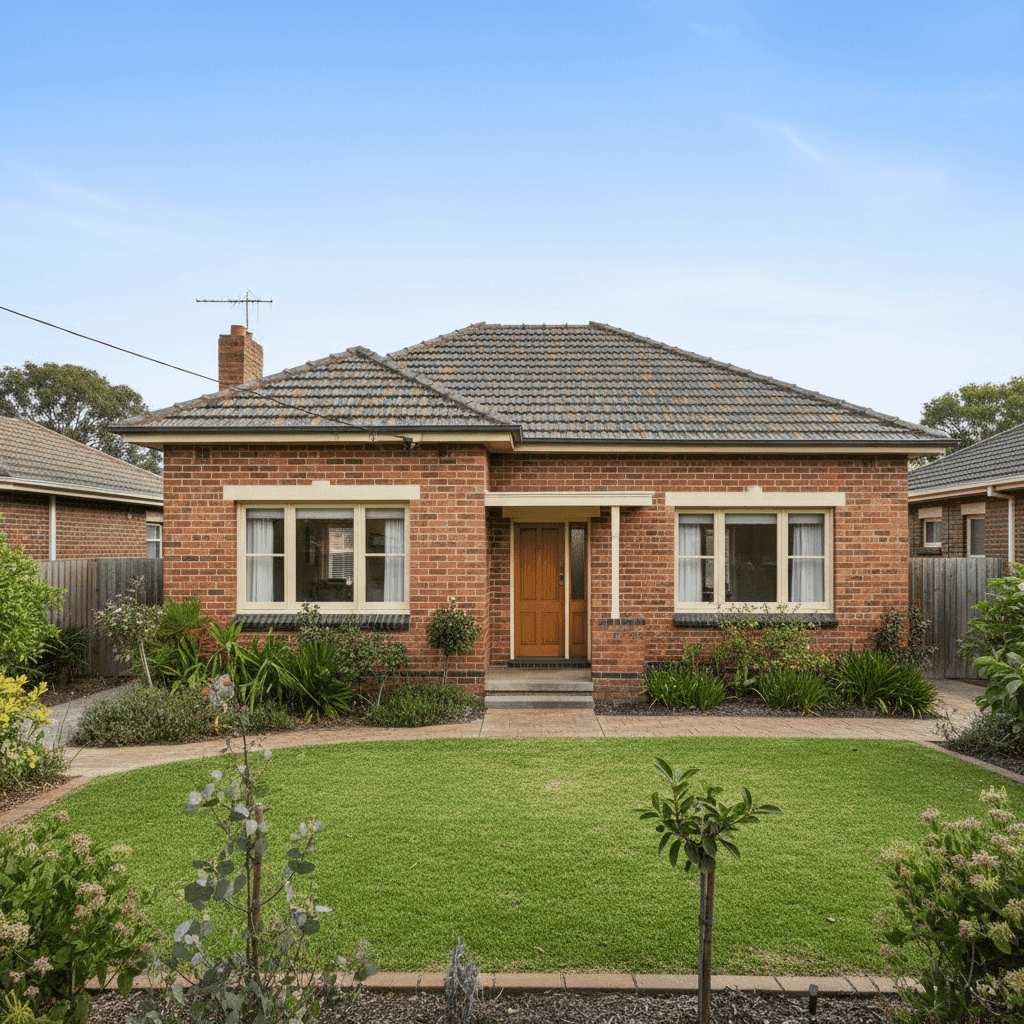
Mount Hawthorn is one of Perth's most sought-after inner-north suburbs — a leafy, character-filled pocket of Western Australia known for its Federation and post-war homes, vibrant café strip, and strong community feel. If you own a free standing home here, you'll know that protecting it with the right building insurance is essential. But how do you know whether the premium you've been quoted is actually competitive? This article breaks down a real building-only insurance quote for a four-bedroom, double brick home in Mount Hawthorn (WA 6016) and puts it into context against local, state, and national data.
---
Is This Quote Fair?
The quote in question comes in at $1,865 per year (or $179/month) for building-only cover on a four-bedroom, two-bathroom free standing home, with a $1,000 building excess and a sum insured of $600,000.
Our price rating for this quote is EXPENSIVE — above average for the area.
To understand why, it helps to look at the numbers side by side. The suburb average premium for Mount Hawthorn sits at $1,109 per year, with a median of just $968 per year. That means this quote is running approximately 68% above the suburb median — a significant gap that's worth interrogating before you simply accept the renewal or sign on the dotted line.
It's worth noting that the 75th percentile for the suburb is $1,456/yr, meaning this quote sits even above the most expensive quarter of premiums seen locally. In short, most homeowners in Mount Hawthorn are paying considerably less.
That said, context matters. A higher sum insured ($600,000 for building cover), the age of the property, and specific construction features all play a role in how insurers price risk — more on that below.
---
How Mount Hawthorn Compares
One of the most useful ways to assess any insurance quote is to zoom out and look at the broader picture. Here's how Mount Hawthorn stacks up:
| Benchmark | Premium |
|---|---|
| This Quote | $1,865/yr |
| Mount Hawthorn suburb average | $1,109/yr |
| Mount Hawthorn suburb median | $968/yr |
| WA state average | $2,811/yr |
| WA state median | $2,127/yr |
| City of Stirling LGA average | $1,660/yr |
| National average | $5,347/yr |
| National median | $2,764/yr |
A few things stand out here. While the quote is above the local suburb average, it actually sits well below the WA state average of $2,811/yr and is a fraction of the national average of $5,347/yr. This reflects the relatively lower risk profile of the Perth metropolitan area compared to regional WA — particularly cyclone-prone areas in the state's north — and high-risk regions interstate such as North Queensland and parts of northern NSW.
Within the City of Stirling LGA, the average premium is $1,660/yr, which is also below this particular quote. So while the homeowner is paying more than most of their immediate neighbours, they're still in a much more favourable position than many Western Australians and Australians broadly.
It's also worth noting that the suburb sample size used in this comparison is 15 quotes — a reasonably small dataset, which means averages can shift as more data comes in. You can explore the latest figures on the Mount Hawthorn suburb stats page.
---
Property Features That Affect Your Premium
Insurance pricing isn't arbitrary — every feature of your home feeds into the risk calculation. Here's how the characteristics of this property are likely influencing the premium:
Double brick construction is generally viewed favourably by insurers. It's durable, fire-resistant, and holds up well structurally over time. Many insurers offer lower base rates for double brick homes compared to weatherboard or clad constructions, so this should theoretically be working in the homeowner's favour.
Tiled roof is another positive. Concrete or terracotta tiles are considered a resilient roofing material, particularly compared to older corrugated iron or fibrous cement sheeting. Tiles tend to perform well in storms and are resistant to ember attack.
Stump foundations are very common in older Perth homes and are something insurers are well acquainted with. However, they can introduce some pricing nuance — particularly if the stumps are original timber (which may have deteriorated), as subsidence and pest damage are potential concerns. Insurers may factor this into their assessment of an older property.
Construction year of 1960 is significant. Homes built in this era often have older electrical wiring, plumbing, and roofing infrastructure that may not meet current building standards. Insurers typically apply a loading to older homes to account for the increased likelihood of claims related to ageing systems.
Timber and laminate flooring adds to the replacement cost calculation. These materials are generally more expensive to restore or replace after a flood or fire than basic concrete or vinyl, which can push the sum insured — and therefore the premium — upward.
Ducted climate control is another feature that increases the insured value of the home. Ducted systems are costly to repair or replace, and their presence across the full building footprint means they're factored into the $600,000 sum insured.
No pool, no solar panels — both of these would typically add to a premium, so their absence is a modest saving.
---
Tips for Homeowners in Mount Hawthorn
If you're looking to make sure you're getting value from your home insurance, here are four practical steps worth taking:
- Shop around and compare multiple quotes. The gap between the cheapest and most expensive quotes in Mount Hawthorn is substantial — from $622/yr at the 25th percentile to $1,456/yr at the 75th percentile. That's a difference of over $800 per year for broadly similar cover. Using a comparison tool like CoverClub makes this process quick and straightforward.
- Review your sum insured carefully. A $600,000 sum insured is on the higher end for a 130 sqm home, even accounting for construction costs in Perth. Make sure your sum insured reflects the actual rebuild cost — not the market value — of your home. Overinsuring unnecessarily inflates your premium, while underinsuring leaves you exposed. Consider using a building cost calculator to validate your figure.
- Ask about discounts for your construction type. Double brick homes are a lower risk for insurers, and some providers offer explicit discounts for masonry construction. It's worth asking directly when obtaining quotes, as not all discounts are automatically applied.
- Consider your excess level. A $1,000 excess is fairly standard, but opting for a higher excess (say, $2,000 or $2,500) can meaningfully reduce your annual premium. If your home is well-maintained and you have an emergency fund to cover a higher out-of-pocket cost in the event of a claim, this trade-off can make good financial sense.
---
Compare Your Options with CoverClub
Whether you're reviewing a renewal or shopping for cover for the first time, it pays to know where your quote stands. CoverClub makes it easy to see how your premium compares to others in your suburb, your LGA, and across Western Australia. Get a quote today and find out if you're paying a fair price — or if there's a better deal waiting for you.