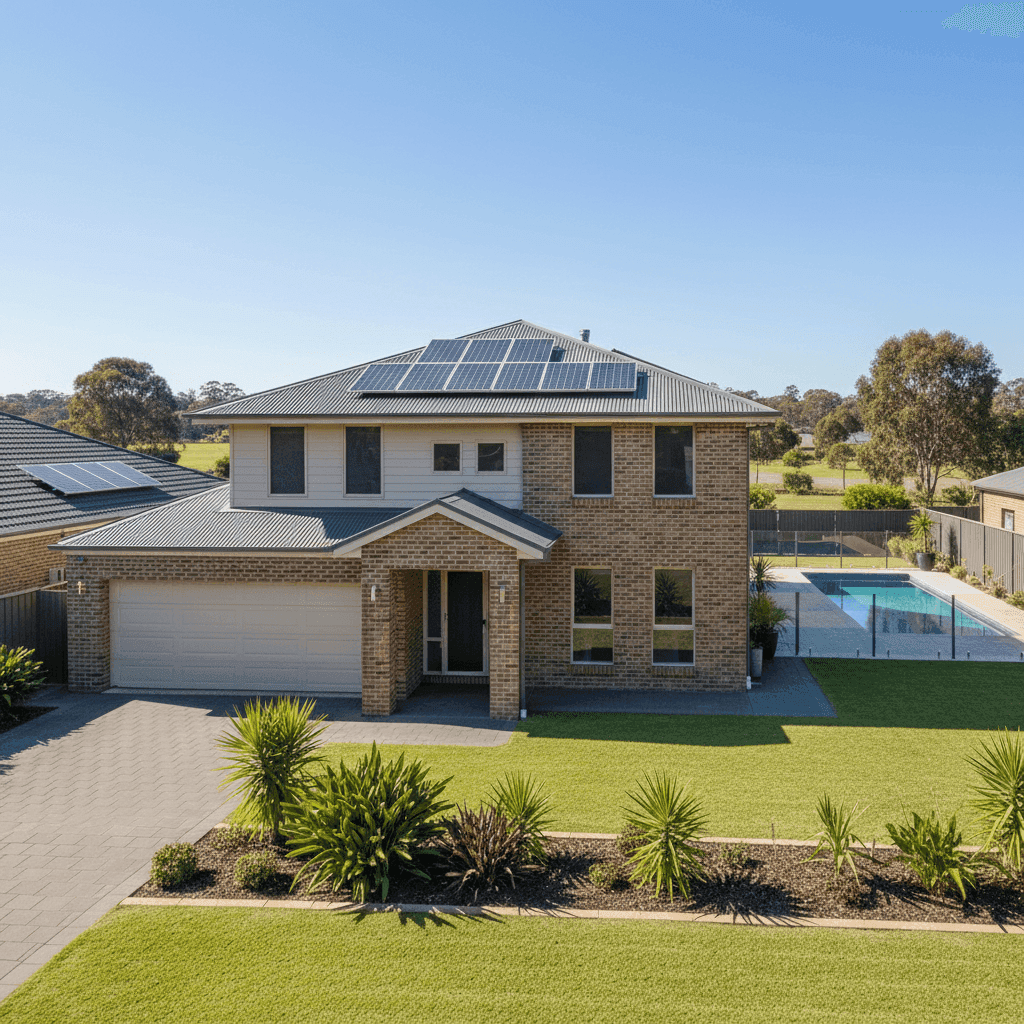
If you own a free standing home in Mount Hunter, NSW 2570, you're likely well aware that getting the right home insurance at a fair price takes a bit of research. This article breaks down a real home and contents insurance quote for a four-bedroom, three-bathroom brick veneer property in the area — and puts it in context against local, state, and national benchmarks so you can judge whether you're getting a good deal.
---
Is This Quote Fair?
The quote in question comes in at $3,649 per year (or around $343 per month), covering both building and contents for a home with a building sum insured of $1,072,000 and contents valued at $177,000. Both the building and contents excess are set at $1,000.
The short answer? This is a cheap quote — well below average by most measures.
Our price rating system classifies this premium as Cheap (Below Average), meaning it sits favourably compared to what most homeowners in similar circumstances are paying. For a property of this size and specification — 214 sqm, built in 2002, with a pool, solar panels, and ducted climate control — a sub-$3,700 annual premium represents solid value.
That said, "cheap" doesn't always mean the cover is comprehensive. It's worth scrutinising the policy details, particularly around inclusions for the pool, solar system, and any limits on contents cover, before assuming the lower price reflects equivalent protection.
---
How Mount Hunter Compares
To understand just how competitive this quote is, let's look at the numbers side by side.
| Benchmark | Premium |
|---|---|
| This Quote | $3,649/yr |
| Suburb Average (Mount Hunter) | $5,492/yr |
| Suburb Median (Mount Hunter) | $5,335/yr |
| Suburb 25th Percentile | $5,166/yr |
| LGA Average (Wollondilly) | $2,297/yr |
| NSW State Average | $9,528/yr |
| NSW State Median | $3,770/yr |
| National Average | $5,347/yr |
| National Median | $2,764/yr |
A few things stand out here. The suburb average for Mount Hunter sits at $5,492/yr — meaning this quote is roughly 34% cheaper than what the typical homeowner in the postcode is paying. Even compared to the suburb's 25th percentile (the cheapest quarter of quotes), this premium still comes in lower at $5,166/yr, which is a meaningful gap.
Zooming out to the NSW state level, the picture is striking. The state average of $9,528/yr is heavily skewed by high-risk and high-value properties across the state, but even the NSW median of $3,770/yr is slightly above this quote. Nationally, the average premium across Australia is $5,347/yr, again well above what's been quoted here.
Interestingly, the Wollondilly LGA average of $2,297/yr is lower than this quote — suggesting that some properties in the broader local government area attract lower premiums, possibly due to differences in property values, construction types, or risk profiles within the LGA.
It's worth noting the suburb sample size is relatively small at 8 quotes, so the local averages should be interpreted with some caution. More data points would give a clearer picture of the true market rate for Mount Hunter specifically.
---
Property Features That Affect Your Premium
Several characteristics of this property have a direct bearing on the premium calculated:
Brick Veneer Walls & Colorbond Roof Brick veneer is one of the most common external wall materials in Australian suburban homes, and insurers generally view it favourably. It offers solid fire resistance and durability. Paired with a steel Colorbond roof — which is lightweight, corrosion-resistant, and performs well in storms — this combination typically attracts competitive premiums compared to, say, weatherboard or fibrous cement cladding.
Concrete Slab Foundation Slab-on-ground construction is standard for homes of this era and region. It's generally considered low-risk from an insurer's perspective, as there are no subfloor spaces that can be affected by moisture or pest damage.
Timber and Laminate Flooring While aesthetically popular, timber and laminate flooring can be more expensive to replace than carpet in the event of water damage or other claims. This may nudge the contents and building replacement cost estimates upward slightly.
Swimming Pool Pools add complexity to home insurance. They increase the replacement cost of the property, may require specific liability cover, and can be a source of claims (think pump and equipment failure, or accidental damage). Homeowners should confirm their policy explicitly covers pool-related structures and equipment.
Solar Panels A rooftop solar system is a significant asset — and one that's easy to underinsure. Solar panels can be damaged by hail, storm, or fire, and replacement costs have risen alongside installation demand. It's important to verify whether the building sum insured accounts for the full replacement value of the solar array, including inverters and mounting hardware.
Ducted Climate Control Ducted air conditioning systems are expensive to repair or replace and are typically covered under the building sum insured. As with solar, homeowners should check that the building replacement value adequately reflects the cost of reinstating this system.
No Cyclone Risk Mount Hunter falls outside designated cyclone risk zones, which removes one of the more significant premium loading factors that affect properties in northern Queensland and parts of Western Australia. This is a contributing factor to the relatively moderate premium.
---
Tips for Homeowners in Mount Hunter
1. Review your building sum insured regularly With construction costs rising sharply in recent years, a sum insured set even two or three years ago may no longer reflect the true cost of rebuilding. A 214 sqm home with quality fittings, a pool, and solar panels could cost significantly more to rebuild today than it would have in 2022. Use a building replacement cost calculator or speak to a quantity surveyor to verify your figure.
2. Confirm solar and pool are explicitly covered Don't assume these features are automatically included in full. Read the product disclosure statement (PDS) carefully to understand sub-limits and exclusions that may apply to solar panel systems and pool equipment. Some policies cap payouts for these items well below replacement cost.
3. Compare quotes at renewal time Even if your current premium is competitive, insurers frequently adjust their pricing models. The gap between the cheapest and most expensive quotes in Mount Hunter is substantial — comparing quotes through CoverClub at renewal ensures you're not paying more than you need to.
4. Consider your excess carefully Both the building and contents excess on this policy are set at $1,000. Opting for a higher excess can reduce your annual premium, but only makes sense if you have the financial buffer to cover that amount in the event of a claim. Conversely, if you have valuable contents or a complex property, a lower excess might offer better peace of mind.
---
Compare Your Own Quote
Whether you're a first-time buyer in Mount Hunter or reassessing your existing cover, it pays to benchmark your premium against the market. CoverClub makes it easy to compare home and contents insurance quotes from multiple providers in one place — so you can be confident you're getting the right cover at a fair price. Start comparing today at CoverClub and see how your quote stacks up.