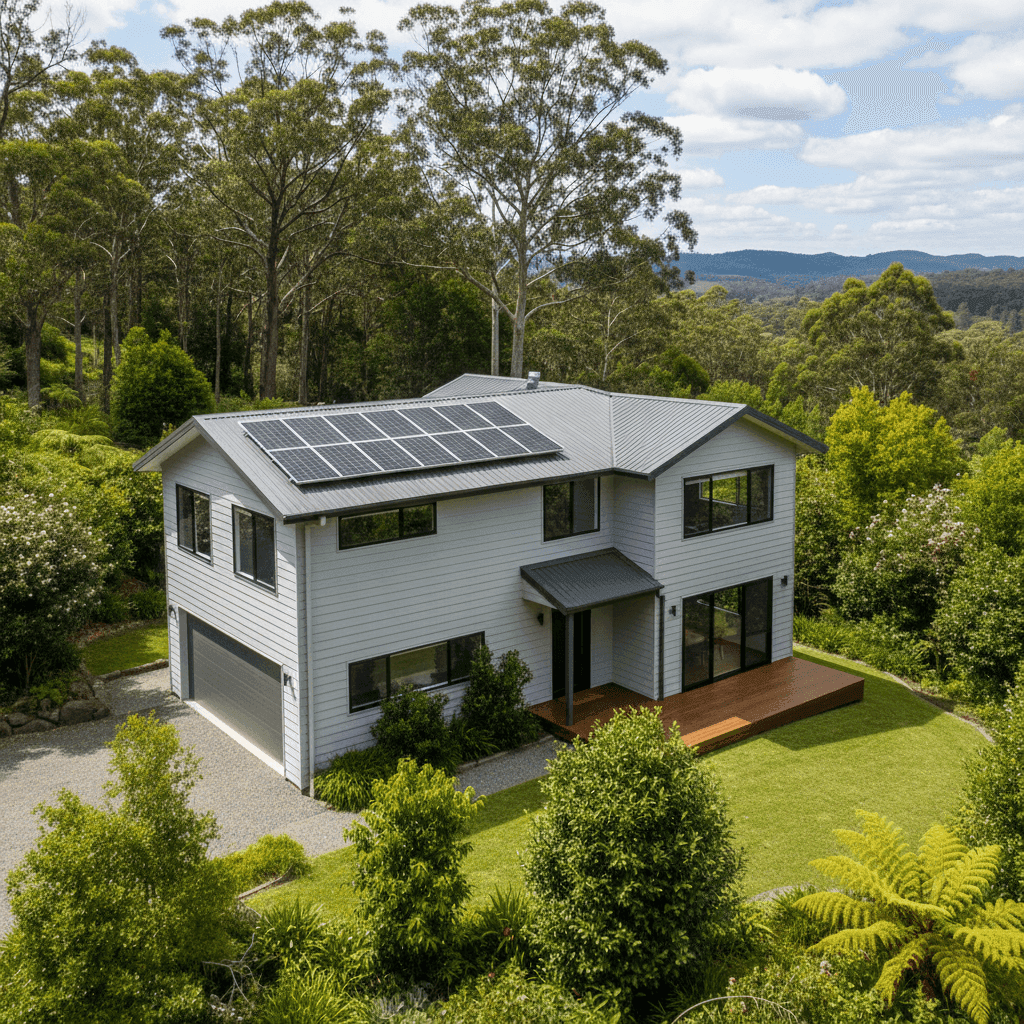
Mount Kembla is a quiet, semi-rural suburb nestled in the Illawarra escarpment south of Sydney, known for its lush bushland setting and relaxed lifestyle. For owners of a free standing home in this postcode, understanding what drives your home insurance premium — and whether you're paying a fair price — can make a real difference to your household budget. This article breaks down a recent home and contents insurance quote for a four-bedroom property in Mount Kembla (NSW 2526), comparing it against local, state, and national benchmarks to help you make a more informed decision.
---
Is This Quote Fair?
The quote in question comes to $5,523 per year (or $540/month) for combined home and contents cover, with a building sum insured of $1,870,000 and contents valued at $171,000. The building excess sits at $2,000, with a separate $1,000 excess applying to contents claims.
Based on available market data, this premium is rated Expensive — above average for the area. That's a meaningful finding, and it's worth unpacking why.
A significant driver here is the high building sum insured of $1,870,000. Rebuild costs in the Illawarra region have risen sharply in recent years, and a 214 sqm home built in 1988 with quality fixtures can carry a substantial replacement value. However, it's always worth checking whether your sum insured reflects a current independent valuation or a figure that may have crept up through automatic indexation over time. Overinsurance is a surprisingly common issue and can quietly inflate premiums year after year.
The contents value of $171,000 is also on the higher end for a standard household, which will add meaningfully to the overall cost. If you haven't reviewed your contents list recently, it may be worth doing so — removing items you no longer own or that are covered elsewhere (such as through a workplace policy) can trim the premium without reducing meaningful protection.
---
How Mount Kembla Compares
To put this quote in context, here's how it stacks up against the broader market:
| Benchmark | Annual Premium |
|---|---|
| This Quote | $5,523 |
| Mount Kembla suburb average | $2,799 |
| Mount Kembla suburb median | $2,701 |
| Wollongong LGA average | $2,530 |
| NSW state average | $3,801 |
| NSW state median | $3,410 |
| National average | $2,965 |
| National median | $2,716 |
This quote sits 97% above the suburb average and nearly 45% above the NSW state average — a considerable gap. While some of that difference is explained by the high sum insured and contents value, it's still a strong signal that shopping around could yield meaningful savings.
According to suburb-level data for Mount Kembla (NSW 2526), the 25th percentile of local quotes sits at $2,325/yr, and the 75th percentile at $3,229/yr — meaning this quote is well above even the most expensive quartile of comparable local policies. Across all of NSW, premiums vary considerably by location and property type, and nationally, the median sits at just $2,716/yr.
It's worth noting the suburb sample size is relatively small (8 quotes), so these figures should be treated as a guide rather than a definitive benchmark. That said, the gap is large enough to warrant a closer look.
---
Property Features That Affect Your Premium
Several characteristics of this property are worth examining through an insurance lens:
Hardiplank / Hardiflex external walls Fibre cement cladding like Hardiplank is generally viewed favourably by insurers — it's durable, fire-resistant, and less susceptible to rot than timber weatherboards. This should, in theory, work in the homeowner's favour when it comes to pricing.
Steel / Colorbond roof A Colorbond steel roof is considered low-risk by most insurers. It's long-lasting, resistant to fire and wind, and requires minimal maintenance. This is a positive factor for premium calculations.
Slab foundation Concrete slab foundations are standard across much of NSW and don't typically attract a loading from insurers, unlike older suspended timber floors that may carry greater risk of subsidence or pest damage.
Timber and laminate flooring Timber floors can be costly to repair or replace following water damage or fire, which may contribute modestly to the premium. Laminate is generally cheaper to reinstate, so a mix of both is fairly neutral overall.
Solar panels This property includes rooftop solar panels. While solar is a great investment for energy costs, it does add to the rebuild value of a home and can increase the cost of reinstatement following storm or fire damage. Some insurers include solar panels automatically under building cover; others treat them as an optional extra. It's worth confirming exactly how your policy handles solar.
Ducted climate control Ducted air conditioning systems are expensive to replace and are typically included in building cover. Their presence contributes to a higher sum insured and, by extension, a higher premium — but they also represent a genuine asset worth protecting.
Construction year: 1988 A home built in the late 1980s may have older electrical wiring, plumbing, or roofing components that haven't been upgraded. Some insurers apply a loading for older properties, particularly if there's no evidence of recent renovations. If you've completed significant updates, it may be worth letting your insurer know.
---
Tips for Homeowners in Mount Kembla
1. Review your sum insured carefully At $1,870,000, the building sum insured is the single largest driver of this premium. Use an independent building cost calculator (such as the Cordell Sum Sure tool) to check whether this figure accurately reflects current rebuild costs — not market value, which includes land. Adjusting an inflated sum insured downward can lead to significant savings.
2. Shop around — seriously With this quote sitting well above both the suburb and state averages, comparing policies from multiple insurers is strongly recommended. Premiums for the same property can vary by hundreds — or even thousands — of dollars between providers. Get a quote through CoverClub to see competitive options side by side.
3. Consider your excess levels The building excess on this policy is $2,000. Opting for a higher voluntary excess is one of the most straightforward ways to reduce your annual premium. If you're unlikely to make small claims, increasing your excess to $3,000 or more could deliver a noticeable discount.
4. Audit your contents coverage A contents value of $171,000 is substantial. Take the time to walk through your home and list your actual possessions — furniture, appliances, clothing, electronics, jewellery, and so on. You may find the insured amount is higher than what you'd genuinely need to replace, or conversely, that some high-value items need to be specifically listed to be fully covered.
---
Ready to Find a Better Deal?
If this quote feels steep, you're not alone — and you don't have to accept the first number you're given. CoverClub makes it easy to compare home and contents insurance quotes from leading Australian insurers, all in one place. Whether you're in Mount Kembla or anywhere else across the country, start your comparison today and make sure you're getting the right cover at the right price.