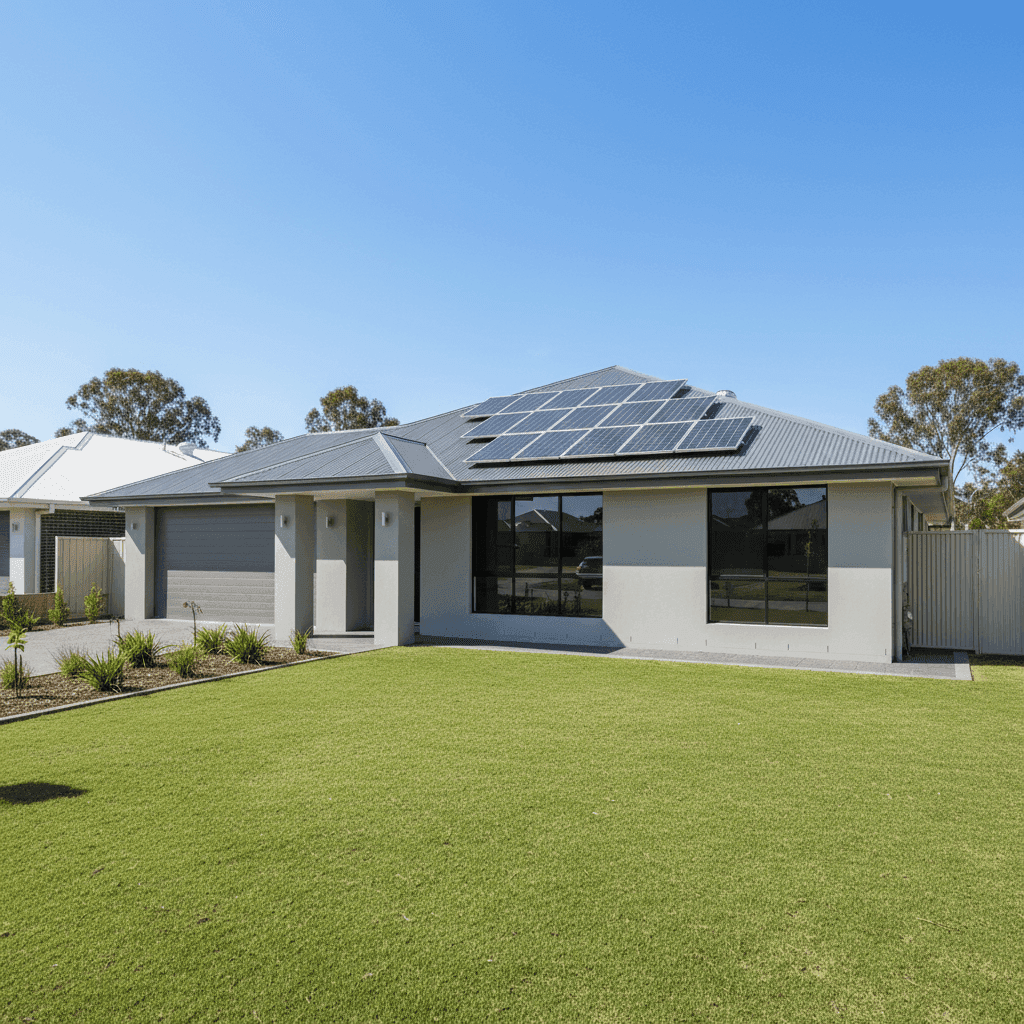
If you own a free standing home in Mount Low, QLD 4818, you already know that insuring a property in North Queensland comes with its own set of challenges — and costs. This article breaks down a real home and contents insurance quote for a four-bedroom, two-bathroom property in the suburb, examines how it stacks up against local, state and national benchmarks, and offers practical tips to help you get better value on your cover.
---
Is This Quote Fair?
The quote in question sits at $7,420 per year (or $711/month) for combined home and contents cover, with a building sum insured of $800,000 and contents valued at $80,000. The building excess is $2,000 and the contents excess is $1,000.
Our price rating for this quote is Expensive — Above Average.
To understand why, it helps to look at the local context. The suburb average premium in Mount Low is $3,799 per year, with a median of $3,603. This quote comes in at roughly double the suburb median, which is a significant gap. Even the 75th percentile for the suburb — meaning 75% of quotes are cheaper — sits at just $4,486/yr, well below this figure.
That said, the sum insured here is substantial. An $800,000 building cover for a 244 sqm concrete home built in 2021 is on the higher end, and that alone will push premiums up considerably compared to properties insured for less. The contents cover of $80,000 also adds to the overall cost.
It's also worth noting that Mount Low sits within a cyclone risk zone, which is one of the most significant premium drivers in Queensland. Insurers price this risk heavily, and it's reflected across the entire Townsville region.
---
How Mount Low Compares
Understanding your premium in isolation doesn't tell the full story. Here's how the Mount Low market compares to broader benchmarks:
| Benchmark | Average Premium | Median Premium |
|---|---|---|
| Mount Low (4818) | $3,799/yr | $3,603/yr |
| Townsville LGA | $7,340/yr | — |
| Queensland | $9,129/yr | $3,903/yr |
| National | $5,347/yr | $2,764/yr |
(Based on CoverClub quote data. Sample size for Mount Low: 19 quotes.)
A few things stand out here. The Queensland state average of $9,129/yr is extraordinarily high — driven largely by cyclone-prone coastal and regional areas — but the median of $3,903 tells a very different story. This gap between average and median suggests a significant number of very expensive quotes are pulling the average upward, while most properties are insured for less.
At the national level, the average of $5,347/yr is also skewed by high-risk regions like North Queensland. The national median of $2,764 reflects what most Australian homeowners actually pay.
For Mount Low specifically, the suburb sits below both the Townsville LGA average ($7,340/yr) and the state average, suggesting it's comparatively more affordable than other parts of the region — though this quote, at $7,420, aligns more closely with the broader Townsville LGA average than the suburb median.
---
Property Features That Affect Your Premium
Several characteristics of this property have a direct bearing on what insurers charge:
Cyclone Risk Zone This is the single biggest factor. Mount Low is classified as a cyclone risk area, and insurers apply significant loadings to properties in these zones. Cyclone cover is typically included in standard policies in Queensland, but the premium cost reflects the elevated risk of wind and storm damage.
Construction Materials The home features concrete external walls, a steel/Colorbond roof, and a slab foundation — all of which are generally viewed favourably by insurers. Concrete and steel construction tends to be more resilient to storm damage than timber-framed or weatherboard homes, and this can work in your favour when it comes to pricing. Tile flooring is similarly low-risk from an insurer's perspective.
Age and Condition Built in 2021, this is a relatively new home. Newer builds typically attract lower premiums than older properties because they're constructed to current building codes, which in cyclone zones are particularly stringent. This is a genuine advantage.
Solar Panels The property has solar panels, which add replacement value to the building and are typically covered under building insurance. Insurers factor in the cost of repairing or replacing solar systems following storm or hail damage, which can add a modest amount to the premium.
Building Size and Sum Insured At 244 sqm and insured for $800,000, this is a well-appointed home with a high replacement cost. A higher sum insured directly increases the premium — it's one of the most straightforward levers in how insurance is priced.
---
Tips for Homeowners in Mount Low
1. Review your sum insured carefully Make sure your $800,000 building cover accurately reflects the actual rebuild cost of your home — not the market value. Overcovering can mean unnecessarily high premiums, while undercovering leaves you exposed. Use a building cost calculator or speak to a quantity surveyor to get an accurate figure.
2. Consider increasing your excess The current excesses are $2,000 (building) and $1,000 (contents). In many cases, opting for a higher excess can meaningfully reduce your annual premium. If you have a financial buffer to cover a larger out-of-pocket cost in a claim, this trade-off may be worth exploring.
3. Shop around — especially in cyclone zones Insurer pricing in cyclone-affected areas varies enormously. One insurer might load a North Queensland property at twice the rate of another for the same risk. Getting multiple quotes through CoverClub is one of the easiest ways to identify whether you're paying more than you need to.
4. Check what's included for cyclone and storm damage Not all policies treat cyclone cover the same way. Some apply separate cyclone excesses, others have waiting periods or specific exclusions. Before renewing or switching, read the Product Disclosure Statement carefully to understand exactly what you're covered for — particularly given Mount Low's risk profile.
---
Compare Your Options with CoverClub
Whether this quote is the right fit depends on the specific policy inclusions, the insurer's claims reputation, and how it compares to alternatives in the market. The best way to find out is to run a comparison. [Get a home insurance quote through CoverClub](https://coverclub.com.au/?focus=address) and see how your options stack up — it takes just a few minutes and could save you hundreds of dollars a year.
For more data on insurance pricing in your area, visit the Mount Low suburb stats page or explore Queensland-wide insurance trends.