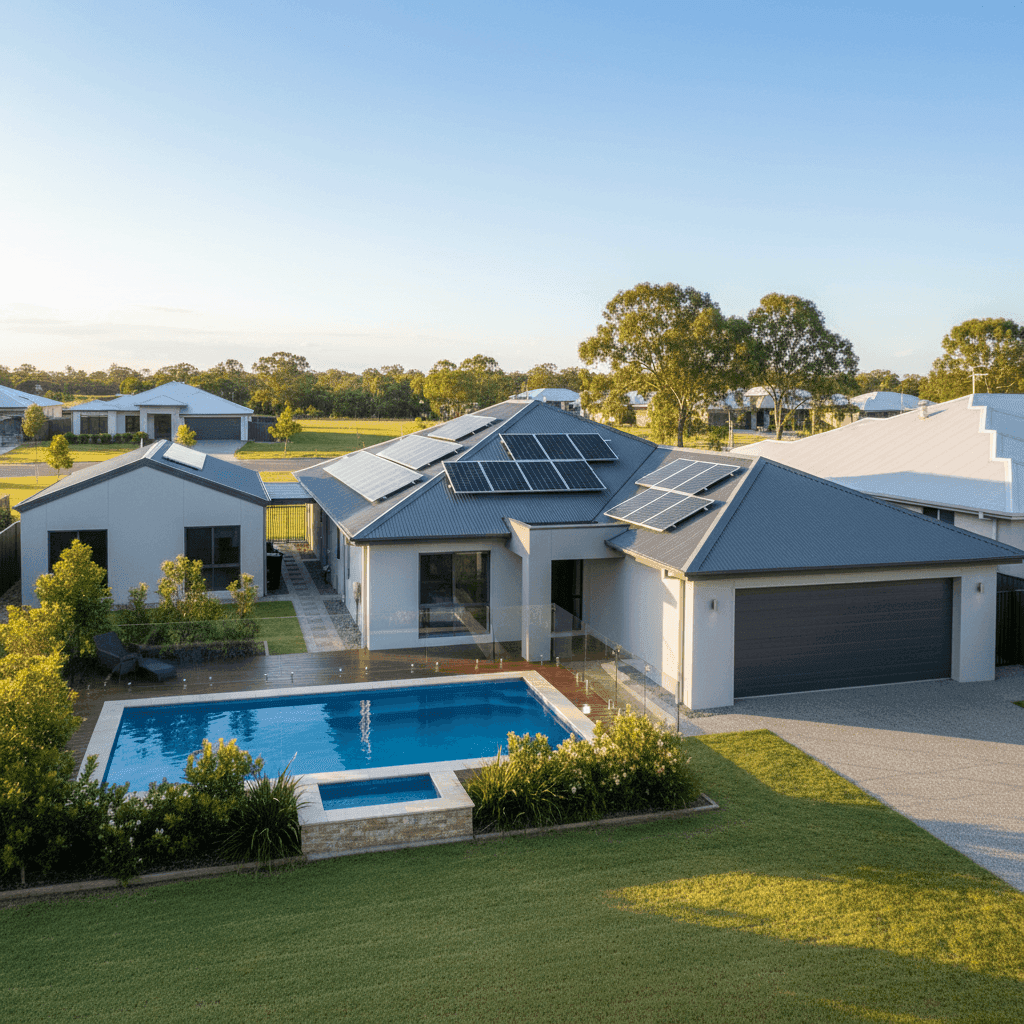
If you own a free standing home in Mount Low, QLD 4818, you already know that insuring a property in North Queensland comes with its own set of considerations — cyclone season chief among them. This article breaks down a real home and contents insurance quote for a four-bedroom, two-bathroom property in the suburb, examines how it stacks up against local, state, and national benchmarks, and offers practical advice for homeowners looking to get the best value on their cover.
---
Is This Quote Fair?
The quote in question comes in at $5,549 per year (or $531 per month) for combined home and contents insurance, with a building sum insured of $994,000 and contents valued at $50,000. Both the building and contents excess are set at $1,000.
Our price rating for this quote is Expensive (Above Average) — and the data backs that up. The suburb average premium for Mount Low sits at $3,799 per year, meaning this quote is roughly 46% above what most comparable properties in the area are paying. Even against the suburb's 75th percentile of $4,486 per year, this quote lands noticeably higher.
That said, "expensive" doesn't automatically mean "wrong." Several features of this specific property — which we'll explore below — legitimately push the premium upward. The key question is whether the loading is proportionate, or whether there's room to shop around for a more competitive rate.
---
How Mount Low Compares
Understanding where Mount Low sits in the broader insurance landscape helps put this quote in context. You can explore the full local data on the Mount Low suburb stats page.
| Benchmark | Premium |
|---|---|
| This quote | $5,549/yr |
| Mount Low suburb average | $3,799/yr |
| Mount Low suburb median | $3,603/yr |
| Mount Low 25th percentile | $3,270/yr |
| Mount Low 75th percentile | $4,486/yr |
| QLD state average | $9,129/yr |
| QLD state median | $3,903/yr |
| Townsville LGA average | $7,340/yr |
| National average | $5,347/yr |
| National median | $2,764/yr |
A few things stand out here. First, the QLD state average of $9,129 per year is remarkably high — a reflection of the concentration of high-risk properties across the state, particularly in cyclone-prone coastal and regional areas. The state median of $3,903 tells a more balanced story, suggesting a significant number of very expensive policies are pulling the average up.
The Townsville LGA average of $7,340 per year is also telling. Mount Low falls within the Townsville local government area, and premiums across the region are elevated compared to the broader national picture. At $5,549, this quote is actually below the Townsville LGA average — which provides some reassurance that it isn't wildly out of step with the local market, even if it sits above the suburb-level figures.
It's worth noting the suburb sample size is 19 quotes, which is a reasonable but not enormous dataset. Results can shift as more data comes in.
---
Property Features That Affect Your Premium
Several characteristics of this property have a direct bearing on what insurers charge. Here's how they play out:
Cyclone Risk Area
This is the single biggest factor. Mount Low is located in a designated cyclone risk zone, and insurers apply significant loadings to properties in these areas. Cyclone damage can be catastrophic and widespread, meaning insurers price in both the frequency and severity of potential claims across the region.
Building Construction
The home features concrete external walls, a steel/Colorbond roof, and a slab foundation — all of which are generally viewed favourably by insurers. Concrete walls offer strong resistance to wind and impact damage, while Colorbond roofing is designed to perform well in harsh Australian conditions. These construction choices may actually be moderating the premium to some degree.
Pool and Solar Panels
A swimming pool adds liability exposure and increases the cost to rebuild or repair, contributing to a higher sum insured. Solar panels are an increasingly common feature in Queensland but represent an additional asset that needs to be covered — both for damage and for the cost of reinstallation after a weather event.
Granny Flat
The presence of a granny flat on the property meaningfully increases the overall rebuild cost, which is reflected in the $994,000 building sum insured. A secondary dwelling adds structural complexity and square footage that insurers must account for.
Building Size and Age
At 214 sqm and built in 2003, this is a mid-sized home of moderate age. Properties from the early 2000s generally don't attract age-related loadings the way older homes might, though they may not benefit from the latest building codes either.
Contents Cover
The $50,000 contents value is relatively modest for a four-bedroom home, which may suggest the policyholder has carefully assessed what they need covered rather than over-insuring. This is a sensible approach.
---
Tips for Homeowners in Mount Low
1. Shop Around — Especially in Cyclone Zones
Insurer pricing in cyclone-prone areas varies enormously. Some providers have greater appetite for North Queensland risk than others, and that translates directly into premium differences of hundreds — sometimes thousands — of dollars. Use a comparison service like CoverClub to see multiple quotes side by side before renewing.
2. Review Your Building Sum Insured Carefully
At $994,000, the building sum insured is substantial — partly driven by the granny flat and pool. Make sure this figure reflects the actual cost to rebuild (not the market value of the land), and consider getting a professional building valuation. Over-insuring wastes money; under-insuring can leave you exposed at claim time.
3. Ask About Cyclone Mitigation Discounts
Some insurers offer premium reductions for homes that have been assessed or upgraded under cyclone mitigation programmes. In Queensland, initiatives like the Resilient Homes Fund and cyclone-proofing retrofits may qualify your property for better rates. It's worth asking your insurer directly.
4. Consider Your Excess Level
Both the building and contents excess on this policy are set at $1,000. Opting for a higher excess — say, $2,500 or $5,000 — can meaningfully reduce your annual premium. This works best if you have the financial buffer to cover a larger out-of-pocket cost in the event of a claim.
---
Ready to Compare?
Whether you're renewing your current policy or shopping for the first time, it pays to see what's out there. Head to CoverClub to compare home and contents insurance quotes for your Mount Low property — it takes just a few minutes and could save you a significant amount each year.