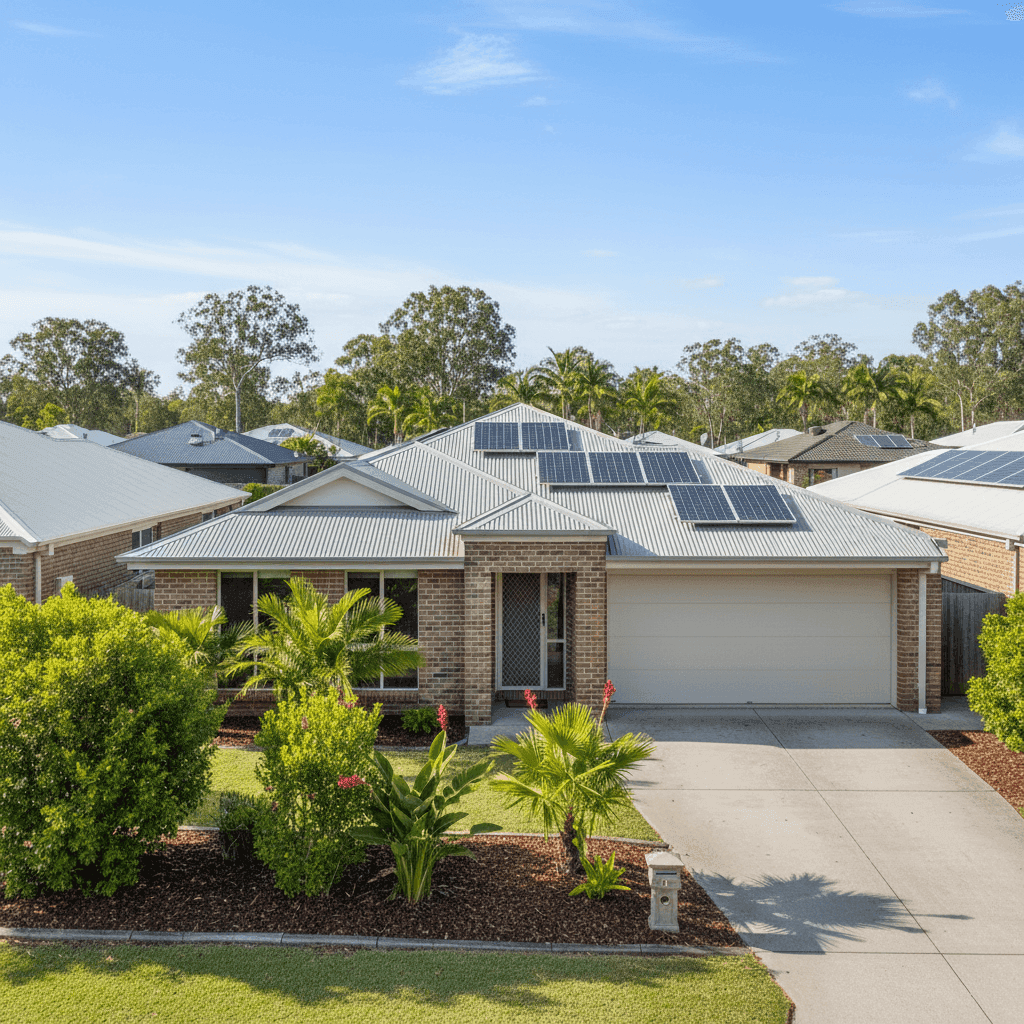
Sitting in the northern suburbs of Townsville, Mount Low is a well-established residential area where brick veneer homes on concrete slabs are a common sight. If you own a four-bedroom free standing home here, you already know that home insurance isn't cheap — but how do you know whether the quote sitting in your inbox is actually reasonable? This article breaks down a real home and contents insurance quote for a property in Mount Low (QLD 4818), compares it against local, state and national benchmarks, and offers practical advice for getting better value on your cover.
---
Is This Quote Fair?
The quote in question comes in at $5,700 per year (or $546/month) for combined home and contents cover, with a building sum insured of $650,000 and contents valued at $30,000. Both the building and contents excess are set at $1,000.
Our price rating for this quote is Expensive — Above Average.
To put that in context, the suburb average premium in Mount Low sits at $3,799/yr, with a median of $3,603/yr. This quote lands well above the 75th percentile for the suburb ($4,486/yr), meaning it's pricier than at least three-quarters of comparable quotes we've seen in the area.
That said, "above average" doesn't automatically mean "wrong." Several property-specific factors — which we'll explore below — can legitimately push a premium higher. The key question is whether those factors justify a premium that's roughly 50% above the suburb median.
---
How Mount Low Compares
Understanding where Mount Low sits in the broader insurance landscape helps make sense of what you're paying.
| Benchmark | Average Premium | Median Premium |
|---|---|---|
| Mount Low (QLD 4818) | $3,799/yr | $3,603/yr |
| Townsville LGA | $7,340/yr | — |
| Queensland | $9,129/yr | $3,903/yr |
| National | $5,347/yr | $2,764/yr |
(Based on a sample of 19 quotes in the suburb. [View full suburb stats](https://coverclub.com.au/stats/QLD/4818/mount-low) · [QLD state stats](https://coverclub.com.au/stats/QLD) · [National stats](https://coverclub.com.au/stats/national))
A few things stand out here. The Queensland state average of $9,129/yr is dramatically higher than the median of $3,903/yr — a clear sign that a small number of very expensive properties (or high-risk locations) are pulling the average upward. The Townsville LGA average of $7,340/yr similarly reflects the elevated risk profile of the broader region, particularly cyclone exposure.
Against those benchmarks, a $5,700/yr premium for Mount Low is actually below the Townsville LGA average and well below the Queensland state average. Compared to the national average of $5,347/yr, it's only marginally higher. So while the quote is above the local suburb median, it's not out of step with what Townsville-area homeowners typically face.
---
Property Features That Affect Your Premium
Several characteristics of this property have a direct bearing on the premium calculated by insurers.
Cyclone Risk Area
This is the single biggest factor. Mount Low falls within a designated cyclone risk zone, and insurers price this in heavily. North Queensland properties routinely attract higher premiums than equivalent homes in southern states purely because of tropical storm exposure. Many policies in cyclone-prone areas also carry a separate cyclone excess or sub-limit, so it's worth reading the Product Disclosure Statement carefully.
Construction: Brick Veneer Walls & Colorbond Roof
Brick veneer is generally viewed favourably by insurers — it's durable and fire-resistant. A steel Colorbond roof is also a practical choice for the region, offering good wind resistance compared to tiles. These construction materials shouldn't be inflating your premium; if anything, they may be keeping it lower than it would be with a timber-framed or tiled-roof home.
Age of Construction (1980)
At over 40 years old, this home falls into a bracket where insurers may apply age-loading. Older properties can carry higher risk of plumbing failures, electrical issues, and structural wear — all of which contribute to claims. Keeping maintenance up to date and providing evidence of recent upgrades (rewiring, replumbing, roof replacement) can sometimes help negotiate a better rate.
Building Sum Insured: $650,000
The building is insured for $650,000, which is on the higher end for a 205 sqm home — though rebuild costs in regional Queensland, particularly post-cyclone, can be significant. It's worth using a building cost calculator periodically to ensure your sum insured reflects current construction costs without being over-insured.
Solar Panels & Ducted Climate Control
Both of these additions increase the replacement value of the home and its contents, and insurers factor this in. Solar panels in particular can be a point of contention — some policies cover them under building, others under contents, and some exclude storm or cyclone damage to panels entirely. Double-check your policy wording.
Slab Foundation & Tiled Flooring
A concrete slab foundation is standard for the region and generally neutral from a risk perspective. Tiled flooring is durable and unlikely to affect your premium materially.
---
Tips for Homeowners in Mount Low
1. Shop around — seriously. With a sample of 19 quotes in the suburb showing a median of $3,603/yr, there's clearly a wide spread of pricing in this market. A premium above $5,000/yr warrants comparison shopping. Get a fresh quote at CoverClub to see how other insurers price your specific property.
2. Review your sum insured. $650,000 for a 205 sqm brick veneer home built in 1980 may be appropriate given cyclone rebuild costs — but it's worth verifying with a quantity surveyor or an online rebuild estimator. Over-insuring inflates your premium without adding real protection; under-insuring leaves you exposed at claim time.
3. Ask about cyclone-specific policy terms. Not all home insurance policies treat cyclone damage the same way. Some have separate cyclone excesses (sometimes as high as $5,000–$10,000), sub-limits on storm damage, or exclusions for certain types of wind damage. Understanding exactly what you're covered for in a cyclone event is just as important as the annual premium.
4. Bundle strategically, but compare first. Bundling home and contents with the same insurer often attracts a discount, and this quote does combine both. However, the discount offered by one insurer may still result in a higher total premium than two separate policies with different providers. Run the numbers both ways before committing.
---
Compare Your Options with CoverClub
Whether you're renewing your existing policy or shopping for cover for the first time, it pays to benchmark your quote against the market. CoverClub aggregates real insurance pricing data from across Australia so you can see exactly how your premium stacks up — suburb by suburb, postcode by postcode.