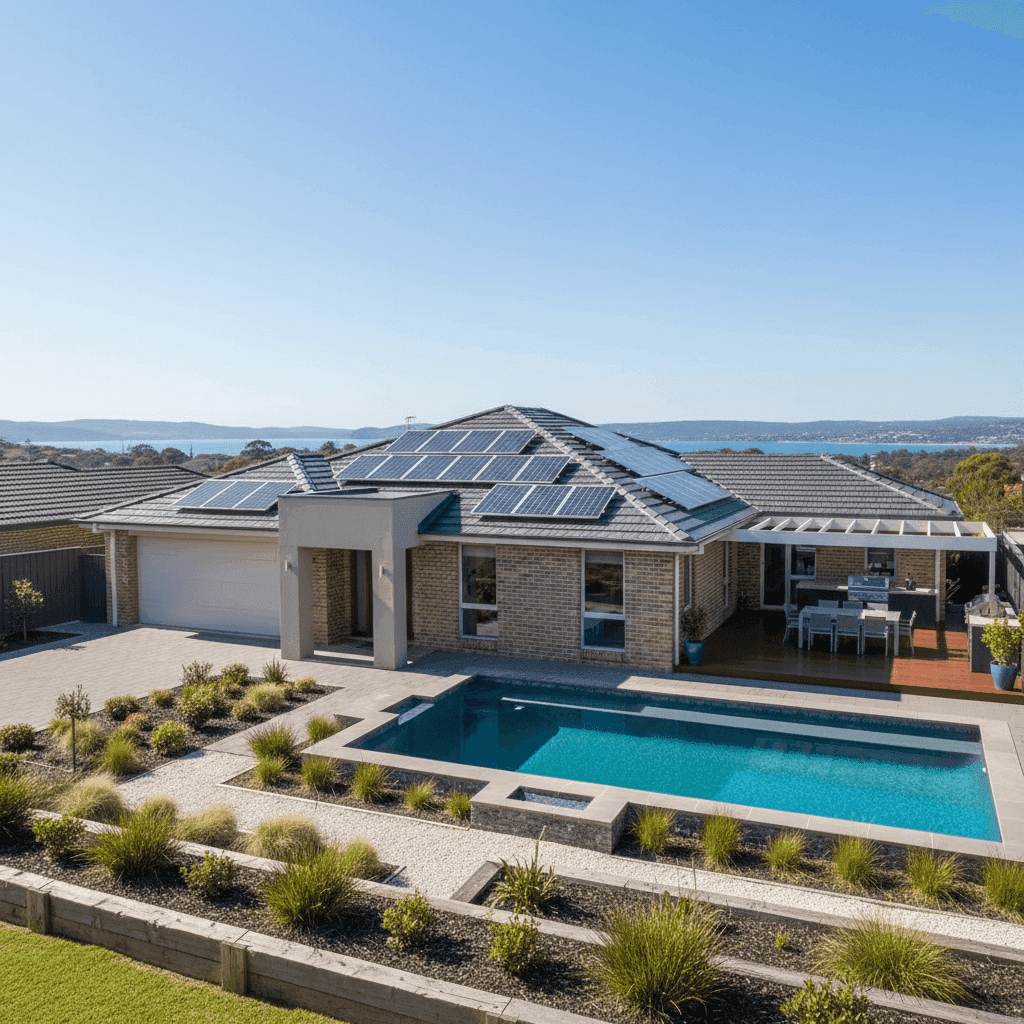
Mount Martha, nestled along the eastern shore of Port Phillip Bay on Victoria's Mornington Peninsula, is one of the region's most sought-after coastal suburbs. Its blend of established family homes, leafy streetscapes, and proximity to the water makes it a desirable — and increasingly valuable — place to live. For owners of a free standing home here, protecting that investment with the right building insurance is essential. This article breaks down a real building-only insurance quote for a four-bedroom, four-bathroom brick veneer home in Mount Martha, and puts the numbers into context so you can judge whether you're getting a fair deal.
---
Is This Quote Fair?
The quote in question sits at $2,594 per year (or $242 per month) for building-only cover, with a sum insured of $1,270,000 and a building excess of $2,000. CoverClub's pricing engine rates this as Fair — Around Average, and the data backs that up.
When you look at the suburb-level statistics for Mount Martha (3934), the average annual premium across 36 quotes sits at $2,521, with a median of $2,498. This quote of $2,594 lands just $73 above the suburb average — a difference of roughly 3%. That's well within normal variation and certainly not a cause for alarm.
To put it another way, this quote falls comfortably within the interquartile range for the suburb: the 25th percentile is $2,021 per year and the 75th percentile is $2,977 per year. At $2,594, this homeowner is paying more than the cheapest quarter of quotes but less than the most expensive quarter — squarely in the middle of the pack.
The "Fair" rating is an honest one. It's not a bargain, but it's not overpriced either. Given the property's size, build quality, and features (more on those shortly), the premium is defensible.
---
How Mount Martha Compares
One of the most useful things you can do with any insurance quote is zoom out and look at the broader picture. Here's how this suburb stacks up:
| Benchmark | Annual Premium |
|---|---|
| This Quote | $2,594 |
| Mount Martha Suburb Average | $2,521 |
| Mornington Peninsula LGA Average | $2,652 |
| VIC State Average | $3,000 |
| VIC State Median | $2,718 |
| National Average | $5,347 |
| National Median | $2,764 |
A few things stand out here. First, Mount Martha homeowners are paying meaningfully less than the Victorian state average of $3,000 per year — about 16% less on the suburb average. This reflects the relatively low risk profile of the area: no cyclone zone, low flood risk for much of the suburb, and a well-established building stock.
Second, the national average of $5,347 is a striking figure, but it's heavily skewed by high-risk regions in Queensland, Western Australia, and Northern Australia, where cyclone, flood, and storm premiums push costs dramatically higher. The national median of $2,764 is a more representative comparison point, and Mount Martha sits just below it.
Compared to the broader Victorian insurance market and national benchmarks, Mount Martha is genuinely one of the more affordable coastal markets in Australia — a fact worth appreciating when reviewing your renewal.
---
Property Features That Affect Your Premium
Not all homes are priced the same, and insurers weigh up a range of property characteristics when calculating your premium. Here's how the features of this particular home play into the pricing:
Brick veneer construction and tiled roof are generally viewed favourably by insurers. Brick veneer offers solid fire resistance and structural durability, while a tiled roof is considered more resilient than corrugated iron in many weather scenarios. Together, these materials contribute to a lower risk profile compared to, say, a weatherboard home with a metal roof.
Slab foundation is the standard for homes built in this era and region, and it's a neutral-to-positive factor. There are no raised subfloor spaces that could harbour moisture or pests, and slab homes tend to be structurally straightforward to repair.
Timber and laminate flooring is worth noting from a claims perspective. These materials can be more expensive to repair or replace than carpet following a water damage event, which may factor into the sum insured calculation.
Above-average fittings quality is one of the more significant premium drivers for this property. Kitchens, bathrooms, and fixtures of a higher specification cost more to repair or replace, and at 268 sqm across four bedrooms and four bathrooms, there's a lot of high-quality fitout to protect. This is a key reason the sum insured reaches $1,270,000.
The swimming pool, solar panels, and ducted climate control all add to the replacement value of the property. Pools require their own structural coverage (surround, filtration, plumbing), solar systems are now a significant asset (often $10,000–$25,000 to replace), and ducted HVAC systems are expensive to reinstate after a major event. Each of these features is appropriately reflected in the sum insured.
The home was built in 2009, which puts it in a sweet spot for insurers — modern enough to meet contemporary building codes (including improved bushfire and energy standards introduced in the 2000s) but not so new that it carries the uncertainty of a recently completed build.
---
Tips for Homeowners in Mount Martha
1. Review your sum insured annually. Construction costs have risen sharply in recent years, and a sum insured set even two or three years ago may no longer reflect what it would actually cost to rebuild your home today. With a high-specification 268 sqm home, underinsurance is a real risk. Use a building cost calculator or speak to a quantity surveyor to validate your figure.
2. Check what's included for your pool and solar system. Not all building policies automatically cover pool equipment or solar panel systems to the same extent. Read the Product Disclosure Statement (PDS) carefully to confirm your filtration system, inverter, and panels are covered — and to what limit.
3. Consider the impact of your excess on your premium. This quote carries a $2,000 building excess. Opting for a higher excess is one of the most straightforward ways to reduce your annual premium. If you have the financial buffer to absorb a larger out-of-pocket cost in a claim, it may be worth modelling the trade-off.
4. Compare at renewal, not just when you first buy. The insurance market shifts every year. A premium that was competitive 12 months ago may have been undercut by newer entrants or pricing changes. Running a fresh comparison at renewal — even if you ultimately stay with your current insurer — ensures you're not paying a loyalty tax.
---
Ready to Compare?
Whether you're reviewing a quote or shopping for cover for the first time, CoverClub makes it easy to see how your premium stacks up against real data from your suburb, your state, and across Australia. Get a building insurance quote now and find out if you're paying a fair price — or if there's a better deal waiting for you.