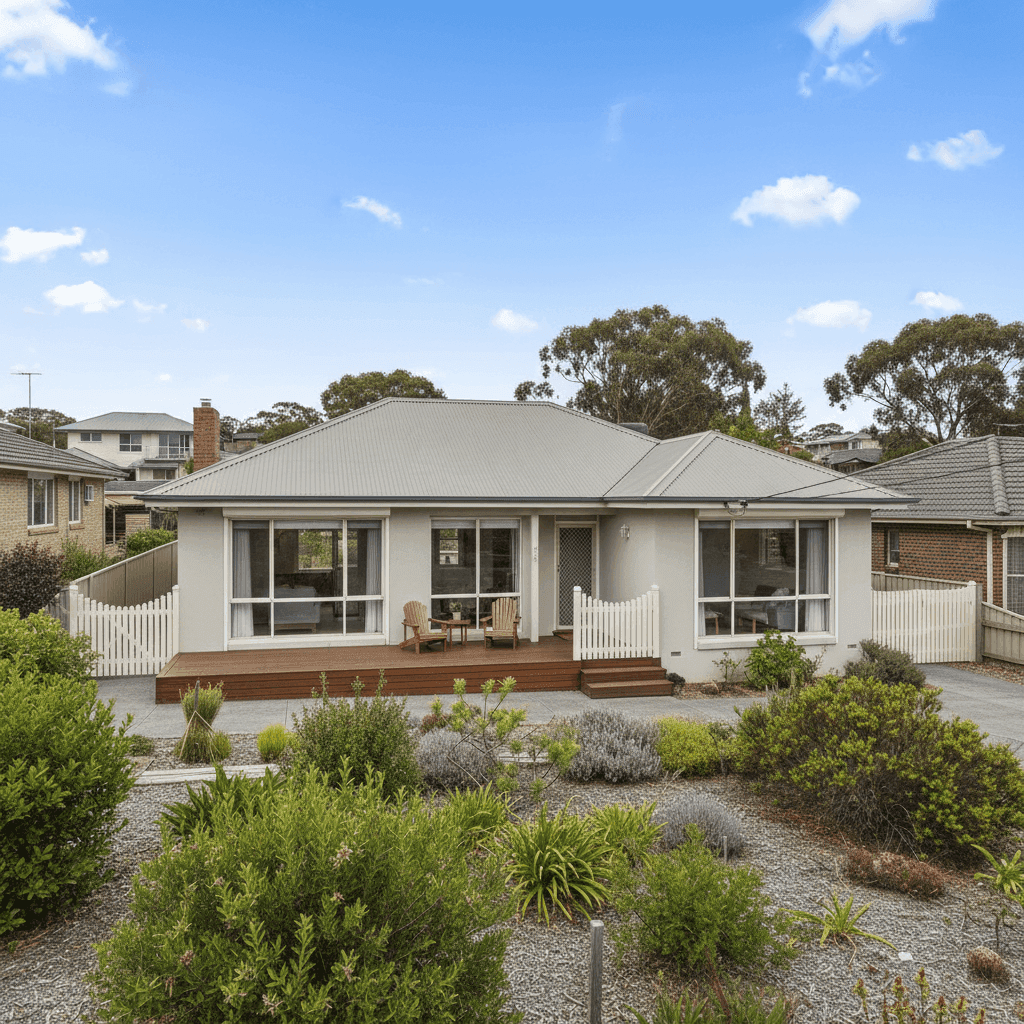
Mount Martha is one of the Mornington Peninsula's most sought-after coastal suburbs — and with that desirability comes the responsibility of protecting your home with the right insurance. This article breaks down a real home and contents insurance quote for a four-bedroom, free-standing home in Mount Martha (VIC 3934), helping you understand whether the premium is competitive and what factors are likely driving the cost.
---
Is This Quote Fair?
The annual premium for this property comes in at $2,811 per year (or $269/month), covering a building sum insured of $1,216,000 and contents valued at $186,000, with a $1,000 excess on both building and contents.
Our price rating for this quote is FAIR — Around Average, which is a reasonable result for a well-appointed property of this size and specification.
To put that in context, the suburb average for Mount Martha sits at $2,521/year, with a median of $2,498. This quote lands above both those figures, but importantly, it's still comfortably within the 75th percentile for the suburb ($2,977). In plain terms: roughly three-quarters of comparable quotes in the area come in at or below $2,977, so this premium is elevated but not outlying.
The higher-than-median result is likely a reflection of the property's size (214 sqm), above-average fittings quality, and the relatively high building sum insured of $1,216,000 — all of which push premiums upward compared to more modestly valued homes in the same postcode.
---
How Mount Martha Compares
Understanding where a suburb sits within the broader insurance landscape can be just as useful as knowing the quote itself. Here's how Mount Martha stacks up:
| Benchmark | Annual Premium |
|---|---|
| This Quote | $2,811 |
| Mount Martha Suburb Average | $2,521 |
| Mount Martha Suburb Median | $2,498 |
| Mornington Peninsula LGA Average | $2,652 |
| Victoria State Average | $3,000 |
| Victoria State Median | $2,718 |
| National Average | $5,347 |
| National Median | $2,764 |
A few things stand out here. First, Mount Martha premiums are notably below the Victorian state average of $3,000 — a positive sign for homeowners in this postcode. The suburb's median of $2,498 also sits just below the national median of $2,764, suggesting that insurance costs here are broadly in line with (or slightly better than) what most Australians pay.
The national average of $5,347 looks dramatically higher, but this figure is heavily skewed by high-risk areas — particularly cyclone-prone regions in Queensland and Western Australia — which pull the mean well above what most southern-state homeowners experience.
You can explore detailed pricing data for this suburb at CoverClub's Mount Martha stats page, compare it against all of Victoria, or see where it sits in the national picture.
---
Property Features That Affect Your Premium
Every home is different, and insurers weigh up a range of property characteristics when calculating your premium. Here's how the key features of this property are likely influencing the cost:
Steel/Colorbond Roof
Colorbond roofing is generally viewed favourably by insurers. It's durable, fire-resistant, and requires less maintenance than older tile or fibrous cement alternatives. This is likely a mild positive factor on the premium.
Stump Foundation
Homes on stumps (also known as pier-and-beam foundations) are common in coastal and hilly parts of Victoria, including the Mornington Peninsula. While stumps can be more susceptible to movement or timber decay over time, they also allow for better airflow and are generally well-understood by insurers in this region. The 1993 construction year suggests this home was built under modern building codes, which helps.
Timber/Laminate Flooring
Timber and laminate floors can be more costly to replace or repair after water damage or fire compared to concrete slab flooring. Insurers factor this into their assessment, particularly for contents and internal fittings.
Above-Average Fittings Quality
This is one of the more significant premium drivers for this property. Above-average fittings — think stone benchtops, quality cabinetry, premium fixtures — cost more to repair or replace, and that's reflected in both the building sum insured and the premium.
Ducted Climate Control
Ducted heating and cooling systems are a valuable asset but also an expensive one to repair or replace. Their inclusion in the building sum insured contributes to the higher-than-average replacement cost.
No Pool, No Solar
The absence of a pool removes a common source of liability and maintenance risk. Similarly, no solar panels means one less system that could be damaged by storm or hail. Both are modest but genuine premium-reducing factors.
High Building Sum Insured
At $1,216,000, the building sum insured is substantial — and rightly so for a 214 sqm home with above-average finishes on the Mornington Peninsula. Building costs in coastal Victoria have risen sharply in recent years, and underinsuring a property of this quality would be a costly mistake. The premium naturally scales with this figure.
---
Tips for Homeowners in Mount Martha
Whether you're reviewing your current policy or shopping around for the first time, here are some practical steps to make sure you're getting the best outcome.
1. Review your building sum insured annually Construction costs have risen significantly across Victoria in recent years. If your sum insured hasn't been updated to reflect current rebuild costs, you could be left short after a major claim. Use an independent building cost calculator or ask your insurer how they determine the figure.
2. Consider your excess carefully This quote carries a $1,000 excess on both building and contents. Opting for a higher excess (say, $2,000 or $2,500) can meaningfully reduce your annual premium — but only if you're confident you could comfortably cover that amount out of pocket in the event of a claim.
3. Check what's included for contents A $186,000 contents value is a reasonable estimate for a well-furnished four-bedroom home, but it's worth doing a proper stocktake. High-value items like jewellery, artwork, or electronics may need to be listed separately to be fully covered. Don't assume your standard policy covers everything automatically.
4. Compare quotes before renewing Loyalty doesn't always pay in insurance. Premiums can vary significantly between providers for the same level of cover, and many insurers offer better rates to new customers. Even if your current policy feels adequate, it's worth running a comparison before your renewal date.
---
Ready to Compare?
If this quote has prompted you to take a closer look at your own home insurance, now is a great time to act. At CoverClub, you can enter your property details and see how your current premium stacks up against the market — in minutes, with no obligation. Smart cover starts with the right comparison.