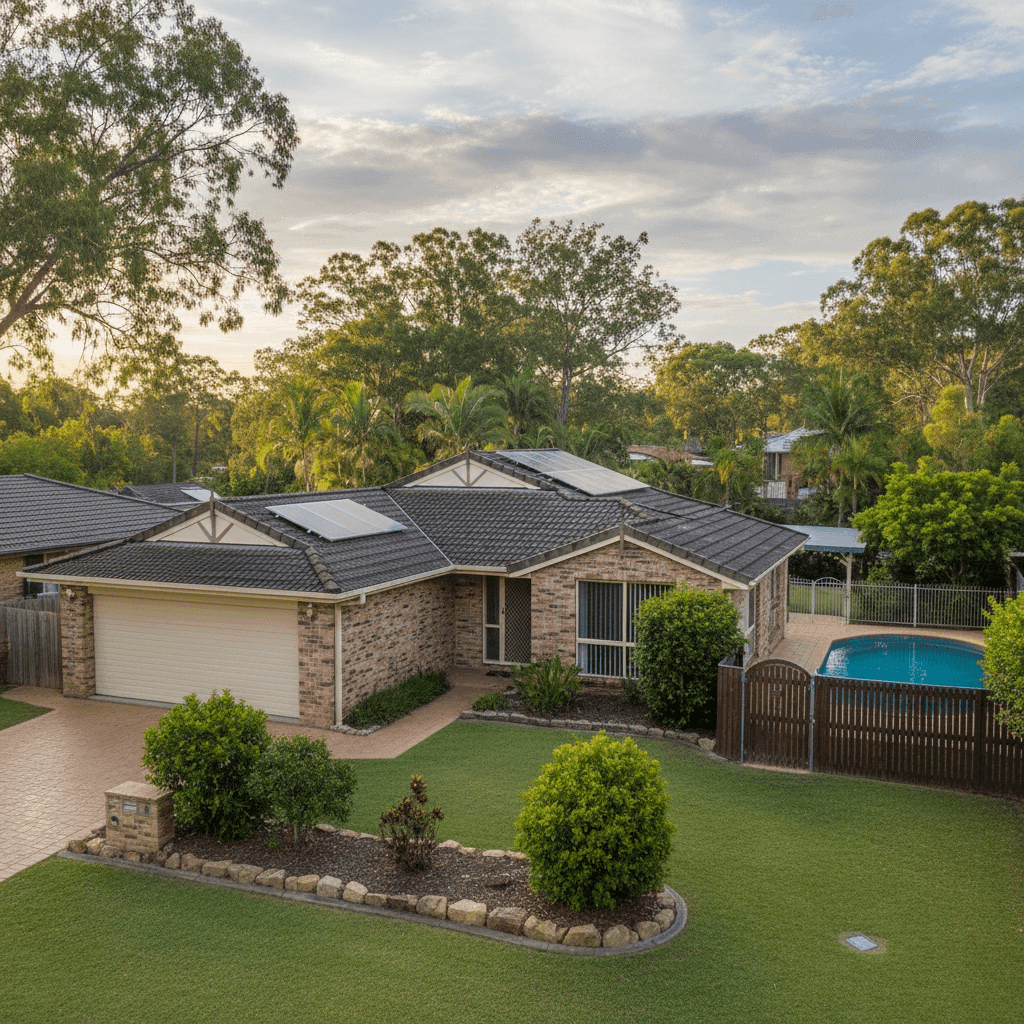
If you own a five-bedroom free standing home in Mount Nathan, QLD 4211, you already know this leafy Gold Coast hinterland pocket is a fantastic place to live. But how much should you expect to pay for home and contents insurance — and is a quote of $4,076 per year actually a good deal? We've crunched the numbers so you don't have to.
---
Is This Quote Fair?
The short answer: yes, this is a competitive quote. CoverClub's pricing engine rates this premium as CHEAP — below average for the area, which is great news for the homeowner.
At $4,076 per year (or around $389 per month), this quote covers:
- Building sum insured: $974,000
- Contents value: $230,000
- Building excess: $1,000
- Contents excess: $1,000
For a 277 m² brick veneer home built in 2006, with a pool, solar panels, and ducted climate control, that's a solid level of cover at a price that sits well below what many comparable properties in the suburb are paying. The combined insured value of over $1.2 million makes the annual premium look even more reasonable in context.
---
How Mount Nathan Compares
To put this quote in perspective, let's look at how it sits against suburb, state, and national benchmarks.
Mount Nathan (QLD 4211)
Based on data from 15 quotes in Mount Nathan, premiums in this suburb vary quite significantly:
| Metric | Premium |
|---|---|
| 25th percentile | $4,892/yr |
| Median | $7,323/yr |
| 75th percentile | $9,885/yr |
| Average | $107,241/yr |
The suburb average of $107,241 is heavily skewed by outlier quotes — likely high-value rural or acreage properties — which is why the median of $7,323 is a more reliable benchmark. Against that figure, this quote of $4,076 sits well below the median, placing it in the most affordable quartile of local quotes.
Queensland
Zooming out to Queensland as a whole, the state average premium sits at $9,129/yr, with a median of $3,903/yr. Queensland is one of Australia's more expensive states for home insurance due to its exposure to cyclones, flooding, and severe storms — so finding a quote near the state median is a positive outcome.
National
At the national level, the average home insurance premium is $5,347/yr and the median is $2,764/yr. This quote of $4,076 sits above the national median but below the national average — entirely reasonable given Queensland's elevated risk profile and the size and value of this particular property.
Scenic Rim LGA
The Local Government Area (LGA) of Scenic Rim records an average premium of $8,744/yr, making this quote approximately 53% cheaper than the LGA average — a meaningful saving.
---
Property Features That Affect Your Premium
Several characteristics of this property influence how insurers price the risk. Here's what matters most:
🧱 Brick Veneer Walls & Tile Roof
Brick veneer construction with a tiled roof is generally viewed favourably by insurers. These materials are durable, fire-resistant, and less susceptible to wind damage than lightweight alternatives like weatherboard or metal cladding. This combination likely contributes to a more competitive premium.
🏗️ Concrete Slab Foundation
A slab-on-ground foundation is standard for Queensland homes of this era and presents minimal additional risk to insurers. It's also less vulnerable to subsidence or pest-related damage compared to raised timber stumps.
🏊 Swimming Pool
Pools add to the replacement cost of a property and can introduce liability considerations. Insurers factor in the cost to repair or replace pool structures, equipment, and surrounds when calculating your building sum insured — so it's important that your $974,000 building cover adequately reflects the pool's inclusion.
☀️ Solar Panels
Solar panels are increasingly common on Australian homes, but they do add complexity to a claim. Panels can be damaged by hail, storms, or fire, and their replacement cost can run into the tens of thousands. Some policies cover panels under building insurance automatically; others require you to check the fine print. Confirming this with your insurer is worthwhile.
❄️ Ducted Climate Control
Ducted air conditioning systems are expensive to repair or replace — easily $10,000–$30,000 or more depending on the system. Ensuring your building sum insured accounts for this is important to avoid being underinsured.
📐 Property Size & Age
At 277 m² and built in 2006, this is a well-established, mid-to-large family home. Homes of this age are generally well-understood by insurers and don't carry the uncertainty of older properties that may have outdated wiring or plumbing.
---
Tips for Homeowners in Mount Nathan
1. Review Your Building Sum Insured Annually
With construction costs rising sharply across Queensland, the cost to rebuild your home may have increased significantly since your policy was last updated. At $974,000 for a 277 m² home, your per-square-metre rebuild cost is approximately $3,516/m² — reasonable, but worth validating with a quantity surveyor or using an online rebuild cost calculator.
2. Check Solar Panel Coverage Explicitly
Don't assume your solar panels are covered. Ask your insurer whether panels are included under building cover, whether storm and hail damage is covered, and what the claims process looks like. This is a common gap in home insurance policies.
3. Don't Overlook Contents Underinsurance
$230,000 in contents cover sounds substantial, but for a five-bedroom home with standard fittings, it can go quickly once you account for furniture, appliances, clothing, electronics, and outdoor items. Consider doing a room-by-room inventory to make sure your figure is realistic.
4. Compare Quotes at Renewal Time
Even if you're happy with your current premium, the insurance market shifts regularly. New entrants, changing risk models, and competitive pricing mean the best deal today may not be the best deal in 12 months. Use a comparison tool like CoverClub at each renewal to make sure you're not overpaying.
---
Ready to Compare?
Whether you're reviewing your existing policy or shopping for cover on a new property, CoverClub makes it easy to compare home insurance quotes tailored to your address. Get a quote today at CoverClub and see how your premium stacks up against the suburb, state, and national benchmarks — in minutes, not hours.