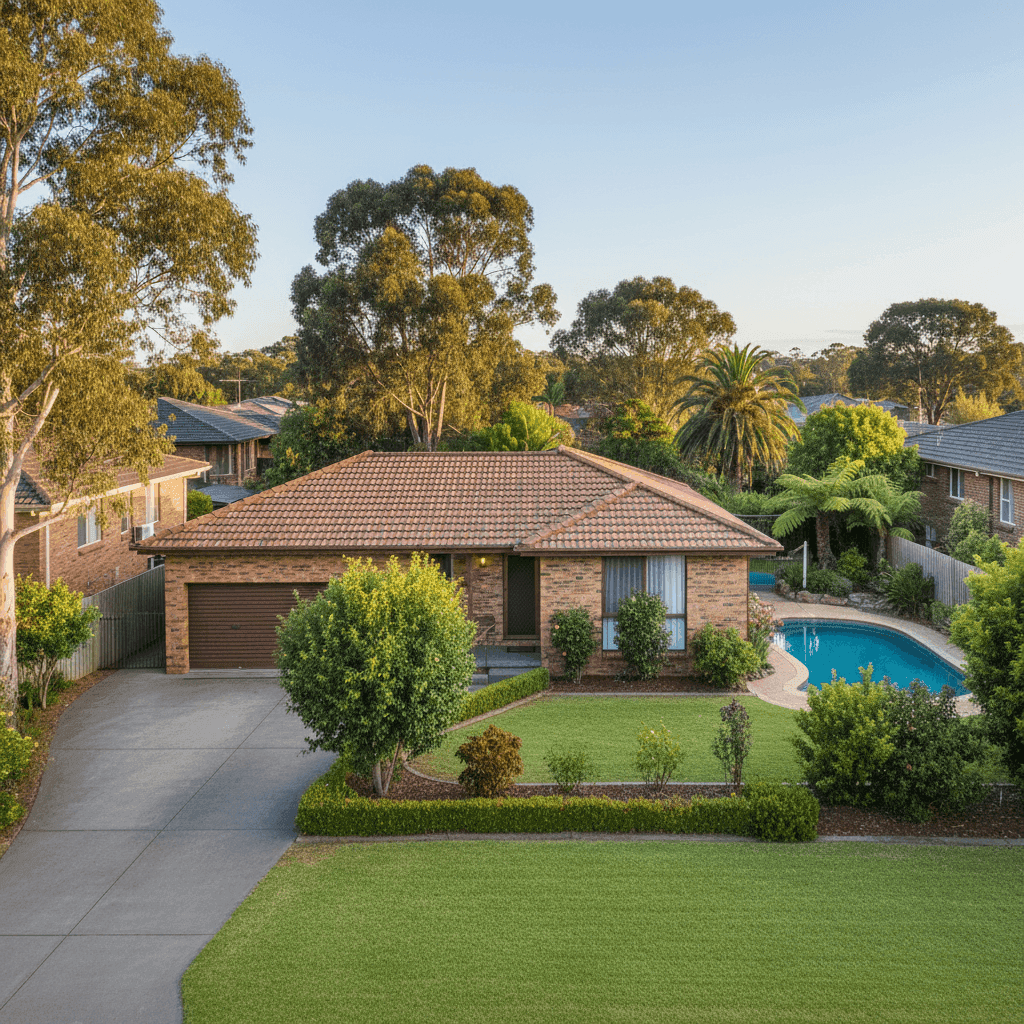
If you own a free standing home in Mount Pleasant, NSW 2519, you've probably wondered whether you're paying a fair price for home insurance — or quietly overpaying while your insurer quietly profits. This article breaks down a real building insurance quote for a four-bedroom, two-bathroom brick veneer home in the suburb, and puts the numbers into context using suburb, state, and national data.
---
Is This Quote Fair?
The quote in question comes in at $2,954 per year (or $283 per month) for building-only cover, with a $1,000 building excess and a sum insured of $651,000. Our rating for this quote is FAIR — around average.
That "fair" rating isn't a red flag, but it's not a green light to stop shopping either. It means the premium sits comfortably within the typical range for this suburb, neither suspiciously cheap nor eye-wateringly expensive. For homeowners who haven't reviewed their policy in a while, a "fair" rating is often a prompt to check whether the coverage itself — not just the price — still fits their needs.
To put the annual figure in perspective: the suburb median premium for Mount Pleasant is $2,930 per year, meaning this quote is almost exactly in line with what most local homeowners are paying. At $24 above the median, the difference is negligible — roughly the cost of a takeaway dinner.
---
How Mount Pleasant Compares
Understanding where your suburb sits relative to broader benchmarks helps you gauge whether local pricing is driven by genuine risk factors or simply market dynamics.
Here's how the numbers stack up (based on Mount Pleasant suburb data from 32 quotes):
| Benchmark | Annual Premium |
|---|---|
| Mount Pleasant 25th percentile | $2,332 |
| Mount Pleasant median | $2,930 |
| Mount Pleasant average | $3,194 |
| Mount Pleasant 75th percentile | $3,588 |
| Wollongong LGA average | $2,751 |
| NSW state median | $3,770 |
| NSW state average | $9,528 |
| National median | $2,764 |
| National average | $5,347 |
A few things stand out here. First, the NSW state average of $9,528 looks alarming — but it's heavily skewed by high-risk and high-value properties across the state, particularly in flood-prone and bushfire-affected regions. The state median of $3,770 is a more reliable comparison point, and Mount Pleasant sits comfortably below it.
Second, the Wollongong LGA average of $2,751 is slightly lower than the Mount Pleasant suburb average of $3,194, suggesting that some pockets of the LGA enjoy cheaper premiums — likely areas with lower flood or storm risk profiles.
Third, the national median of $2,764 is actually close to what Mount Pleasant homeowners are paying, which is a reassuring sign that local pricing isn't inflated relative to the broader Australian market.
You can explore further comparisons on the NSW state insurance stats page or the national home insurance statistics page.
---
Property Features That Affect Your Premium
Every property is unique, and insurers weigh up a combination of construction characteristics, location risk, and home features when calculating a premium. Here's how the specifics of this property likely influence its pricing:
Brick Veneer Walls Brick veneer is one of the most common external wall types in Australian suburban homes and is generally viewed favourably by insurers. It offers solid fire resistance compared to timber weatherboard, which can help keep premiums in check.
Tiled Roof Terracotta or concrete tiles are considered a durable, low-risk roofing material. They hold up well in storms and are less susceptible to fire than Colorbond or corrugated iron in some scenarios — though they can be costly to repair if cracked. Overall, a tiled roof is a neutral-to-positive factor for premium pricing.
Slab Foundation A concrete slab foundation is standard for homes built in this era and is generally considered structurally sound. It's not a significant risk flag for insurers in non-flood-prone areas.
Timber and Laminate Flooring Timber and laminate floors are a mid-range fittings consideration. They're not as premium as solid hardwood, but they're more susceptible to water damage than tiles — something worth noting if your area experiences storm or burst pipe events.
Swimming Pool Having a pool adds a small but real element of liability risk to a property, which can nudge premiums slightly higher. It also increases the replacement cost of the home if not already factored into the sum insured.
Ducted Climate Control Ducted air conditioning systems are expensive to replace and can be a source of water damage if drainage fails. Insurers may factor this into the overall sum insured assessment, and it's worth ensuring your building cover adequately accounts for it.
Construction Year: 1980 A home built in 1980 is now over 40 years old. While brick veneer construction from this era is generally robust, older homes may have ageing plumbing, wiring, or roofing that can increase the likelihood of a claim. Some insurers apply age-related loading, particularly if the property hasn't been recently renovated.
Building Size: 214 sqm At 214 square metres, this is a reasonably sized family home. The sum insured of $651,000 works out to approximately $3,042 per square metre — which is broadly in line with current rebuilding cost estimates for brick veneer homes in the Illawarra region, though it's always worth getting a professional assessment.
---
Tips for Homeowners in Mount Pleasant
1. Review your sum insured annually Construction costs have risen significantly in recent years. A sum insured that was accurate three years ago may now fall short of what it would actually cost to rebuild your home. Use a building cost calculator or engage a quantity surveyor to verify your figure — underinsurance is one of the most common (and costly) mistakes homeowners make.
2. Consider bundling contents cover This quote covers building only. If your contents aren't separately insured, you could be exposed in the event of theft, fire, or water damage to your belongings. Many insurers offer discounts when you bundle building and contents cover together, so it's worth comparing combined quotes.
3. Increase your excess strategically A $1,000 excess is standard, but opting for a higher excess — say $2,000 — can meaningfully reduce your annual premium. If you have an emergency fund that could cover a larger out-of-pocket expense, this is a low-effort way to save.
4. Shop around at renewal time Insurer loyalty rarely pays off in Australia. Premiums can vary significantly between providers for the same property and level of cover. Even if your current quote is "fair," running a comparison at renewal could reveal a materially cheaper option without sacrificing coverage quality.
---
Compare Your Home Insurance Quote Today
Whether you're assessing a new quote or reviewing an existing policy, having the right data makes all the difference. CoverClub helps Australian homeowners understand what they're paying and whether there's a better deal available.
Get a home insurance quote for your property and see how your premium stacks up against your neighbours — it takes just a few minutes and could save you hundreds each year.