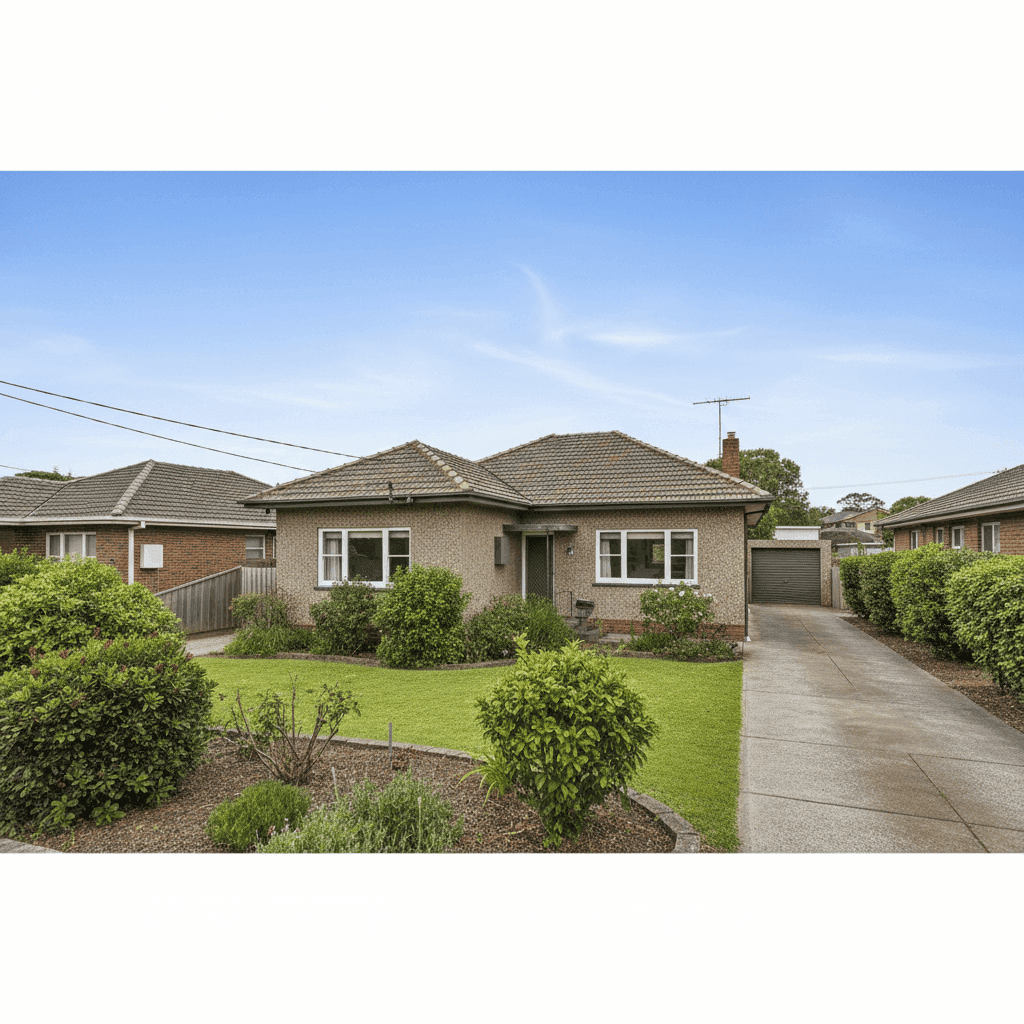
If you own a free standing home in Mount Pritchard, NSW 2170, you've probably wondered whether you're paying a fair price for your home insurance. This article breaks down a real building insurance quote for a three-bedroom, one-bathroom home in the suburb — and puts it into context using suburb, state, and national benchmarks — so you can make a more informed decision about your own cover.
---
Is This Quote Fair?
The quote in question comes in at $1,932 per year (or $185/month) for building-only cover, with a $500 building excess and a sum insured of $450,000.
Our price rating for this quote is FAIR — Around Average.
What does that mean in practice? Based on insurance data for Mount Pritchard, the suburb average sits at $1,605/yr and the median at $1,440/yr. This quote lands above both of those figures, which places it in the upper half of the local market — but it's still comfortably within the suburb's 75th percentile of $2,085/yr. In other words, roughly a quarter of comparable quotes in the area cost more than this one.
So while you're not getting the cheapest deal on the block, you're also not being gouged. The "fair" rating reflects that this premium is within a reasonable range for the property type and location, even if there may be room to shop around for a better price.
---
How Mount Pritchard Compares
To put this quote into broader perspective, it helps to zoom out and look at the bigger picture.
| Benchmark | Average Premium | Median Premium |
|---|---|---|
| Mount Pritchard (suburb) | $1,605/yr | $1,440/yr |
| Fairfield LGA | $2,137/yr | — |
| New South Wales | $9,528/yr | $3,770/yr |
| National | $5,347/yr | $2,764/yr |
A few things stand out here. First, the NSW state average of $9,528/yr looks startling — but this is heavily skewed by high-risk and high-value properties across the state, including flood-prone regions and coastal areas. The median of $3,770/yr is a far more representative figure for typical NSW homeowners, and this quote sits well below that mark.
At the national level, the average premium across Australia is $5,347/yr, with a median of $2,764/yr. Again, this quote comes in below both figures, which is a positive sign.
Interestingly, the Fairfield LGA average of $2,137/yr is higher than the Mount Pritchard suburb average, suggesting that other pockets within the council area may carry greater risk or higher property values. Mount Pritchard itself appears to be a relatively affordable suburb to insure compared to its neighbours.
You can explore more detailed NSW home insurance statistics here.
---
Property Features That Affect Your Premium
Several characteristics of this property are worth examining when it comes to understanding why the premium lands where it does.
Age of construction (1959): At over 65 years old, this home is considered an older dwelling. Insurers often apply higher premiums to older homes due to the increased likelihood of ageing infrastructure — think original plumbing, older wiring, and structural wear. This factor alone can push premiums above what you'd see for a newer build.
Foundation type — stumps: Homes built on stumps (also known as pier or post foundations) are common in older Australian suburbs and can be more susceptible to subsidence, movement, and pest damage over time. This is a risk factor that insurers price into their assessments.
Roof type — tiles: Tiled roofs are generally well-regarded by insurers. They're durable, fire-resistant, and weather well in most Australian climates. This is likely a neutral-to-positive factor in the premium calculation.
External walls — other material: The "other" wall classification can sometimes introduce uncertainty for insurers, depending on the actual material used. Non-standard construction materials may attract slightly higher premiums compared to brick or weatherboard, though the impact varies between providers.
Ducted climate control: The presence of ducted air conditioning adds to the overall replacement value of the home, which can contribute to a higher sum insured and, in turn, a higher premium.
No pool, no solar panels: These are both risk-reducing factors. Pools introduce liability and equipment replacement costs, while solar panels add complexity to roof repairs. The absence of both keeps things simpler from an insurer's perspective.
Building size — 214 sqm: At 214 square metres, this is a mid-sized home. The $450,000 sum insured works out to roughly $2,100 per sqm, which is broadly in line with current construction cost estimates in NSW — suggesting the sum insured is reasonably calibrated.
---
Tips for Homeowners in Mount Pritchard
1. Review your sum insured regularly Construction costs in NSW have risen significantly in recent years. If your sum insured hasn't been updated to reflect current rebuild costs, you could be underinsured. Use an independent building calculator or speak to a quantity surveyor to validate your figure.
2. Compare at least three quotes before renewing The suburb data shows a meaningful spread between the 25th percentile ($1,223/yr) and the 75th percentile ($2,085/yr). That's a difference of over $860/yr for broadly similar properties. Shopping around at renewal time could save you hundreds without sacrificing cover quality.
3. Ask about discounts for security upgrades Many insurers offer premium reductions for homes with deadbolts, alarm systems, or monitored security. Given the age of this home, upgrading door and window locks may also reduce your risk profile in the eyes of insurers.
4. Consider whether building-only cover is sufficient This quote covers the building only. If you have valuable contents — furniture, appliances, personal belongings — a combined building and contents policy may offer better overall value than two separate policies. It's worth getting a combined quote to compare.
---
Ready to Compare?
Whether you're renewing your existing policy or buying cover for the first time, it pays to see what's available in your area. Get a home insurance quote at CoverClub and compare building, contents, or combined cover options side by side — so you can be confident you're getting the right protection at a fair price.