Nestled in the Murrindindi region of regional Victoria, Mountain Bay (postcode 3723) is a quiet residential locality where modern builds are becoming increasingly common. For owners of a free standing home in this area, understanding what drives your home insurance premium — and whether you're paying a fair price — can make a meaningful difference to your household budget.
This article breaks down a real home and contents insurance quote for a three-bedroom, two-bathroom free standing home in Mountain Bay, comparing it against local, state, and national benchmarks to help you make an informed decision.
---
Is This Quote Fair?
The annual premium for this property came in at $2,692 per year (or $273 per month), covering both building (sum insured: $1,000,000) and contents ($50,000). Our rating for this quote is FAIR — Around Average, which means the price is broadly in line with what comparable properties in Victoria are paying, though there's still room to shop around.
A building excess of $3,000 and a contents excess of $1,000 are on the higher side, which is one reason the annual premium is kept relatively contained. Higher excesses reduce the insurer's risk exposure, which typically flows through to a lower base premium. If you'd prefer a lower out-of-pocket cost at claim time, it's worth requesting quotes with reduced excess options — just be aware this will likely push the annual premium up.
Overall, paying $2,692 for a newly built, well-appointed home with a $1,000,000 building sum insured is a reasonable outcome, particularly given the property's location in a bushfire-adjacent region of regional Victoria.
---
How Mountain Bay Compares
Putting this quote in context against broader market data reveals some useful insights:
| Benchmark | Annual Premium |
|---|---|
| This Quote | $2,692 |
| VIC State Average | $3,000 |
| VIC State Median | $2,718 |
| National Average | $5,347 |
| National Median | $2,764 |
| Murrindindi LGA Average | $4,184 |
A few things stand out here. First, this quote sits below the Victorian state average of $3,000 and is very close to the state median of $2,718 — a strong indicator that the pricing is competitive within Victoria. Second, and perhaps most strikingly, it comes in at less than half the national average of $5,347. This reflects the fact that national figures are heavily influenced by high-risk regions in Queensland and northern Australia, where cyclone and flood exposure drives premiums significantly higher.
Most notably, this quote is well below the Murrindindi LGA average of $4,184 — a difference of nearly $1,500 per year. The LGA average is elevated partly due to the region's bushfire risk profile, which affects many properties across Murrindindi. The fact that this particular property has secured cover at $2,692 suggests its specific characteristics are working in its favour.
You can explore more local data on the Mountain Bay suburb stats page, compare against the Victorian state average, or review national home insurance benchmarks for broader context.
---
Property Features That Affect Your Premium
Every home is different, and insurers assess a wide range of property characteristics when calculating your premium. Here's how the features of this Mountain Bay home likely influence the final price:
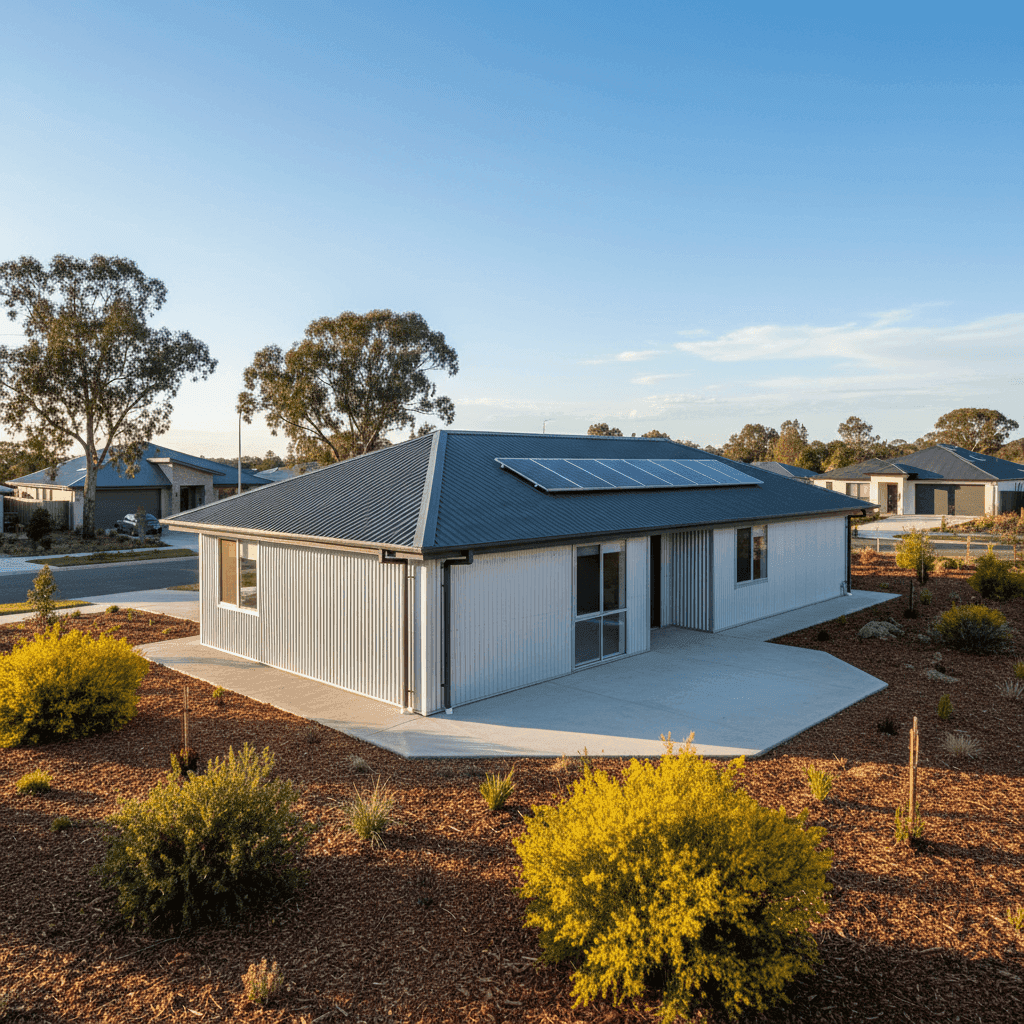
Construction Year (2023) Being a brand-new build is one of the most premium-friendly attributes a property can have. Modern homes are constructed to current building codes, which means improved structural integrity, better fire resistance, and up-to-date electrical and plumbing systems. Insurers generally view newer homes as lower risk, and this is likely a key reason the quote is competitive despite the elevated LGA average.
Aluminium Cladding & Colorbond Roof Aluminium external walls and a steel Colorbond roof are both highly regarded by insurers. These materials are non-combustible, weather-resistant, and durable — all qualities that reduce the likelihood of significant damage from fire, hail, or storm events. In a region like Murrindindi where bushfire risk is a real consideration, non-combustible cladding can have a meaningful positive impact on your premium.
Slab Foundation & Tile Flooring A concrete slab foundation is structurally sound and resistant to moisture and pest damage. Combined with tile flooring — which is hard-wearing and easy to replace — the home presents a low-maintenance, low-risk profile from an insurer's perspective.
Solar Panels Solar panels are increasingly common on Australian homes, but they do add a layer of complexity for insurers. They increase the rebuild value of the home and can be damaged by hail or storm events. Homeowners should confirm with their insurer that solar panels are explicitly included in the building sum insured.
Ducted Climate Control Ducted heating and cooling systems are considered above-average fittings and contribute to the overall replacement cost of the home. This is factored into the building sum insured and is one reason a $1,000,000 building cover figure is appropriate for a 139 sqm property with above-average fittings quality.
No Pool, No Cyclone Risk Zone The absence of a swimming pool removes a common liability risk, and Mountain Bay's location outside cyclone risk zones means the property avoids one of the most significant premium drivers seen in northern Australia.
---
Tips for Homeowners in Mountain Bay
1. Review Your Building Sum Insured Annually Construction costs have risen significantly across Australia in recent years. A $1,000,000 sum insured may be appropriate today, but it's worth reassessing each year — particularly for a newly built home where replacement costs can shift. Underinsurance is a common and costly mistake.
2. Confirm Solar Panel Coverage Ask your insurer specifically whether your solar panel system is covered under the building policy, and for how much. Some policies include panels automatically; others require a separate endorsement or have sub-limits. Don't assume — get it in writing.
3. Consider Bushfire Preparedness Mountain Bay sits within the Murrindindi LGA, a region with a known bushfire risk history. Maintaining a defendable space around your property, installing ember guards, and keeping gutters clear are all practical steps that may also support your insurance claim in the event of a fire. Some insurers offer discounts for properties with documented bushfire mitigation measures.
4. Compare at Renewal Time Insurance premiums can shift significantly from year to year. Even if your current quote is rated as fair, it's always worth comparing at renewal. The home insurance market is competitive, and a 10–15% saving is not uncommon for homeowners who take the time to shop around.
---
Compare Home Insurance Quotes at CoverClub
Whether you're a new homeowner in Mountain Bay or approaching your annual renewal, comparing quotes is one of the simplest ways to ensure you're not overpaying. CoverClub makes it easy to see what multiple insurers are offering for your specific property — so you can choose the cover that suits your needs and your budget. Get a quote today and see how your premium stacks up.