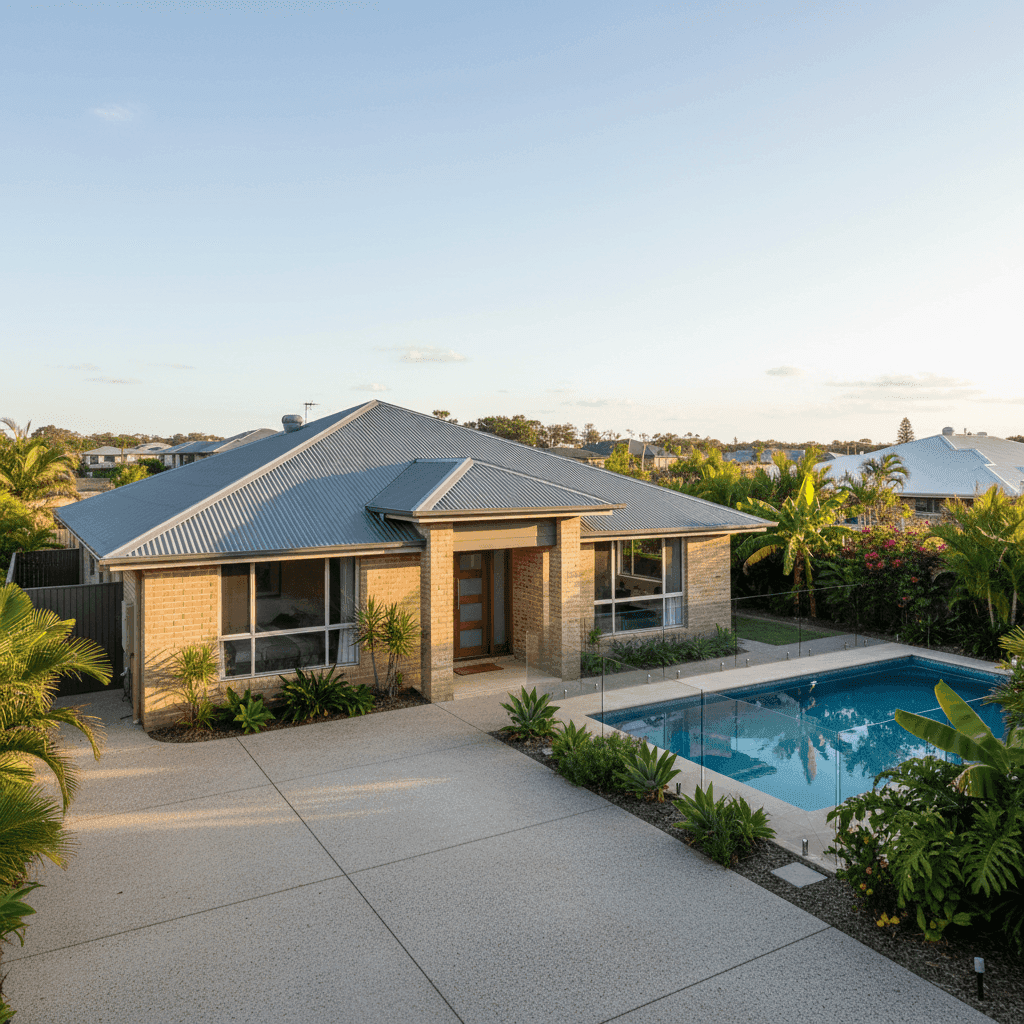
Mulambin is a coastal suburb in the Livingstone local government area on Queensland's Capricorn Coast, known for its relaxed beachside lifestyle and proximity to Yeppoon. It's also an area where home insurance premiums deserve careful scrutiny — particularly for larger, well-appointed properties. This article breaks down a real home and contents insurance quote for a four-bedroom, two-bathroom free standing home in Mulambin, rated Expensive (Above Average), and explores what's driving the cost and how you might reduce it.
---
Is This Quote Fair?
The quoted annual premium of $3,360 (or $301/month) covers both building (sum insured: $739,000) and contents ($100,000), with a $1,000 building excess and $500 contents excess. On the surface, it may not seem outrageous — but context tells a different story.
Compared to the Mulambin suburb average of $2,854/yr, this quote sits 18% above average and a notable 39% above the suburb median of $2,421/yr. Even against the 75th percentile of $2,628/yr for the area, this quote comes in $732 higher. That's a meaningful gap — equivalent to a family holiday or several months of groceries.
That said, the quote isn't entirely out of left field when you zoom out. Queensland's average home insurance premium sits at a steep $9,129/yr, though the state median is a more moderate $3,903/yr — still above this quote. And at the LGA level, the Livingstone average is a striking $13,146/yr, which reflects the concentration of high-risk coastal and cyclone-prone properties across the region.
So while this quote is expensive relative to Mulambin specifically, it's not alarming in the broader Queensland coastal context. The key question is whether the property's specific features justify the premium — and there are several that do.
---
How Mulambin Compares
Understanding where Mulambin sits in the national and state landscape is essential for any homeowner trying to gauge fairness.
| Benchmark | Premium |
|---|---|
| This quote | $3,360/yr |
| Mulambin suburb average | $2,854/yr |
| Mulambin suburb median | $2,421/yr |
| QLD state average | $9,129/yr |
| QLD state median | $3,903/yr |
| National average | $5,347/yr |
| National median | $2,764/yr |
| Livingstone LGA average | $13,146/yr |
Compared to national benchmarks, this quote is actually below the national average ($5,347/yr) and close to the national median ($2,764/yr). For a coastal Queensland property with a pool and cyclone exposure, that's a relatively competitive position nationally — but it's still on the expensive side for the immediate suburb.
It's worth noting that the Mulambin sample size used in this comparison is eight quotes, which is a relatively small dataset. As more data comes in, these averages may shift. Always treat suburb-level benchmarks as a guide rather than a guarantee.
---
Property Features That Affect Your Premium
Several characteristics of this property have a direct bearing on what insurers charge. Here's how each one plays into the premium calculation:
Cyclone Risk Area
This is arguably the single biggest premium driver. Mulambin falls within a designated cyclone risk zone, and insurers price this in heavily. Cyclone cover typically involves stricter underwriting, higher base rates, and in some cases, separate cyclone excess clauses. Properties in cyclone-prone areas of Queensland routinely pay significantly more than their southern counterparts.
Swimming Pool
A pool adds both asset value and liability exposure. Insurers factor in the cost to repair or replace pool structures, fencing, and associated equipment, as well as public liability considerations. Expect a pool to add a few hundred dollars to your annual premium.
Double Brick Construction
On the positive side, double brick walls are generally viewed favourably by insurers. Brick is more resistant to wind, fire, and impact damage than lightweight cladding or weatherboard — all of which can help moderate your premium relative to less robust construction types.
Colorbond Steel Roof
Steel roofing is durable and performs well in storm conditions, which insurers tend to reward. It's less susceptible to hail damage than terracotta tiles and holds up better in high-wind events — a meaningful advantage in a cyclone risk zone.
Slab Foundation & Tile Flooring
A concrete slab foundation is a stable, low-maintenance base that insurers generally view as low-risk. Tile flooring is similarly regarded as durable and resistant to water damage — both factors that can help keep premiums in check.
Ducted Climate Control
Ducted air conditioning systems represent a significant replacement cost and are factored into the building sum insured. At $739,000, the building cover here is substantial, and ducted systems contribute to that figure.
Building Size & Age
At 214 sqm and built in 2012, this is a relatively modern, mid-to-large home. Newer builds generally comply with more recent building codes (including cyclone-rated standards), which can work in your favour with some insurers. The size, however, directly influences the replacement cost and therefore the sum insured.
---
Tips for Homeowners in Mulambin
If you're looking to reduce your home insurance costs without sacrificing meaningful cover, here are four practical steps worth considering:
- Shop around — seriously. With only eight quotes in the Mulambin sample, there's genuine variation between insurers. A quote that's expensive with one provider may be competitive with another. Use a comparison platform like CoverClub to see multiple quotes side by side without the legwork.
- Review your sum insured carefully. Overinsuring your building is a common and costly mistake. Use a building cost calculator to confirm your replacement cost estimate is accurate — not inflated. At $739,000, it's worth verifying this figure reflects actual rebuild costs rather than market value.
- Consider a higher excess. Increasing your building excess from $1,000 to $2,000 or more can meaningfully reduce your annual premium. If you have an emergency fund and rarely make small claims, a higher excess is often a smart trade-off.
- Ask about cyclone-proofing discounts. Some insurers offer premium reductions for properties with cyclone-rated roofing, shutters, or reinforced garage doors. If your home already has these features — or you're considering upgrades — it's worth asking your insurer directly whether they'll recognise them in your pricing.
---
Ready to Find a Better Rate?
Whether you're renewing your policy or shopping for the first time, comparing quotes is the fastest way to find out if you're overpaying. CoverClub makes it easy to benchmark your premium against real data from your suburb, state, and across Australia.
Get a home insurance quote now and see how your current cover stacks up — you might be surprised by what you find.