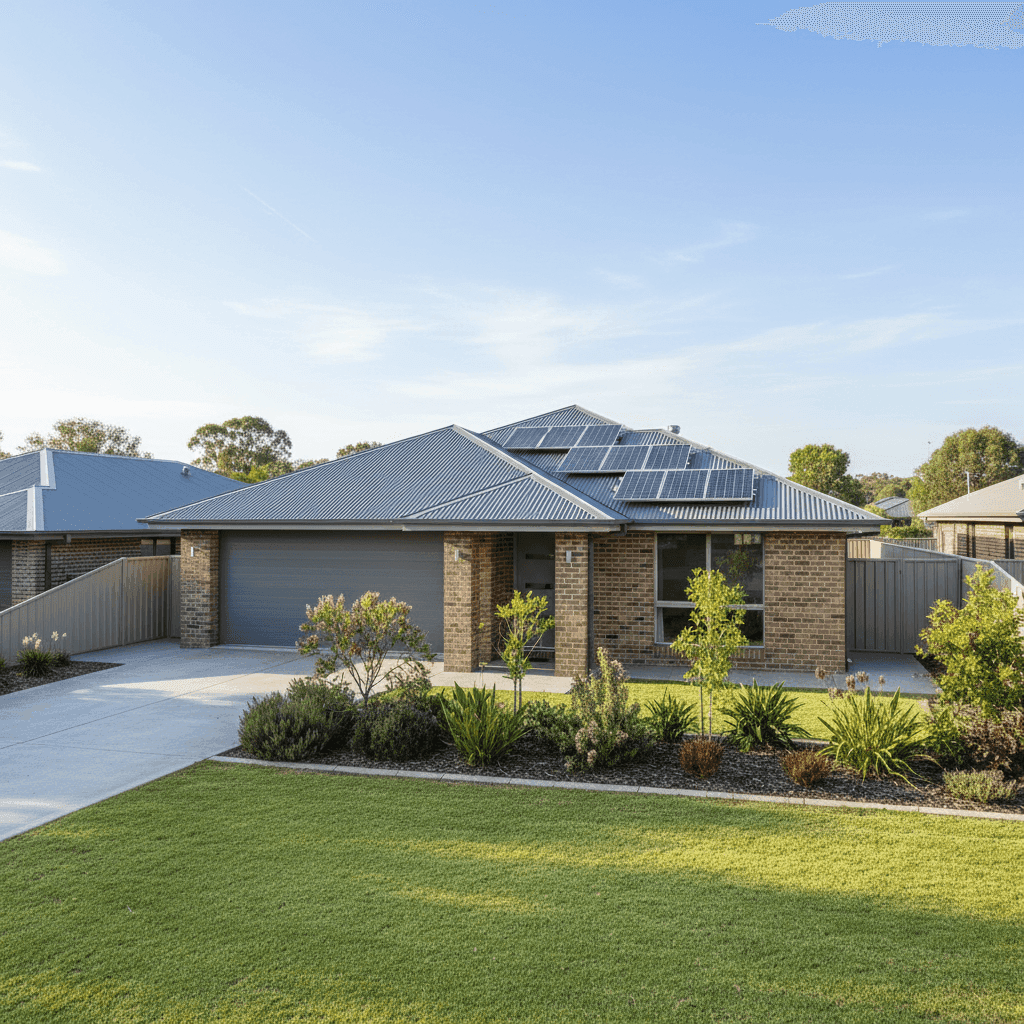
If you own a free standing home in Mulbring, NSW 2323, you're probably wondering whether you're getting a fair deal on your home insurance — or quietly paying too much. This article breaks down a real home and contents insurance quote for a four-bedroom property in the area, comparing it against suburb, state, and national benchmarks to give you a clear picture of where it sits.
---
Is This Quote Fair?
The quote in question comes in at $3,358 per year (or roughly $322 per month), covering both building and contents for a four-bedroom, two-bathroom free standing home with a building sum insured of $756,000 and contents valued at $120,000. Both the building and contents excess are set at $1,000.
Our pricing analysis rates this quote as CHEAP — below average for the area. That's genuinely good news for the homeowner. In a market where insurance premiums have been climbing steadily across Australia, landing a quote that sits meaningfully below the local going rate is worth paying attention to.
To put it simply: if you're paying around this amount for comparable cover in Mulbring, you're doing better than most of your neighbours.
---
How Mulbring Compares
To understand just how competitive this quote is, it helps to look at the numbers in context. You can explore the full local data on the Mulbring insurance stats page.
| Benchmark | Premium |
|---|---|
| This quote | $3,358/yr |
| Mulbring suburb average | $4,565/yr |
| Mulbring suburb median | $4,741/yr |
| Mulbring 25th percentile | $4,010/yr |
| Lake Macquarie LGA average | $11,064/yr |
| NSW state average | $9,528/yr |
| NSW state median | $3,770/yr |
| National average | $5,347/yr |
| National median | $2,764/yr |
A few things stand out here. First, this quote is $1,207 below the Mulbring suburb average and sits well beneath even the 25th percentile for the area ($4,010/yr) — meaning it's cheaper than at least 75% of quotes recorded locally. That's a strong result.
Second, the NSW state average of $9,528/yr looks startlingly high at first glance, but this is heavily skewed by high-value properties and higher-risk postcodes across the state. The NSW median of $3,770/yr is a more useful comparison point — and even against that, this quote holds up well.
At the national level, the average sits at $5,347/yr, with a median of $2,764/yr. The national median being lower than this quote reflects the broad mix of properties across Australia — including smaller homes, lower-value contents, and lower-risk rural areas. For a four-bedroom home with $756,000 in building cover, a $3,358 annual premium is a genuinely competitive outcome.
It's worth noting that the Lake Macquarie LGA average of $11,064/yr is extremely elevated — likely driven by high-value waterfront and prestige properties within the broader LGA — so this shouldn't be treated as a direct comparison for a standard residential home in Mulbring.
---
Property Features That Affect Your Premium
Insurance premiums aren't calculated in a vacuum. Insurers assess dozens of factors about a property when pricing a policy. Here's how the key features of this home likely influence its premium:
Brick Veneer Walls Brick veneer is one of the most common and well-regarded external wall materials in Australia. It's considered relatively low risk by insurers — it's fire-resistant, durable, and less prone to storm damage than lightweight cladding alternatives. This likely works in favour of a lower premium.
Steel/Colorbond Roof Colorbond steel roofing is highly regarded in Australian conditions. It handles heat, rain, and moderate wind well, and is resistant to corrosion. Insurers generally view it favourably compared to older tile or fibrous cement roofing, which can be more susceptible to storm damage claims.
Slab Foundation A concrete slab foundation is standard for modern Australian construction and poses minimal risk from a structural standpoint. It's generally viewed neutrally to positively by insurers.
Timber/Laminate Flooring Flooring type can influence contents and building claims, particularly in flood or water damage scenarios. Timber and laminate floors can be more susceptible to water damage than tiles, which may nudge the premium slightly upward — though this is typically a minor factor.
Solar Panels The property includes solar panels, which add to the replacement value of the home. Insurers need to account for the cost of repairing or replacing panels after events like hail or storm damage. Homeowners should confirm their policy explicitly covers solar panels as part of the building sum insured.
Ducted Climate Control Ducted air conditioning systems are a significant fixed installation and add to the overall replacement cost of the building. These are generally covered under building insurance, but it's worth verifying the scope of cover with your insurer.
2019 Construction A home built in 2019 benefits from modern building standards and materials, which typically means lower risk of structural issues and compliance with current fire and safety codes. Newer homes often attract more competitive premiums as a result.
No Pool, No Cyclone Risk Zone The absence of a swimming pool removes a liability and maintenance risk factor. Mulbring is also not classified as a cyclone risk area, which keeps premiums lower compared to properties in northern Queensland or parts of WA.
---
Tips for Homeowners in Mulbring
Whether you're reviewing an existing policy or shopping for the first time, here are some practical steps to make sure you're getting the best value:
1. Review your sum insured annually Building costs have risen sharply in recent years. Make sure your $756,000 sum insured still reflects the actual cost to rebuild your home — not just its market value. Underinsurance is one of the most common and costly mistakes Australian homeowners make.
2. Confirm solar panels are explicitly covered Not all policies automatically include solar panels under building cover. Check your Product Disclosure Statement (PDS) to confirm your panels are covered for storm, hail, and fire damage, and that the cover limit is adequate.
3. Compare quotes at renewal — every time The insurance market shifts regularly. A quote that's competitive today may not be the best option at your next renewal. Use a comparison platform like CoverClub to benchmark your premium each year before automatically renewing.
4. Consider bundling building and contents This quote already combines building and contents cover, which often results in a better overall rate than purchasing them separately. If you're currently holding separate policies, it may be worth exploring a combined option at your next renewal.
---
Compare Your Home Insurance Today
Whether this quote reflects your own situation or you're simply trying to understand what's fair for your area, knowledge is your best tool. CoverClub makes it easy to see how your premium stacks up — and to find better options if you're overpaying. Get a home insurance quote now and see where you stand.