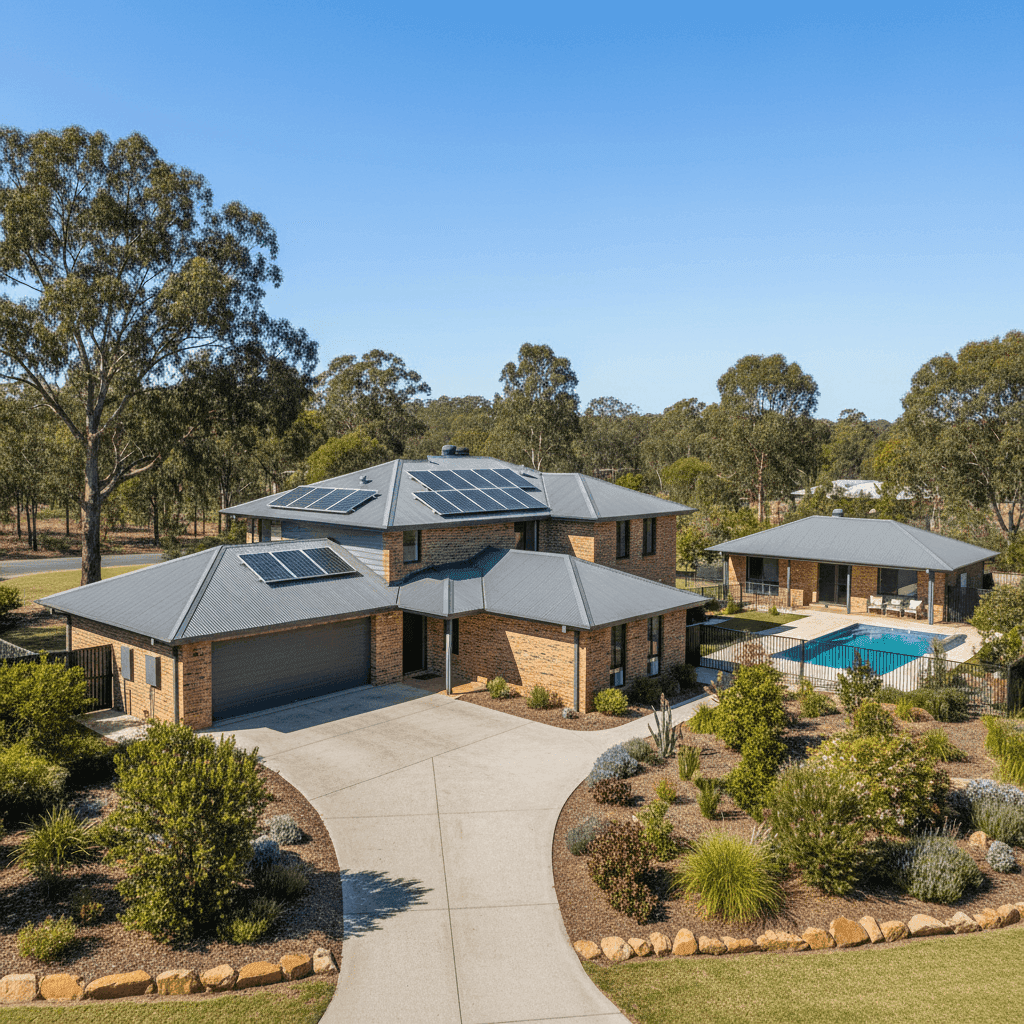
If you own a large free standing home in Mulgoa, NSW 2745, you already know that insuring a substantial property comes with a substantial price tag. But how do you know whether the premium you've been quoted is genuinely competitive — or whether you're quietly paying too much? In this article, we break down a real home and contents insurance quote for a six-bedroom property in Mulgoa, compare it against local, state, and national benchmarks, and share practical tips to help you get better value.
---
Is This Quote Fair?
The quote in question comes in at $10,008 per year (or $959/month) for combined home and contents cover, with a building sum insured of $2,499,000 and contents valued at $249,000. Both the building and contents excess are set at $1,000.
Our price rating for this quote is EXPENSIVE — above average for the area.
To put that in context: the suburb average premium in Mulgoa sits at around $7,505/year, and the suburb median is $7,529/year. This quote lands roughly 33% above the local average, which is a meaningful gap worth investigating. That said, it's worth noting the suburb sample size is relatively small (five quotes), so local averages should be interpreted with some caution.
Compared to the broader NSW state average of $9,528/year, this quote is only modestly higher — about 5% above the state mean. So while it's above average locally, it's not wildly out of step with what NSW homeowners are paying more broadly.
The bottom line? This quote isn't outrageous, but there's likely room to negotiate or shop around — particularly given how far it sits above the suburb median.
---
How Mulgoa Compares
Understanding where your premium sits relative to different benchmarks helps you make a more informed decision.
| Benchmark | Premium |
|---|---|
| This Quote | $10,008/yr |
| Mulgoa Suburb Average | $7,505/yr |
| Mulgoa Suburb Median | $7,529/yr |
| Mulgoa 25th Percentile | $6,844/yr |
| Mulgoa 75th Percentile | $9,956/yr |
| NSW State Average | $9,528/yr |
| NSW State Median | $3,770/yr |
| National Average | $5,347/yr |
| National Median | $2,764/yr |
| Wollondilly LGA Average | $2,297/yr |
A few things stand out here. First, the enormous gap between the NSW state average ($9,528) and the NSW state median ($3,770) tells us the state average is being pulled up significantly by high-value properties and high-risk areas — which is exactly the category a 420 sqm, $2.5M-insured home in Western Sydney falls into. Similarly, the national average of $5,347 versus a national median of $2,764 reflects the same dynamic at a broader scale.
The Wollondilly LGA average of just $2,297/year appears strikingly low by comparison, but this likely reflects a large proportion of smaller or lower-value properties across the wider LGA dragging that figure down.
For detailed Mulgoa suburb insurance statistics, including how premiums trend over time, visit our suburb stats page.
---
Property Features That Affect Your Premium
Several characteristics of this property directly influence what insurers charge. Here's how each one plays a role:
Large home size (420 sqm, 6 bedrooms, 3 bathrooms) At 420 square metres with six bedrooms and three bathrooms, this is a genuinely large home. Rebuild costs scale with size, and a $2,499,000 building sum insured reflects the real cost of reconstructing a home of this footprint in today's market. Larger sums insured translate directly into higher premiums.
Double brick construction Double brick walls are generally viewed favourably by insurers — they're durable, fire-resistant, and less susceptible to storm damage than timber-framed alternatives. This construction type can have a modest positive effect on your premium compared to lighter materials.
Steel/Colorbond roof Colorbond roofing is another tick in the right column. It's lightweight, long-lasting, and performs well in both heat and moderate wind events. Insurers tend to rate it similarly to or better than tiled roofs.
Slab foundation A concrete slab foundation is a standard, low-risk choice that generally doesn't attract any premium loading. It's straightforward for insurers to assess.
Swimming pool Pools add to the insured value of your property and introduce liability considerations. Most home and contents policies include some public liability cover, but a pool increases the risk profile slightly, which can nudge premiums upward.
Solar panels Solar panels are increasingly common, but they do add to the replacement cost of your home. If your building sum insured accounts for the panels (as it should), this contributes to the overall premium calculation.
Granny flat A secondary dwelling on the property adds complexity to your cover. Depending on your policy, the granny flat structure and any contents within it may or may not be covered under a standard home policy. It's critical to confirm this with your insurer.
Year built: 1996 At roughly 28–29 years old, this home sits in a comfortable middle ground — old enough to have some wear, but not so old as to attract significant age-related loadings. Wiring, plumbing, and roofing from the mid-1990s may be approaching the end of their recommended service life, which some insurers factor into their pricing.
---
Tips for Homeowners in Mulgoa
1. Review your building sum insured annually Construction costs have risen sharply in recent years. If your sum insured hasn't kept pace, you could be underinsured — meaning the payout in a total loss scenario wouldn't cover a full rebuild. Equally, if your sum insured has crept too high, you may be overpaying. Use a quantity surveyor or an online rebuild cost calculator to check your figure each year.
2. Confirm granny flat coverage explicitly Don't assume your granny flat is covered under your standard policy. Ask your insurer directly whether the secondary dwelling is included in the building sum insured and whether any contents inside it are covered. Some policies treat it as a separate structure requiring additional endorsement.
3. Shop around at renewal time Loyalty rarely pays in insurance. Insurers frequently offer their best rates to new customers, meaning long-term policyholders can end up paying a premium for staying put. Set a reminder to compare quotes at CoverClub at least 30 days before your renewal date.
4. Check your excess settings A $1,000 excess on both building and contents is fairly standard, but increasing your excess can meaningfully reduce your annual premium. If you're financially comfortable absorbing a higher out-of-pocket cost in a claim, bumping the excess to $2,000 or more could save you hundreds per year.
---
Compare Your Quote Today
Whether this quote is right for your situation depends on your specific cover needs, risk tolerance, and what other insurers are willing to offer. The best way to find out is to compare. At CoverClub, we make it easy to benchmark your premium against real quotes from across the market — so you can walk into renewal negotiations with confidence.
Get a home insurance quote for your Mulgoa property today and see how your current premium stacks up.