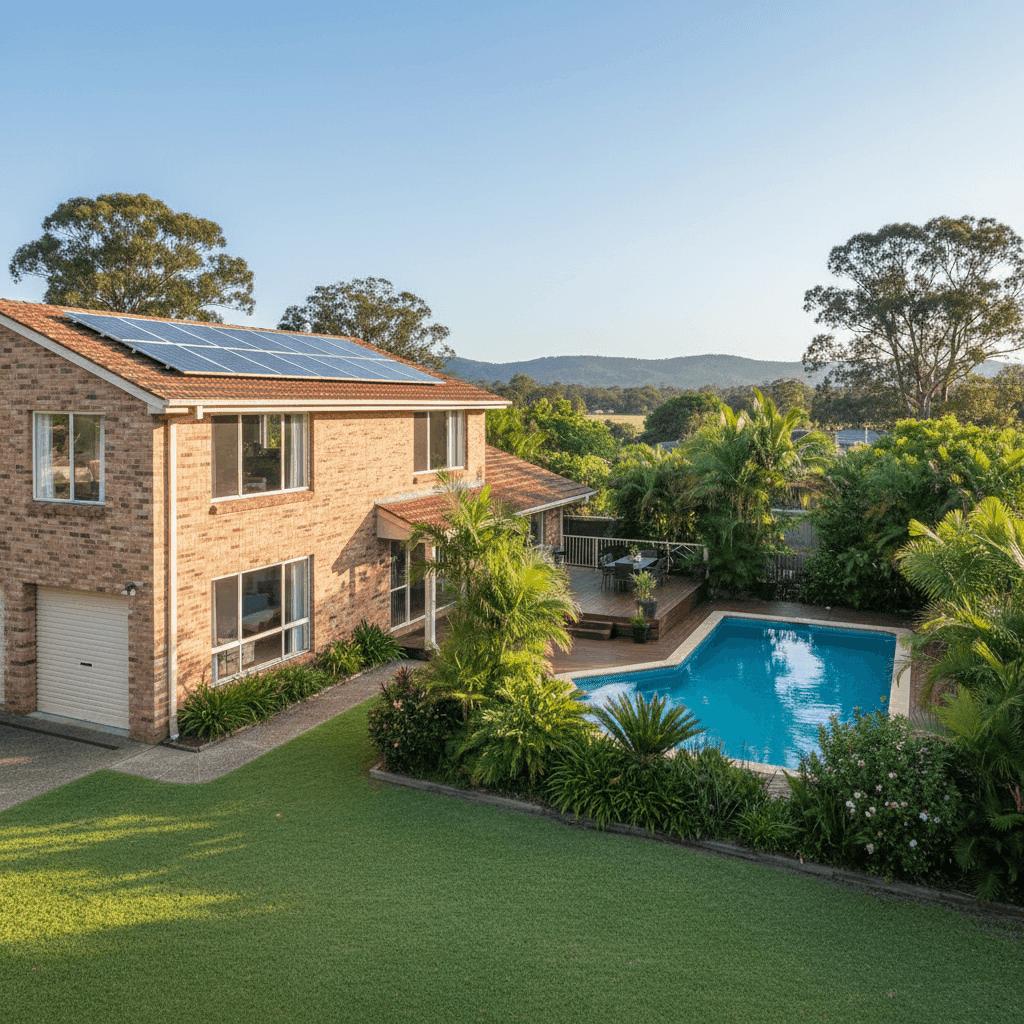
Mullumbimby — affectionately known as "Mullum" — is one of the Northern Rivers' most characterful towns, nestled in the Byron Shire between lush hinterland and the coast. It's a sought-after location for families and sea-changers alike, and that desirability is reflected in local property values. For owners of a free standing home here, making sure your building insurance is both adequate and fairly priced is an important part of protecting what is likely your most significant asset.
This article breaks down a recent building-only insurance quote for a 4-bedroom, 3-bathroom free standing home in Mullumbimby (postcode 2482), comparing it against local, state, and national benchmarks to help you understand whether you're getting a good deal.
---
Is This Quote Fair?
The quote in question comes in at $2,996 per year (or roughly $293 per month) for building-only cover on a home insured for $800,000. Our analysis rates this quote as CHEAP — below the average for the area.
To put that in perspective: the suburb average premium for Mullumbimby sits at $4,914 per year, meaning this quote is approximately 39% below what most homeowners in the area are paying. Even compared to the suburb's 25th percentile — the threshold below which only a quarter of quotes fall — this premium of $2,996 sits right at that boundary ($3,028/yr), confirming it represents genuinely competitive pricing.
It's worth noting the building excess on this policy is $5,000, which is on the higher side. A higher excess is one of the most common levers insurers use to reduce your upfront premium. If a claim arises, you'll need to cover that first $5,000 out of pocket, so it's important to weigh the premium saving against your financial capacity to absorb that cost.
Overall, for a well-built brick veneer home with a tiled roof in this postcode, this is a strong result — but as always, the cheapest quote isn't automatically the best one. Policy inclusions, claim handling reputation, and cover limits all matter.
---
How Mullumbimby Compares
Understanding how local premiums fit into the broader picture helps you assess your own quote with confidence. Here's how Mullumbimby stacks up:
| Benchmark | Premium |
|---|---|
| This Quote | $2,996/yr |
| Mullumbimby Suburb Average | $4,914/yr |
| Mullumbimby Suburb Median | $4,045/yr |
| Byron LGA Average | $4,856/yr |
| NSW State Average | $9,528/yr |
| NSW State Median | $3,770/yr |
| National Average | $5,347/yr |
| National Median | $2,764/yr |
(Based on a sample of 36 quotes in the Mullumbimby area. [View full Mullumbimby suburb stats](https://coverclub.com.au/stats/NSW/2482/mullumbimby).)
A few things stand out here. The NSW state average of $9,528 is dramatically higher than the median of $3,770 — a sign that a relatively small number of very high-risk properties (think flood zones, bushfire-prone areas, or coastal erosion zones) are pulling the average upward significantly. The median is generally a more reliable guide for typical homeowners.
Nationally, the pattern is similar: a national average of $5,347 versus a median of $2,764. Mullumbimby's median of $4,045 sits above the national median, reflecting the elevated risk profile of the Northern Rivers region — an area that has experienced significant flooding events in recent years.
For NSW as a whole, premiums vary enormously depending on flood, bushfire, and storm risk. Mullumbimby and the broader Byron Shire sit in a region that insurers treat with some caution, making a sub-$3,000 annual premium a genuinely noteworthy outcome.
---
Property Features That Affect Your Premium
Several characteristics of this particular property influence how insurers price the risk:
Brick veneer construction with a tiled roof is generally viewed favourably by insurers. Brick veneer offers solid fire resistance and structural durability, while tiled roofs — though heavier — tend to perform well in storms and have long lifespans. This combination typically attracts lower premiums compared to, say, a weatherboard home with a metal roof.
Slab foundation is standard for homes of this era and construction type in NSW. Slabs are generally considered low-risk from an insurer's perspective, with fewer concerns around subfloor moisture, pest ingress, or structural movement compared to raised timber foundations.
Timber and laminate flooring can be a consideration in flood-prone areas, as these materials are more susceptible to water damage than tiles. Insurers in flood-risk postcodes may factor this in, though it's rarely a primary driver of premium.
The pool adds a small degree of liability risk and replacement cost to the building sum insured. Pools must typically be included within the building coverage calculation, so it's worth confirming your $800,000 sum insured adequately accounts for the pool structure.
Solar panels are increasingly common on Australian homes and are generally covered under building insurance, though it's essential to confirm this explicitly with your insurer. Panels are expensive to replace, and some policies have sub-limits or exclusions for solar systems.
Ducted climate control is another fixed installation that should be captured within your building sum insured. Ducted systems can cost $10,000–$25,000+ to replace, and they're easy to overlook when calculating rebuild costs.
No cyclone risk is a meaningful factor here. Unlike parts of Queensland or the Northern Territory, Mullumbimby does not fall within a designated cyclone risk zone, which keeps wind-related loadings lower than they might otherwise be.
---
Tips for Homeowners in Mullumbimby
1. Review your sum insured carefully At $800,000 for a 214 sqm home built in 1992 with a pool and ducted air conditioning, the sum insured appears reasonable — but building costs have risen sharply in recent years. Use a building cost calculator or speak with a quantity surveyor to make sure your coverage reflects current rebuild costs, not purchase price or market value.
2. Understand your flood cover status The Northern Rivers region has experienced devastating flood events, and Mullumbimby itself has been impacted. Check whether your policy includes flood cover as standard or as an optional extra — and if it's excluded, understand exactly what that means for your exposure. Don't assume "storm" cover and "flood" cover are the same thing.
3. Weigh up that $5,000 excess A higher excess is one of the simplest ways to reduce your annual premium, and it works — as this quote demonstrates. However, if a claim event does occur, you'll need $5,000 available before your insurer contributes. Consider whether a slightly higher premium with a lower excess (say, $1,000–$2,000) might suit your financial situation better.
4. Compare at renewal, not just at inception Insurers often offer better rates to new customers than to loyal ones. Make a habit of comparing your building insurance premium at each annual renewal rather than simply accepting the rollover price. Even a 20–30 minute comparison exercise could save you hundreds of dollars per year.
---
Compare Home Insurance Quotes in Mullumbimby
Whether you're reviewing an existing policy or shopping for the first time, CoverClub makes it easy to compare building and contents insurance quotes for homes across Mullumbimby and the broader Byron Shire. See real premium data for your postcode and find out if you're paying a fair price. Get a quote today at CoverClub — it takes just a few minutes and could save you significantly at renewal.