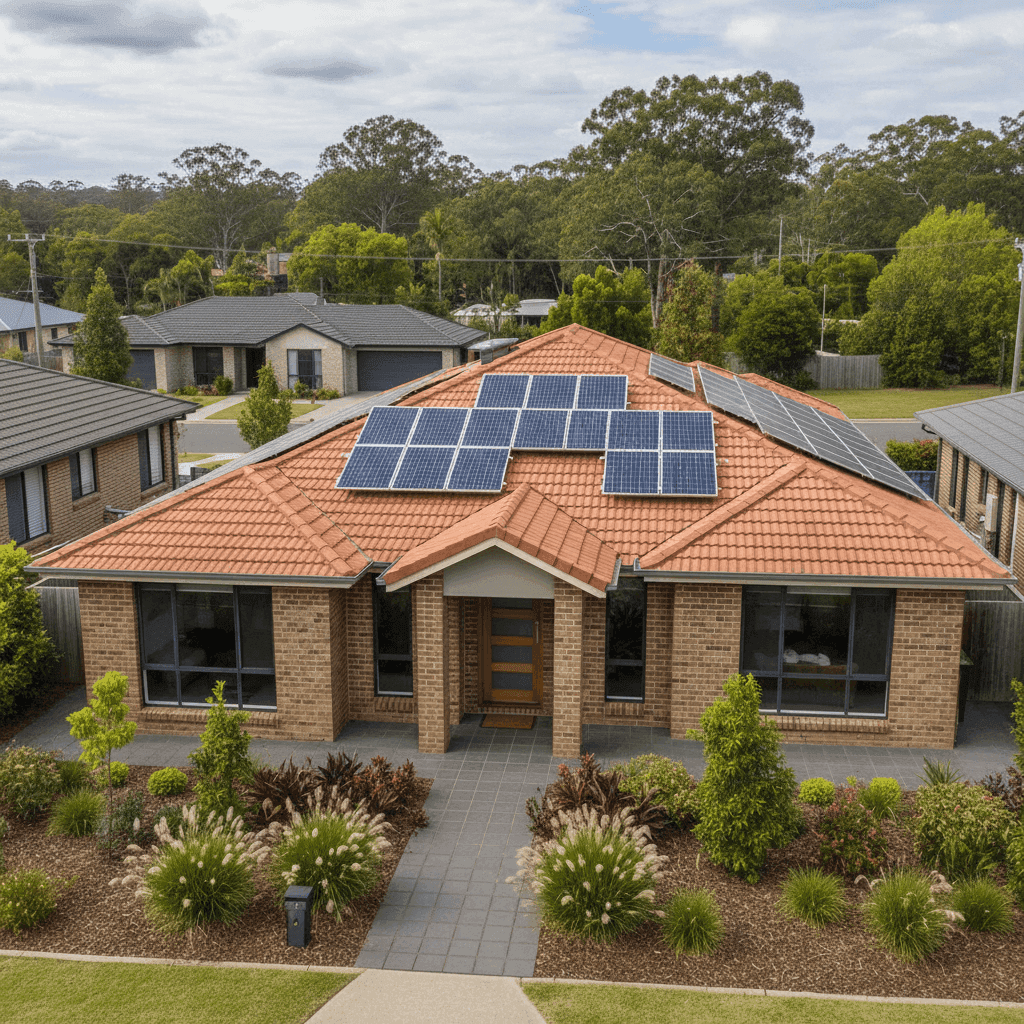
Mullumbimby is one of the Northern Rivers' most characterful towns — a lush, community-driven pocket of New South Wales that sits inland from Byron Bay. It's also a suburb where home insurance premiums can vary quite significantly, largely due to the region's exposure to severe weather events. If you own a free-standing home here, understanding what drives your premium is the first step to making sure you're getting genuine value for money.
This article breaks down a real home and contents insurance quote for a four-bedroom, two-bathroom free-standing home in Mullumbimby (postcode 2482), built in 2015, with a building sum insured of $863,000 and $50,000 in contents cover. The annual premium came in at $3,508 (or $343/month), with a $1,000 excess on both building and contents.
---
Is This Quote Fair?
The short answer: yes, broadly speaking. CoverClub's pricing analysis rates this quote as Fair (Around Average) — which, in the context of Mullumbimby and the broader Northern Rivers region, is actually a reasonably solid outcome.
Here's why that matters. The suburb average premium across 36 quotes collected in Mullumbimby (2482) sits at $4,914 per year, with a median of $4,045. This particular quote at $3,508 comes in below both the average and the median — meaning it's outperforming more than half of comparable quotes in the area.
The 25th percentile for the suburb is $3,028/yr, so while there's room to push lower, this quote is comfortably within the better half of the market. The 75th percentile sits at a steep $6,957/yr — a stark reminder of just how expensive home insurance can get in this part of New South Wales if you're not shopping around.
---
How Mullumbimby Compares
To put this quote in broader context, it helps to look at how Mullumbimby stacks up against both NSW as a whole and national benchmarks.
| Benchmark | Average Premium | Median Premium |
|---|---|---|
| Mullumbimby (2482) | $4,914/yr | $4,045/yr |
| LGA (Byron) | $4,856/yr | — |
| NSW | $9,528/yr | $3,770/yr |
| National | $5,347/yr | $2,764/yr |
A few things stand out here. The NSW average of $9,528/yr looks alarming at first glance, but it's heavily skewed by high-value properties and high-risk postcodes across the state — the median of $3,770/yr is a far more representative figure for most homeowners. Similarly, the national average of $5,347/yr is pulled upward by cyclone-prone regions in Queensland and Western Australia.
This quote at $3,508/yr sits below the NSW median, below the national average, and below the Mullumbimby suburb average — all positive signals. That said, the Byron LGA average of $4,856/yr reflects the elevated risk profile of the broader region, which is worth keeping in mind when reviewing your policy at renewal time.
---
Property Features That Affect Your Premium
Every home is different, and insurers weigh up a range of property characteristics when calculating your premium. For this particular property, several features are worth noting:
Brick Veneer Walls & Tiled Roof Brick veneer is generally viewed favourably by insurers — it offers solid fire resistance and structural durability compared to weatherboard or fibrous cement. Combined with a tiled roof, this construction profile is considered relatively low-risk, which likely contributes to a more competitive premium.
Slab Foundation A concrete slab foundation is a standard and reliable choice for modern construction. It reduces the risk of subsidence and pest-related structural damage, both of which can be costly to remediate and are factored into underwriting decisions.
Built in 2015 A relatively modern build means the property is likely compliant with contemporary building codes, including improved standards for weather resistance and structural integrity. Newer homes typically attract lower premiums than older properties that may have ageing wiring, plumbing, or roofing.
Solar Panels The property has solar panels installed, which adds some replacement value risk in the event of storm or hail damage. It's important to confirm with your insurer that solar panels are explicitly covered under your building policy — not all standard policies include them automatically.
Ducted Climate Control Ducted air conditioning systems are considered a higher-value fitting and contribute to the overall rebuild cost. This is appropriately reflected in the $863,000 building sum insured.
Above Average Fittings Quality & Timber/Laminate Flooring Above-average fittings — think quality cabinetry, stone benchtops, and premium fixtures — increase the cost to rebuild or repair, which justifies a higher sum insured. Timber and laminate flooring also adds replacement cost considerations, particularly in flood-prone areas where floor coverings may need full replacement after water ingress.
No Pool, Not in a Cyclone Risk Zone The absence of a pool removes a common liability risk, and the property's classification outside a cyclone risk area is a meaningful premium advantage for a Northern Rivers address.
---
Tips for Homeowners in Mullumbimby
1. Review your building sum insured annually Construction costs in regional NSW have risen considerably in recent years. A sum insured of $863,000 for 214 sqm of above-average quality construction seems reasonable, but it's worth using a building cost calculator each year at renewal to ensure you're not underinsured — especially given the post-flood rebuild pressures the Northern Rivers has experienced.
2. Confirm solar panel coverage explicitly Don't assume your solar system is covered. Ask your insurer specifically whether panels are included in the building definition, what events are covered (storm, hail, fire), and whether the inverter and battery (if applicable) are also included. Get it in writing.
3. Consider a higher excess to reduce your premium The current excess is $1,000 on both building and contents. If you have a financial buffer and rarely make small claims, opting for a higher excess (e.g. $2,500 or $5,000) can meaningfully reduce your annual premium — sometimes by 15–25%.
4. Shop the market at every renewal The wide spread between the 25th percentile ($3,028/yr) and 75th percentile ($6,957/yr) in Mullumbimby shows that premiums vary enormously for similar properties. Loyalty doesn't always pay — comparing quotes at renewal is one of the most effective ways to avoid overpaying.
---
Compare Your Home Insurance Quote Today
Whether you're reviewing your current policy or shopping for cover on a new property, CoverClub makes it easy to see how your premium stacks up. Get a home insurance quote now and compare real prices for your address — so you can be confident you're paying a fair price, not just a convenient one.