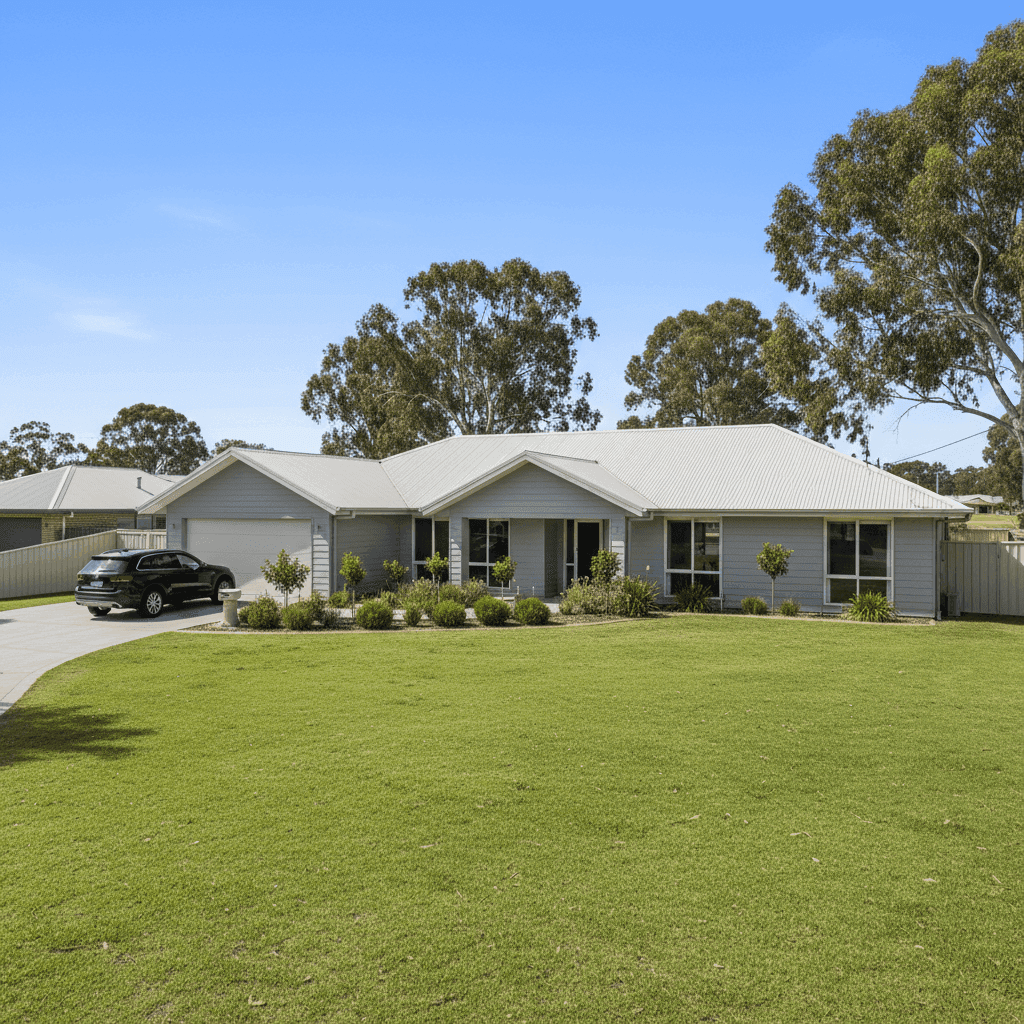
Mulwala is a quiet lakeside town in southern New South Wales, sitting right on the Murray River border with Victoria. It's a popular spot for retirees, families, and holiday homeowners — and like any regional property market, home insurance costs here can vary considerably. This article breaks down a real home and contents insurance quote for a five-bedroom free standing home in Mulwala (postcode 2647), comparing it against local, state, and national benchmarks to help you understand whether you're getting a fair deal.
---
Is This Quote Fair?
The quote in question comes in at $3,569 per year (or $348 per month) for combined home and contents cover, with a building sum insured of $860,000 and contents valued at $117,000. Both the building and contents excess sit at $1,000.
Our pricing analysis rates this quote as CHEAP — below average for the area. That's genuinely good news for the homeowner. In a suburb where premiums can swing wildly (more on that below), landing a quote well under the local median is a meaningful saving. To put it in perspective, the suburb median premium for Mulwala sits at $4,442 per year, meaning this quote comes in roughly $873 cheaper than the typical policy in the area.
For a property of this size — 277 square metres, five bedrooms, two bathrooms — a sub-$3,600 annual premium is competitive. The building sum insured of $860,000 is substantial, reflecting the cost of rebuilding a large home in regional NSW, and the contents cover of $117,000 is a reasonable figure for a well-furnished family home. Getting all of that covered for under $3,600 a year represents solid value.
---
How Mulwala Compares
Understanding where your premium sits relative to broader benchmarks is essential context. Here's how the numbers stack up:
| Benchmark | Premium |
|---|---|
| This Quote | $3,569/yr |
| Mulwala Suburb Median | $4,442/yr |
| Mulwala Suburb Average | $9,214/yr |
| NSW State Median | $3,770/yr |
| NSW State Average | $9,528/yr |
| National Average | $5,347/yr |
| National Median | $2,764/yr |
| Berrigan LGA Average | $1,601/yr |
A few things stand out here. First, the gap between the suburb average ($9,214) and median ($4,442) is enormous — a sign that a small number of very expensive quotes are pulling the average up significantly. With only eight quotes in the suburb sample, a single outlier can skew the data considerably. The median is a more reliable indicator of what most Mulwala homeowners are actually paying.
Compared to the NSW state average of $9,528/yr, this quote looks exceptionally competitive. Even against the national average of $5,347/yr, it comes in well below. Interestingly, the Berrigan LGA average is just $1,601/yr — though this likely reflects a mix of properties with lower sum insured values or contents-only policies, so it's not a direct apples-to-apples comparison.
You can explore more detailed pricing data for the area on the Mulwala suburb stats page.
---
Property Features That Affect Your Premium
Several characteristics of this particular property will have influenced how insurers priced the risk. Here's what matters most:
Hardiplank/Hardiflex External Walls
Fibre cement cladding like Hardiplank and Hardiflex is generally viewed favourably by insurers. It's non-combustible, resistant to rot and termites, and holds up well in most weather conditions. Compared to weatherboard or older timber cladding, it typically attracts lower premiums — a genuine advantage for this property.
Steel/Colorbond Roof
Colorbond steel roofing is one of the most insurer-friendly roof types in Australia. It's durable, fire-resistant, and requires minimal maintenance. Insurers tend to price Colorbond roofs more favourably than older materials like terracotta tiles or — particularly — asbestos cement sheeting.
Stump Foundation
The home sits on stumps, which is common for properties built in the 1990s in regional NSW. Stump foundations can be a double-edged sword: they allow good airflow beneath the home (reducing moisture issues) but can also be more vulnerable to movement over time. Some insurers factor this into their pricing, though it's rarely a major driver.
Construction Year: 1990
A home built in 1990 is in a middle ground for insurers — old enough that wear and tear on systems like plumbing and electrical wiring may be a consideration, but not so old as to attract the significant loadings applied to pre-1970s homes. Regular maintenance is key to keeping premiums manageable.
Ducted Climate Control
The presence of ducted climate control adds to the replacement cost of the home, and insurers will factor this into their assessment of the building sum insured. It's one of the reasons a higher sum insured like $860,000 may be appropriate for a property of this size and specification.
No Pool, No Solar
The absence of a pool removes one of the more common sources of liability claims and premium loading. Similarly, no solar panels means no additional risk around inverter fires or panel damage — both of which can push premiums up on properties that do have them.
---
Tips for Homeowners in Mulwala
1. Review your building sum insured regularly Construction costs have risen sharply across regional NSW in recent years. A sum insured that was adequate three years ago may now fall short of what it would actually cost to rebuild your home. Use a building cost calculator or speak with a quantity surveyor to make sure your $860,000 coverage still reflects current rebuild costs for a 277 sqm home.
2. Shop around — the spread is wide The data for Mulwala shows a huge range in premiums, from the 25th percentile of $4,071/yr to the 75th percentile of $14,522/yr. That's a massive gap, and it means there are both very cheap and very expensive policies available for similar properties. Never accept your renewal price without comparing alternatives first.
3. Maintain your stump foundations Homes on stumps benefit from periodic inspections to check for movement, rot, or pest damage. Keeping your foundations in good condition not only protects the structural integrity of your home but also reduces the likelihood of a claim — which in turn helps keep your premium history clean.
4. Consider your excess carefully Both the building and contents excess on this policy sit at $1,000. Opting for a higher excess (say, $2,000 or $2,500) can reduce your annual premium meaningfully. If you have the savings buffer to cover a higher out-of-pocket cost in the event of a claim, this is a straightforward way to lower your ongoing insurance costs.
---
Compare Home Insurance Quotes for Your Mulwala Property
Whether you're a long-term Mulwala resident or a newcomer to the area, it pays to compare your options before committing to a policy. CoverClub makes it easy to see multiple quotes side by side, so you can find cover that suits your property and your budget. Get a quote today at CoverClub and see how your current premium stacks up.