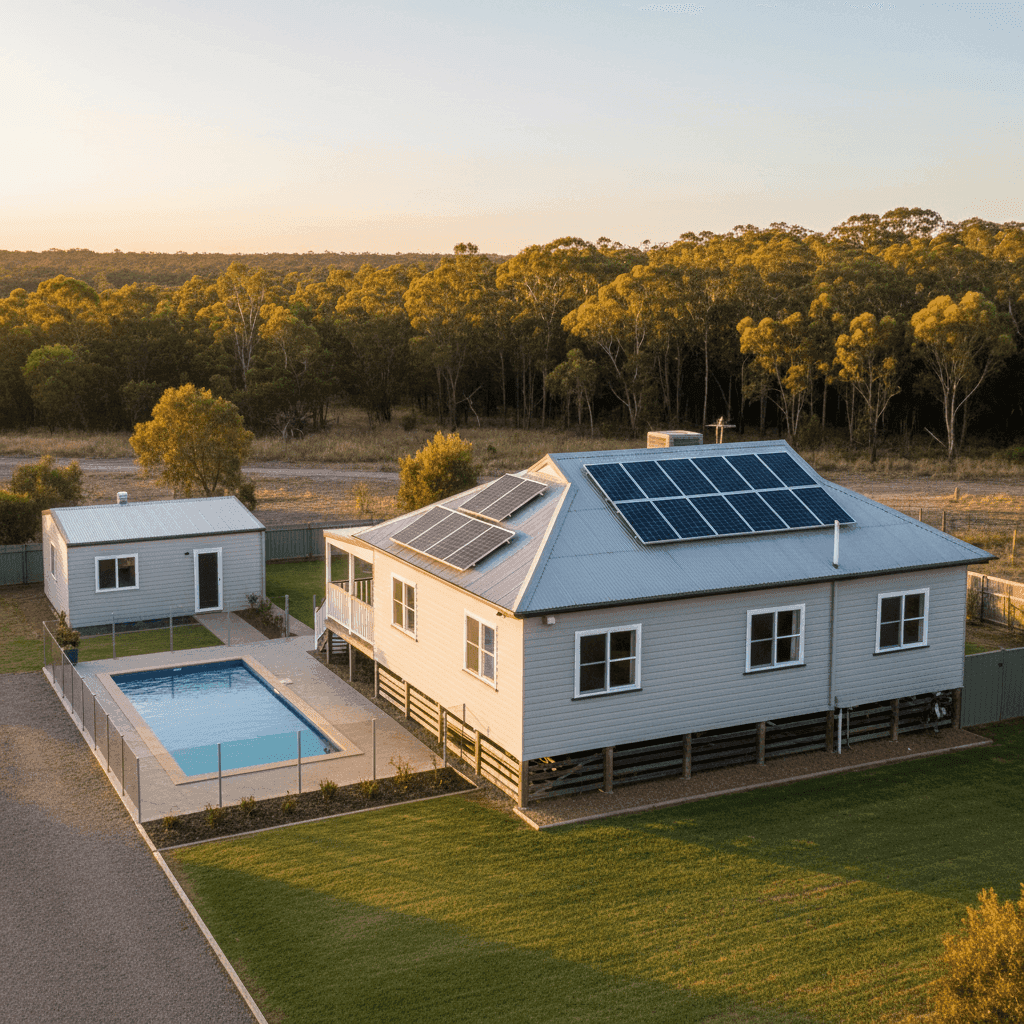
Nestled in the South West region of Western Australia, Mungalup (postcode 6225) is a quiet rural locality that sits within the Shire of Boyup Brook. If you own a free standing home here, you'll know that insurance costs can feel a little opaque — especially when you're not sure whether you're paying a fair price or being stung by factors you might be able to address. This article breaks down a real home and contents insurance quote for a 3-bedroom, 1-bathroom property in Mungalup, comparing it against WA state benchmarks and national figures to help you make a more informed decision.
---
Is This Quote Fair?
The annual premium on this quote comes in at $4,228 per year (or $405/month), covering both building (sum insured: $705,000) and contents ($150,000). Our price rating for this quote is Expensive — above average when measured against comparable policies.
To put that in context:
- The WA state average premium is $2,144/yr, with a median of $1,944/yr
- The national average is $2,965/yr, with a median of $2,716/yr
- The Boyup Brook LGA average sits at $3,045/yr
This quote is nearly double the WA state average and roughly 43% above the national average. Even when compared to the local LGA average of $3,045, this premium is around $1,183 higher annually. That's a meaningful gap — and it's worth understanding why before simply accepting the figure or shopping elsewhere without context.
The elevated premium isn't necessarily a sign of price gouging. Several property-specific characteristics are almost certainly driving the cost upward, and we'll unpack those below.
---
How Mungalup Compares
Unfortunately, there isn't enough suburb-level data available to produce a precise Mungalup-specific benchmark at this stage. However, the LGA and state figures still paint a useful picture.
| Benchmark | Annual Premium |
|---|---|
| This Quote | $4,228 |
| Boyup Brook LGA Average | $3,045 |
| WA State Average | $2,144 |
| WA State Median | $1,944 |
| National Average | $2,965 |
| National Median | $2,716 |
The Boyup Brook LGA average of $3,045 already sits above both the WA and national averages, suggesting that properties in this region carry inherent risk factors — likely related to bushfire exposure, the rural setting, and older housing stock — that push premiums higher across the board. This quote, however, still lands well above even that elevated local benchmark.
---
Property Features That Affect Your Premium
Several characteristics of this property are likely contributing to its above-average insurance cost. Here's what insurers are probably paying close attention to:
Asbestos Roof
This is arguably the most significant premium driver. Asbestos roofing was common in homes built before the mid-1980s, and this property — constructed in 1970 — fits squarely in that era. When an asbestos roof is damaged (by storm, hail, or fire), repairs and replacement require licensed asbestos removalists and strict safety protocols, making claims significantly more expensive to settle. Most insurers load premiums heavily for this material.
Hardiplank / Hardiflex Cladding
Hardiplank and Hardiflex are fibre cement products that are generally considered fire-resistant and durable. This is actually a positive factor for insurers compared to, say, weatherboard or timber cladding — so it may be partially moderating what could otherwise be an even higher premium.
Stump Foundation & Elevated Construction
The home sits on stumps and is elevated by less than 1 metre. While this style of construction is common in older Australian homes and offers some flood resilience, it can also mean higher rebuilding costs and additional complexity during claims assessment.
Granny Flat
The presence of a granny flat increases the overall rebuild cost and the insurable value of the property. This additional structure needs to be factored into the building sum insured, which at $705,000 reflects the combined replacement cost of the main dwelling and the secondary dwelling.
Swimming Pool
A pool adds both asset value and liability exposure. Insurers consider pools when calculating contents and property risk, particularly regarding accidental damage and public liability.
Solar Panels
Solar panels are increasingly common, but they add to rebuild complexity and replacement costs. They're generally a minor premium factor but still worth noting.
Building Size & Age
At 214 sqm and built in 1970, this is a mid-sized older home. The age of the property means older wiring, plumbing, and structural elements — all of which insurers view as higher-risk than modern construction.
---
Tips for Homeowners in Mungalup
If you're looking to manage your insurance costs without compromising on coverage, here are four practical steps worth considering:
1. Get the Asbestos Roof Assessed
If your asbestos roof is in good condition and fully encapsulated, some insurers may view it more favourably. Obtaining a professional condition report could support your case when negotiating with insurers. Better still, if you're planning any renovation work, replacing the roof with a modern material (such as Colorbond) could substantially reduce your premium over time.
2. Review Your Sum Insured
A building sum insured of $705,000 for a 214 sqm home in a rural WA locality is on the higher end. Make sure this figure reflects a realistic rebuild cost — not the market value of the land. Overinsuring your building is a common and costly mistake. Use a building cost calculator or speak with a quantity surveyor to get an accurate figure.
3. Adjust Your Excess to Lower Your Premium
This quote carries a $3,000 building excess and a $1,000 contents excess. If you're financially comfortable absorbing a higher out-of-pocket cost in the event of a claim, voluntarily increasing your excess can meaningfully reduce your annual premium. Just make sure the excess is an amount you could realistically pay if something went wrong.
4. Compare Multiple Quotes
The single most effective way to reduce your premium is to shop around. Insurers assess risk differently, and the same property can attract vastly different premiums across providers. Use a comparison tool to benchmark your current quote against the market before renewing.
---
Compare Your Home Insurance at CoverClub
Whether you're renewing your existing policy or taking out cover for the first time, it pays to know what the market looks like. CoverClub makes it easy to get a home insurance quote and compare your options in minutes. With transparent pricing data and suburb-level insights, you'll always know whether you're getting a fair deal — or paying more than you should.