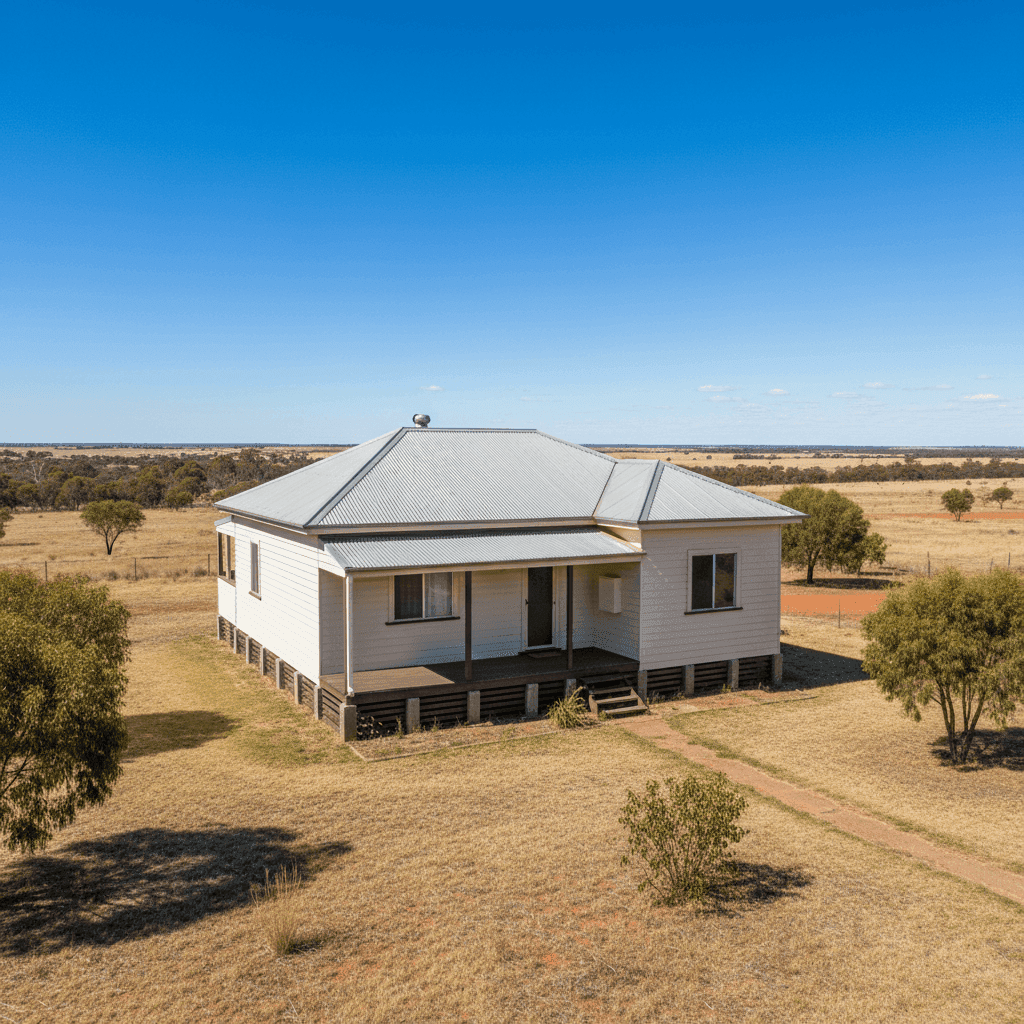
If you own a free standing home in Mungindi, NSW 2406, you might be wondering whether you're paying a fair price for home and contents insurance — or whether there's room to do better. This article breaks down a real insurance quote for a 2-bedroom weatherboard home in Mungindi, compares it against local, state and national benchmarks, and explains the property features most likely to shape what you pay.
---
Is This Quote Fair?
The short answer: yes — and then some.
This quote came in at $1,415 per year (or around $145/month) for combined home and contents cover, with a building sum insured of $400,000 and contents valued at $50,000. Our price rating for this quote is CHEAP — well below average for the Mungindi area.
To put that in perspective, the suburb average for comparable quotes sits at $3,557 per year, and the median is $2,625 per year. Even the cheapest quarter of quotes in the suburb (the 25th percentile) comes in at $2,340 per year. That means this quote is priced significantly below the lowest tier of what most Mungindi homeowners are paying — a genuinely strong result.
For a homeowner on a tight budget, a saving of over $2,000 annually compared to the suburb average is meaningful. Over five years, that's more than $10,000 staying in your pocket rather than going to an insurer.
---
How Mungindi Compares
Mungindi is a small border town in north-western NSW, and insurance pricing in the area reflects a mix of regional risk factors and relatively modest property values. Here's how the numbers stack up across different geographic levels:
| Benchmark | Average Premium | Median Premium |
|---|---|---|
| Mungindi (NSW 2406) | $3,557/yr | $2,625/yr |
| NSW State | $9,528/yr | $3,770/yr |
| National | $5,347/yr | $2,764/yr |
| Goondiwindi LGA | $6,634/yr | — |
A few things stand out here. The NSW state average of $9,528 is extremely high — driven largely by premium-heavy postcodes in flood-prone, cyclone-affected or high-value coastal areas. The state median of $3,770 is a more realistic benchmark for typical NSW homeowners, and Mungindi's median of $2,625 sits comfortably below even that.
Nationally, the median premium of $2,764 is broadly in line with Mungindi's local median, suggesting this area is roughly in the middle of the road on a national basis — neither a high-risk hotspot nor an unusually cheap market. The Goondiwindi LGA average of $6,634 is notably higher, which may reflect a broader mix of property types and risk profiles across that local government area.
You can explore more suburb-level data on the Mungindi insurance stats page, or compare across the state on the NSW insurance stats page. For a broader picture, the national insurance stats page breaks down averages by state and territory.
> Note: The suburb sample size for Mungindi is 13 quotes, so while the data is directionally useful, a larger sample would give even greater confidence in these benchmarks.
---
Property Features That Affect Your Premium
Every insurer looks at a property's physical characteristics when calculating risk. Here's how the key features of this particular home are likely to influence pricing:
Weatherboard Timber Walls
Weatherboard construction is common in older Australian homes and is generally considered moderate risk by insurers. Timber is more susceptible to fire and pest damage than brick veneer or double brick, which can push premiums slightly higher. That said, many insurers have well-developed pricing models for weatherboard homes, and the impact varies significantly between providers.
Steel / Colorbond Roof
A Colorbond steel roof is viewed favourably by most insurers. It's durable, fire-resistant, low-maintenance and handles the elements well — particularly important in regional NSW where hail and high winds can be a concern. This is likely contributing positively to the competitive premium on this quote.
Stump Foundation
Homes built on stumps (also known as pier and beam foundations) are common in older Queensland and northern NSW properties. While they allow good airflow underneath the home, they can be more vulnerable to certain types of structural movement and pest entry. Insurers assess this differently, but it's worth ensuring your policy adequately covers the subfloor structure.
Age of Construction (1948)
At over 75 years old, this home is pre-war era construction. Older homes can attract higher premiums due to the cost of sourcing period-appropriate materials and the likelihood of ageing plumbing, wiring and structural components. However, if the home has been well-maintained or partially renovated, some insurers will factor that in.
Timber / Laminate Flooring
Timber floors are a popular feature but can be costly to repair or replace — particularly if the home floods or sustains water damage. Ensuring your sum insured reflects the true replacement cost of these finishes is important.
Standard Fittings
With standard-grade fittings throughout, this home doesn't carry the premium loading that high-end or luxury finishes can attract. This is a straightforward factor that keeps the quote competitive.
---
Tips for Homeowners in Mungindi
Whether you're renewing your policy or shopping for the first time, here are four practical steps to make sure you're getting the right cover at the right price.
- Review your sum insured regularly. Building costs have risen sharply across regional NSW in recent years. A sum insured of $400,000 for a 105 sqm home may be appropriate today, but it's worth recalculating your rebuild cost annually — especially as labour and materials costs continue to shift. Underinsurance is one of the most common and costly mistakes homeowners make.
- Check what your excess means in practice. This quote carries a $3,000 building excess and a $1,000 contents excess. A higher excess is one way to bring your premium down, but make sure you could comfortably cover those amounts out of pocket if you needed to make a claim. If not, consider whether a lower excess with a slightly higher premium makes more sense for your situation.
- Maintain your weatherboard cladding. Timber walls need regular painting and maintenance to stay weather-tight. Not only does this protect the structure of your home, but some insurers may reduce or deny claims if damage is found to have resulted from poor maintenance. A well-maintained exterior can also support a more favourable assessment at renewal time.
- Compare quotes before you renew. Loyalty doesn't always pay in insurance. Premiums can vary dramatically between providers for the same property — as this quote clearly demonstrates. Use a comparison tool like CoverClub to benchmark your renewal offer against the broader market before you sign on for another year.
---
Find a Better Deal with CoverClub
Whether this quote is yours or you're simply curious about what home insurance costs in Mungindi, the best way to make sure you're not overpaying is to compare. At CoverClub, you can get quotes tailored to your property and see how they stack up against real data from your suburb, your state and across Australia. It takes just a few minutes and could save you thousands.