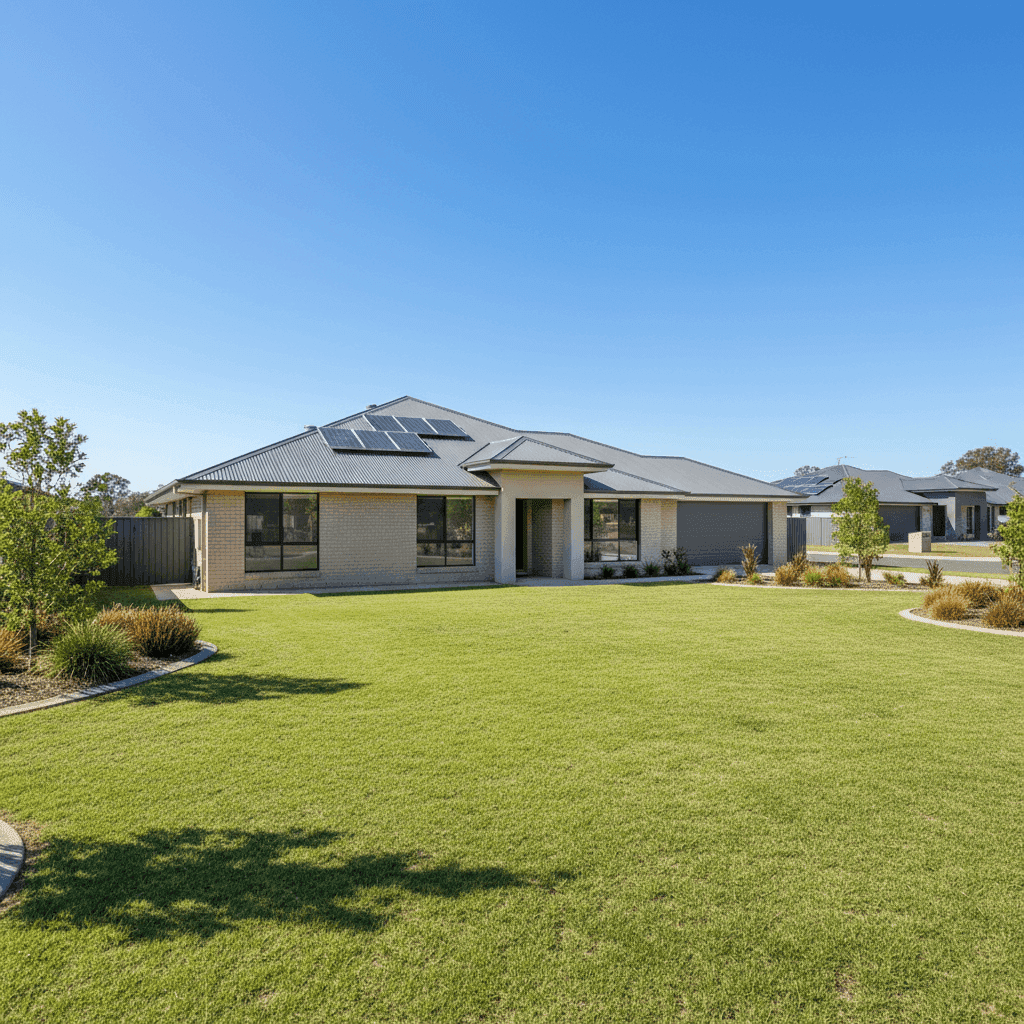
Murphys Creek is a quiet semi-rural locality nestled in the Lockyer Valley foothills of South East Queensland, known for its scenic landscape and tight-knit community. For owners of larger free standing homes in the area, understanding what drives home insurance costs — and whether a quoted premium is competitive — can make a meaningful difference to the household budget. This article breaks down a recent Home and Contents insurance quote for a five-bedroom property in Murphys Creek (postcode 4352) and puts the numbers into perspective.
---
Is This Quote Fair?
The quote in question comes in at $7,458 per year (or $729/month), covering a building sum insured of $800,000 and contents valued at $175,000, each with a $1,000 excess. Our analysis rates this premium as Expensive — above average for the area.
To understand why, it helps to look at where this figure sits relative to what other homeowners in the same suburb are paying. Based on a sample of 19 quotes in Murphys Creek, the suburb average sits at $6,829/yr and the median at $6,305/yr. The quote of $7,458 exceeds the suburb's 75th percentile of $7,077 — meaning it's more expensive than roughly three-quarters of comparable quotes in the area.
That said, "expensive" is relative. The sum insured here is substantial at $800,000 for the building alone, and the combined coverage is comprehensive. A higher insured value naturally pushes the premium upward, so some elevation above the suburb median is to be expected. The key question is whether there's room to find equivalent cover at a more competitive price point — and the answer, in most cases, is yes.
---
How Murphys Creek Compares
Zooming out beyond the suburb gives a fuller picture of where this quote lands across different benchmarks.
| Benchmark | Average Premium | Median Premium |
|---|---|---|
| Murphys Creek (suburb) | $6,829/yr | $6,305/yr |
| Queensland (state) | $9,129/yr | $3,903/yr |
| National | $5,347/yr | $2,764/yr |
| Goondiwindi LGA | $6,634/yr | — |
You can explore the full breakdown for this postcode on the Murphys Creek suburb stats page, or compare it to the broader Queensland insurance landscape and national averages.
A few things stand out in this data. Queensland's average premium of $9,129/yr is significantly higher than the national average of $5,347 — a reflection of the state's elevated exposure to natural hazards including floods, storms, and hail. However, Queensland's median of just $3,903 tells a different story: a large portion of QLD policyholders pay far less, which means the average is being pulled up by high-risk or high-value properties.
Murphys Creek's own averages sit comfortably below the state average, which is a positive sign for locals. The suburb's median of $6,305 is notably higher than the national median of $2,764, reflecting both the regional risk profile and the tendency for properties in this area to carry higher rebuild values due to their size and construction.
---
Property Features That Affect Your Premium
Several characteristics of this property will have influenced the quoted premium — some favourably, others less so.
Construction materials play a significant role in how insurers assess risk. This home features brick veneer external walls and a steel/Colorbond roof, both of which are viewed positively by most insurers. Colorbond roofing in particular is durable, fire-resistant, and performs well in storm conditions — factors that can work in your favour at renewal time.
The slab foundation and tile flooring are also considered low-risk construction elements. Slabs offer structural stability and are less susceptible to moisture-related damage than some alternative foundation types.
Solar panels are increasingly common on Australian homes, but they do add complexity to insurance assessments. Panels represent an additional asset that needs to be factored into the sum insured, and some insurers charge a loading for the added risk of electrical faults or storm damage to rooftop systems. It's worth confirming that your policy explicitly covers solar panels and checking whether they're included under building or contents cover.
Ducted climate control is another feature that adds to the replacement cost of the home. These systems are expensive to reinstall and are typically included in the building sum insured. Ensuring your $800,000 building cover adequately reflects the full cost of rebuilding — including fixtures like ducted air conditioning — is essential to avoiding underinsurance.
At 214 sqm with five bedrooms and two bathrooms, this is a generously sized home. Larger floor plans naturally carry higher rebuild costs, which supports a higher sum insured and, in turn, a higher premium. Built in 2008, the property is relatively modern, which generally means lower maintenance risk compared to older homes.
---
Tips for Homeowners in Murphys Creek
1. Review your sum insured annually Construction costs have risen sharply in recent years across Queensland. The $800,000 building sum insured should be reviewed each year to ensure it reflects current rebuild costs — not the purchase price or market value of the property. Underinsurance is one of the most common and costly mistakes homeowners make.
2. Shop around at renewal time Insurers reprice risk differently, and loyalty doesn't always pay. Getting two or three competing quotes before your policy renews — especially given this quote is above the suburb's 75th percentile — could result in meaningful savings without sacrificing cover quality.
3. Consider your excess strategically Both the building and contents excess are set at $1,000. Opting for a higher voluntary excess (say, $2,000 or $2,500) can reduce your annual premium noticeably. If you have a solid emergency fund and are unlikely to make small claims, this trade-off often makes financial sense.
4. Confirm solar panel coverage Given the solar panels on this property, it's worth calling your insurer to clarify exactly how they're covered — whether under the building policy, as a separate item, or excluded altogether. Some policies have specific sub-limits or conditions for rooftop solar systems that homeowners don't discover until they need to make a claim.
---
Compare Your Options with CoverClub
Whether you're renewing soon or just curious about what else is out there, CoverClub makes it easy to compare home and contents insurance quotes tailored to your property. Don't pay more than you need to — get a quote today and see how your current premium stacks up against the market.