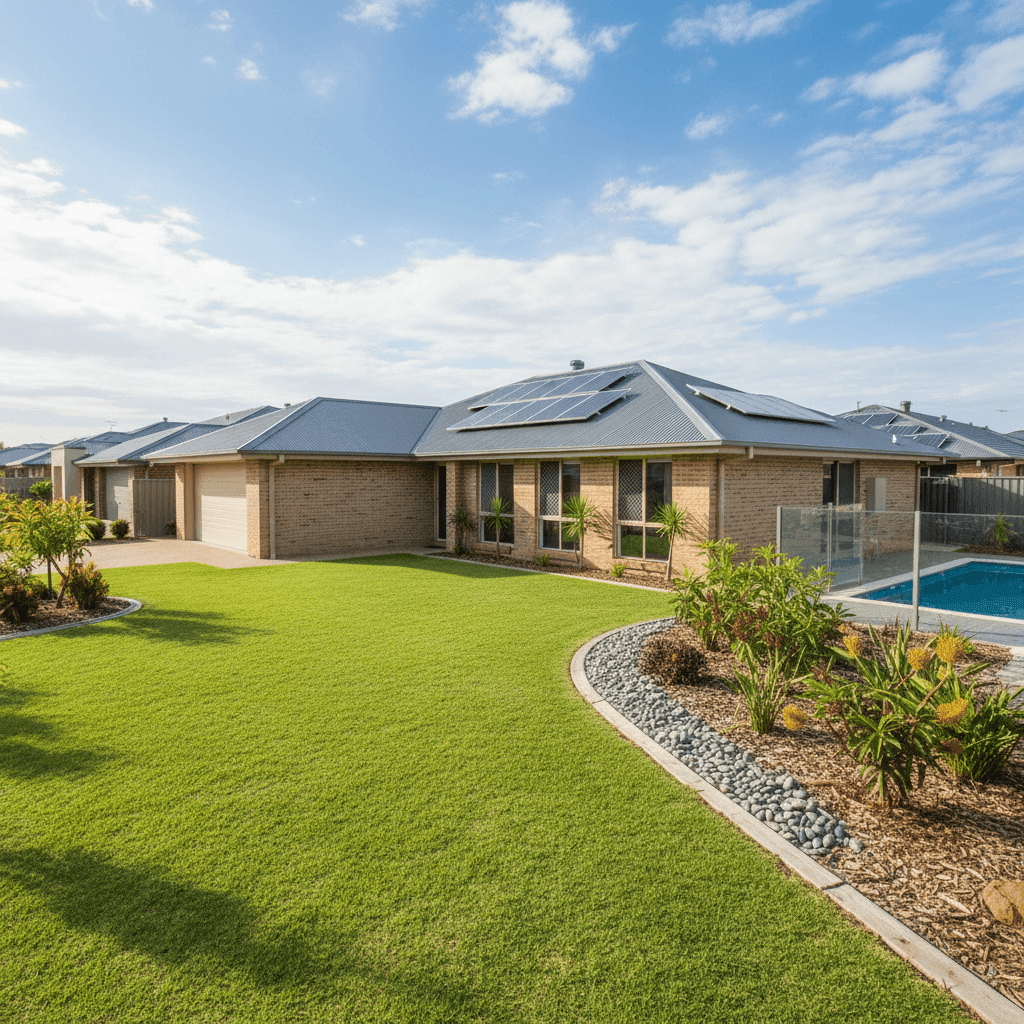
Murrumba Downs is a well-established residential suburb in the Moreton Bay region of South East Queensland, known for its family-friendly streets, quality housing stock, and proximity to both the Bruce Highway and Westfield North Lakes. If you own a free standing home here, understanding what you should expect to pay for home and contents insurance — and whether your current quote is competitive — can make a real difference to your household budget.
This article breaks down a recent home and contents insurance quote for a five-bedroom, three-bathroom free standing home in Murrumba Downs (postcode 4503), with an annual premium of $2,087 (or roughly $205 per month). We'll put that figure in context using suburb, state, and national data so you can make an informed decision.
---
Is This Quote Fair?
The short answer: yes, broadly speaking — but there's room to do better.
This quote has been rated Fair (Around Average) based on comparison data from Murrumba Downs home insurance quotes. Here's what that means in practice:
- The suburb average premium for Murrumba Downs sits at $2,726/yr, and the median is $2,617/yr
- At $2,087/yr, this quote comes in below both the suburb average and median — a positive sign
- However, it sits above the 25th percentile of $1,877/yr, meaning roughly a quarter of comparable quotes in the area are cheaper
In other words, this isn't a bad quote, but it's not the sharpest price available either. Homeowners who shop around could potentially find cover closer to the $1,877 mark — a saving of over $200 per year. Given that the 75th percentile reaches $3,780/yr, there are clearly far more expensive options on the market too, so this quote is sitting in a reasonable middle ground.
---
How Murrumba Downs Compares
One of the most telling insights from this data is just how much cheaper Murrumba Downs is compared to the broader Queensland market. Take a look:
| Benchmark | Average Premium | Median Premium |
|---|---|---|
| Murrumba Downs (suburb) | $2,726/yr | $2,617/yr |
| Moreton Bay LGA | $3,145/yr | — |
| Queensland (state) | $4,547/yr | $3,931/yr |
| National | $2,965/yr | $2,716/yr |
The Queensland state average of $4,547/yr is a stark reminder of how expensive home insurance has become across much of the state — largely driven by high-risk areas in North Queensland that face cyclone, flood, and storm surge exposure. Murrumba Downs, by contrast, benefits from a more benign risk profile, which is reflected in its comparatively modest premiums.
Interestingly, the suburb average of $2,726/yr also sits below the [national average](https://coverclub.com.au/stats/national) of $2,965/yr, making Murrumba Downs one of the more affordable pockets of Queensland for home insurance. The quote in question, at $2,087/yr, is well under the national average — a reasonable outcome for a large, well-appointed home.
(Note: suburb comparison data is based on a sample of 26 quotes, so results should be treated as indicative rather than exhaustive.)
---
Property Features That Affect Your Premium
Several characteristics of this particular property will have influenced the final premium — some favourably, others less so.
Features That May Increase the Premium
- Size and value: At 315 sqm with a building sum insured of $1,200,000 and contents valued at $245,000, this is a substantial asset. Larger sums insured naturally attract higher premiums.
- Swimming pool: Pools add liability exposure and replacement cost, which insurers factor into pricing.
- Ducted climate control: Whole-home air conditioning systems are expensive to repair or replace, and insurers account for this in building cover calculations.
Features That May Help Keep the Premium Down
- Brick veneer construction: Brick veneer external walls are generally viewed favourably by insurers compared to lightweight cladding or timber, as they offer better fire resistance and structural integrity.
- Colorbond steel roof: A steel roof is durable, low-maintenance, and resistant to ember attack — all positives from an underwriting perspective.
- Concrete slab foundation: Slab foundations are typically considered stable and less susceptible to movement, particularly in South East Queensland's soil conditions.
- No cyclone risk: Murrumba Downs falls outside designated cyclone risk zones, which keeps a significant loading off the premium that many North Queensland homeowners face.
- Solar panels: While solar panels can sometimes add minor complexity (replacement cost), they don't generally attract a significant premium loading and may even signal a well-maintained property.
- Construction year (2006): A home built in 2006 was constructed under modern building codes, which typically means better structural standards than older dwellings.
---
Tips for Homeowners in Murrumba Downs
1. Check Your Sum Insured Annually
Building costs in South East Queensland have risen sharply in recent years. Make sure your $1,200,000 building sum insured reflects current construction costs — not what it cost to build the home in 2006. Underinsurance is one of the most common and costly mistakes homeowners make.
2. Shop Around at Renewal Time
Insurers regularly adjust their pricing models, and loyalty doesn't always pay. Use a comparison platform like CoverClub to benchmark your renewal quote against the market before you auto-renew.
3. Review Your Excess Settings
This policy carries a $2,000 excess for both building and contents. Opting for a higher excess can reduce your annual premium, while a lower excess means more out-of-pocket at claim time. Consider your financial buffer and choose accordingly.
4. Document Your Contents Thoroughly
With $245,000 in contents cover, it's worth maintaining an up-to-date home inventory — photos, receipts, and serial numbers stored securely offsite or in the cloud. This makes claims faster and reduces the risk of disputes over high-value items.
---
Ready to Compare?
Whether you're reviewing your current policy or shopping for cover on a new property in Murrumba Downs, comparing quotes is the single most effective way to ensure you're not overpaying. Get a home insurance quote through CoverClub and see how your premium stacks up against the suburb, state, and national benchmarks — all in one place.