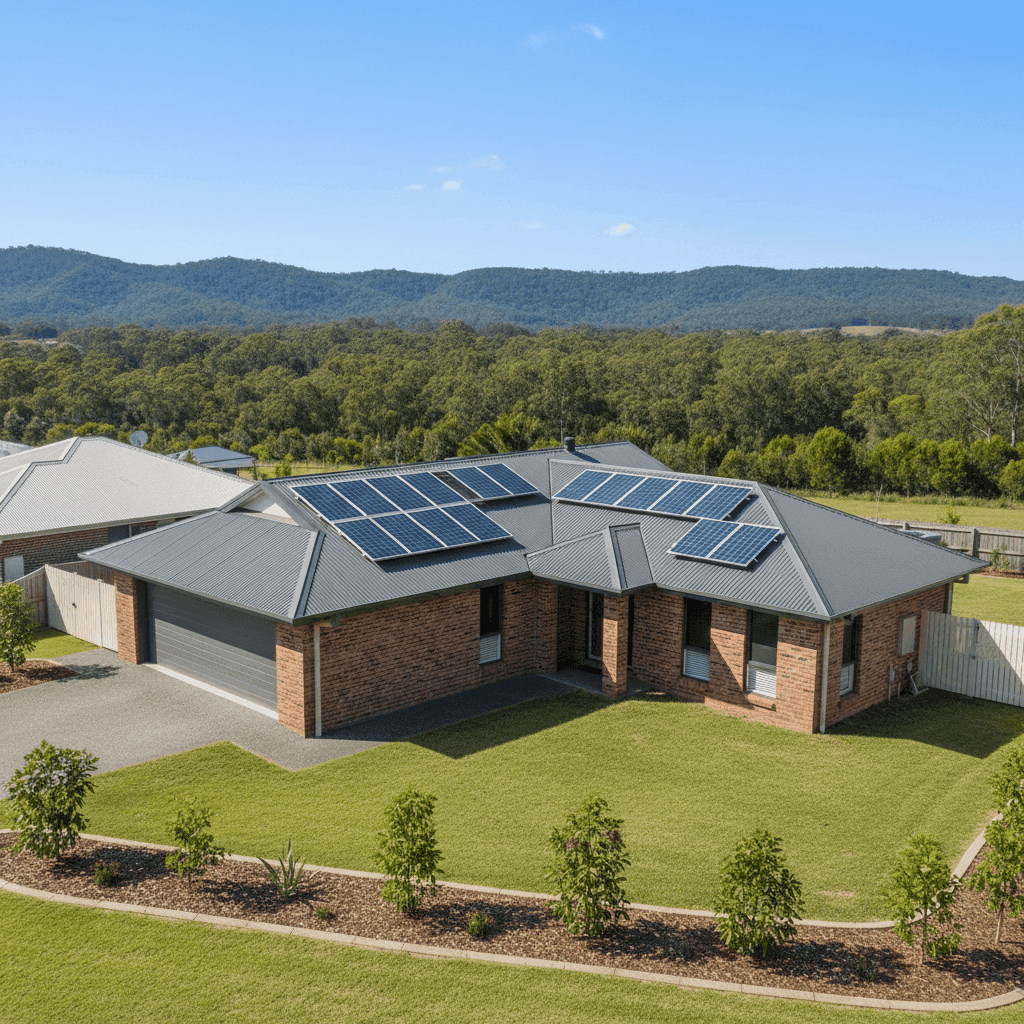
Murwillumbah is a charming hinterland town in the Tweed Valley of northern New South Wales, nestled beneath the iconic Mount Warning. It's a region that attracts families and lifestyle seekers alike — but like any property purchase, understanding what you'll pay for home insurance is an essential part of the picture. This article breaks down a real home and contents insurance quote for a five-bedroom free standing home in Murwillumbah (postcode 2484), and puts the numbers into context so you can make a more informed decision.
---
Is This Quote Fair?
The quote in question comes in at $3,940 per year (or $389/month) for combined home and contents cover, with a building sum insured of $850,000 and contents valued at $30,000. Both the building and contents excess are set at $1,000.
Our price rating for this quote is FAIR — Around Average, and the data backs that up. At $3,940 annually, this premium sits comfortably within the interquartile range for the Murwillumbah suburb, which runs from $3,439 (25th percentile) to $3,972 (75th percentile). In other words, roughly half of all comparable quotes in the area fall within that band — and this one lands just inside the upper boundary, suggesting it's neither a standout bargain nor an overpriced outlier.
For homeowners, a "fair" rating is actually a reasonable outcome, particularly for a larger five-bedroom property with solar panels. It means the insurer is pricing the risk in line with market expectations, rather than padding the premium unnecessarily.
---
How Murwillumbah Compares
To really understand this quote, it helps to zoom out and look at the broader pricing landscape. Here's how the numbers stack up across different geographic levels:
| Benchmark | Average Premium | Median Premium |
|---|---|---|
| Murwillumbah (2484) | $5,040/yr | $3,576/yr |
| NSW (State) | $9,528/yr | $3,770/yr |
| National | $5,347/yr | $2,764/yr |
| Kyogle LGA | $9,180/yr | — |
A few things stand out here. First, the NSW state average of $9,528/yr looks alarming at first glance — but the median of $3,770 tells a more nuanced story. A small number of very high-risk or high-value properties are pulling that average up significantly, which is a common pattern in insurance data. The quote at $3,940 sits above the NSW median but well below the state average, which is a sensible position for a well-built suburban home.
The Kyogle LGA average of $9,180/yr is notably elevated, likely reflecting the mix of rural and flood-prone properties across the broader local government area. Murwillumbah itself, while part of the Tweed Valley flood plain historically, shows a more moderate pricing profile at the suburb level — with a local average of $5,040 and a median of $3,576.
Nationally, the median sits at $2,764, which is lower than this quote. However, national medians are heavily influenced by lower-risk, lower-cost regions across regional Australia, so direct comparisons require some care.
You can explore the full pricing data for Murwillumbah on CoverClub, compare it against NSW state-wide statistics, or browse national home insurance benchmarks.
---
Property Features That Affect Your Premium
Every home is unique, and insurers weigh up a range of property characteristics when calculating your premium. Here's how the features of this particular home are likely influencing the quote:
Brick Veneer Walls & Colorbond Roof Brick veneer is one of the more common and insurer-friendly external wall types in Australia. It offers solid fire resistance and structural durability, which generally works in your favour at premium time. A steel Colorbond roof is similarly well-regarded — it's lightweight, resistant to corrosion, and holds up well in storms compared to older tile or iron roofing.
Slab Foundation Concrete slab foundations are standard for homes built from the 1980s onwards and are generally considered low-risk by insurers. They're less susceptible to subsidence and termite entry compared to older timber-framed stumped homes.
Timber and Laminate Flooring While aesthetically appealing, timber and laminate floors can be more expensive to repair or replace after water damage events. This is a factor insurers consider when assessing contents and building replacement costs.
Solar Panels This property has solar panels installed, which adds a modest degree of complexity to the insurance picture. Solar systems are generally covered under building insurance, but it's worth confirming with your insurer that the panels and inverter are explicitly included in your sum insured — and that the $850,000 building cover is sufficient to account for their replacement value.
Building Size and Age At 139 sqm and built in 1990, this is a well-established home of modest footprint for five bedrooms. The 1990 construction date means it was built under relatively modern building codes, which is a positive signal for structural integrity. However, homes of this age may have components — roofing, plumbing, electrical — approaching the end of their serviceable life, which can influence claims risk.
No Pool, No Ducted Climate Control The absence of a pool removes a common source of liability and maintenance claims. No ducted air conditioning also simplifies the mechanical systems in the home, reducing one potential avenue for costly repairs.
---
Tips for Homeowners in Murwillumbah
1. Review your building sum insured carefully $850,000 is a substantial sum insured for a 139 sqm home, but reconstruction costs in regional NSW — especially in areas with limited tradesperson availability — can be surprisingly high. Use a building cost calculator or speak to a quantity surveyor to ensure your coverage is accurate. Being underinsured is one of the most common and costly mistakes homeowners make.
2. Confirm solar panel coverage with your insurer Don't assume your solar system is automatically covered. Ask your insurer directly whether the panels, inverter, and associated wiring are included under your building policy, and whether there are any sub-limits that might apply.
3. Check for flood and storm cover The Tweed Valley region has a documented history of flooding, and Murwillumbah in particular has experienced significant flood events. Ensure your policy explicitly includes flood cover — not just storm or rainwater damage — and understand the distinction between the two, as some policies treat them differently.
4. Compare quotes annually Insurance loyalty doesn't always pay. Premiums can shift significantly from year to year based on claims history, reinsurance costs, and insurer appetite for risk in a given region. Running a comparison at renewal time is one of the simplest ways to avoid overpaying.
---
Ready to Compare?
Whether you're renewing your existing policy or buying cover for the first time, it pays to see what the market has to offer. Get a home insurance quote through CoverClub and find out how your premium stacks up against real data from your suburb and beyond. With transparent pricing benchmarks and side-by-side comparisons, CoverClub makes it easier to find cover that's genuinely fair — not just familiar.